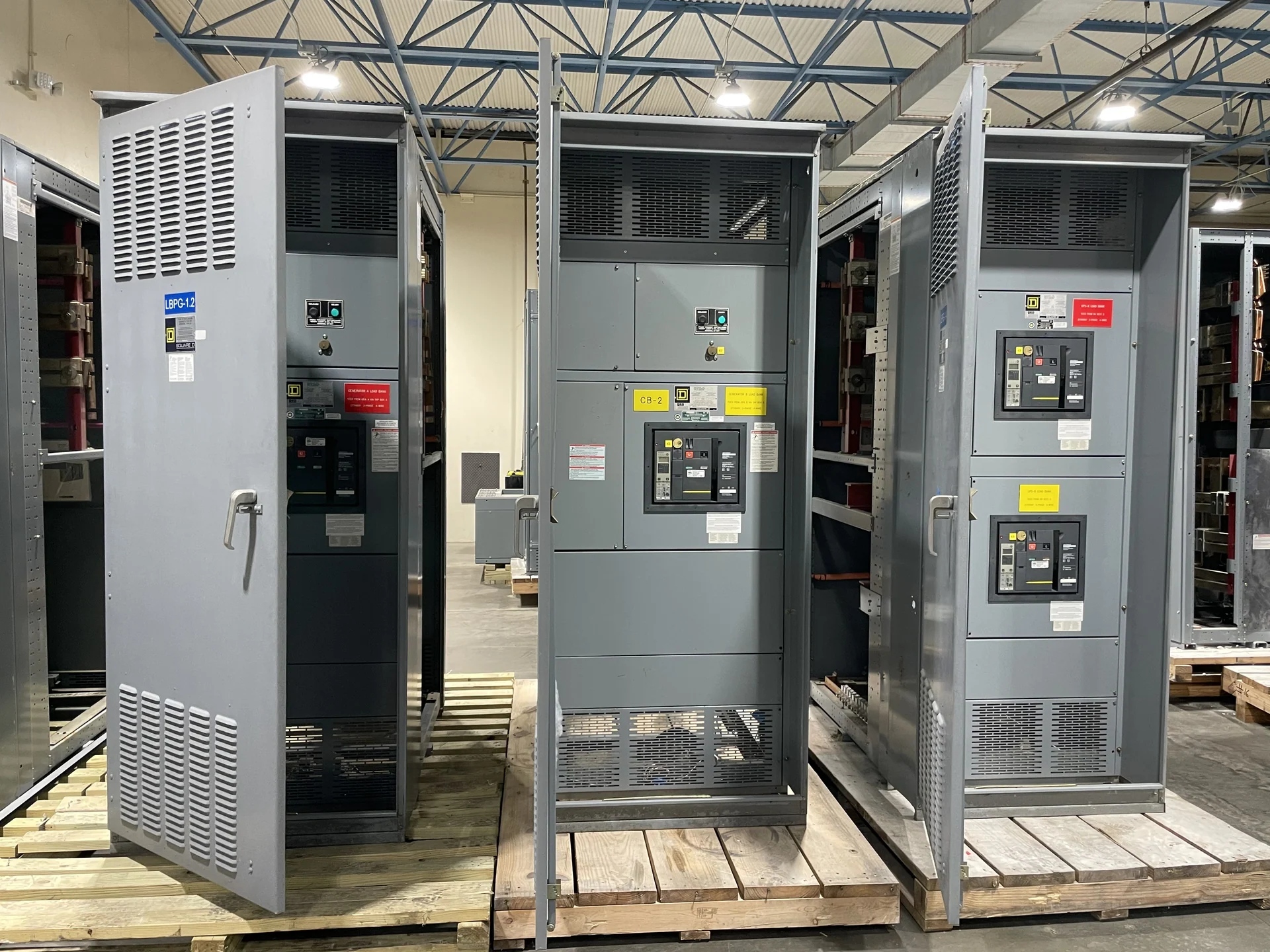
Start with the Montana Service Interface
Planning Montana switchgear for a commercial or industrial project begins with the service interface, not a catalog label. Establish the utility source arrangement, nominal voltage, phase and wire configuration, grounding method, service conductors, metering location, and requested service disconnecting means. The electrical engineer, utility, owner, and installation contractor should reconcile these inputs before a manufacturer develops a detailed lineup. A new service-entrance switchboard can then be built around the actual one-line diagram, feeder schedule, available fault current, physical access, and project documents rather than an assumed standard arrangement.
Coordinate Utility Metering and Disconnecting Means
Utility metering requirements can affect enclosure sections, instrument compartments, conductor routing, seals, access, and the order in which equipment is installed. Confirm the serving utility's current service manual and obtain project-specific direction on meter sockets, current transformers, test provisions, compartments, labeling, and inspection steps. Separately define the service disconnecting means, number of service disconnects where applicable, main-device arrangement, emergency or standby interfaces, and space for feeder terminations. These details help distinguish a complete service-entrance switchboard scope from a generic distribution lineup and reduce late drawing revisions.
Size the Distribution Around Real Loads
A useful Montana electrical distribution design connects continuous current requirements to calculated loads, feeder circuits, motor starting conditions, future capacity, and the equipment's available fault current. Provide a current load summary, feeder conductor information, breaker or fusible-device preferences, and any selective-coordination or arc-flash-study inputs available for review. The manufacturer can use those documents to develop bus, mains, feeders, metering, and enclosure sections custom to the specified arrangement. The resulting proposal should clearly identify assumptions, exclusions, required field information, and any items that remain subject to engineering approval.
Account for Montana Site Conditions
Site conditions influence more than the electrical rating. Identify whether the service-entrance switchboard will be indoors or outdoors, the enclosure environment, exposure to moisture or dust, elevation information when relevant to the design basis, ambient temperature assumptions, equipment-room dimensions, working clearances, cable approach, and foundation or housekeeping-pad interfaces. Commercial and industrial sites may also require coordinated access, lifting, sectional shipping, and a defined receiving route. These inputs should be reviewed with the engineer and qualified installer so the new assembly fits the building, yard, and installation sequence without relying on unverified local assumptions.
Define Drawings, Verification, and Project Requirements
Before ordering, request a coordinated package that identifies the one-line diagram, elevations, dimensions, device schedule, ratings, terminal details, metering provisions, control wiring, labels, and shipping splits applicable to the project. If the specification references UL 891, confirm with the responsible engineer and manufacturer whether it applies to the particular switchboard construction and what project-specific listing, evaluation, or verification is required. Inspection and electrical test expectations should likewise be agreed in advance, with acceptance criteria and records tied to the approved design.
Purchase New Equipment Direct from the Manufacturer
Switchgear Builders manufactures new electrical switchgear in the United States, builds equipment custom to specification, uses American components, and ships nationwide. For a Montana inquiry, send the project location, service voltage, source and grounding information, fault-current data, utility metering direction, feeder schedule, enclosure setting, dimensions, drawings, and desired documentation. A complete request lets the manufacturer address equipment scope and shipping coordination while clarifying availability, price, and delivery expectations for the order.
Plan Shipment and Site Receiving
Nationwide shipping still requires project-specific logistics planning. Identify the Montana destination, site contact, receiving hours, unloading equipment, dock or gate limitations, road access, indoor storage conditions, and whether the lineup will ship as one assembly or multiple sections. Confirm lifting points, section weights, packing protection, identification marks, and responsibility for final movement and placement with the qualified rigging and installation team. Receiving personnel should compare the shipment against approved drawings, inspect packaging and visible equipment condition, document discrepancies, and preserve records before installation begins.