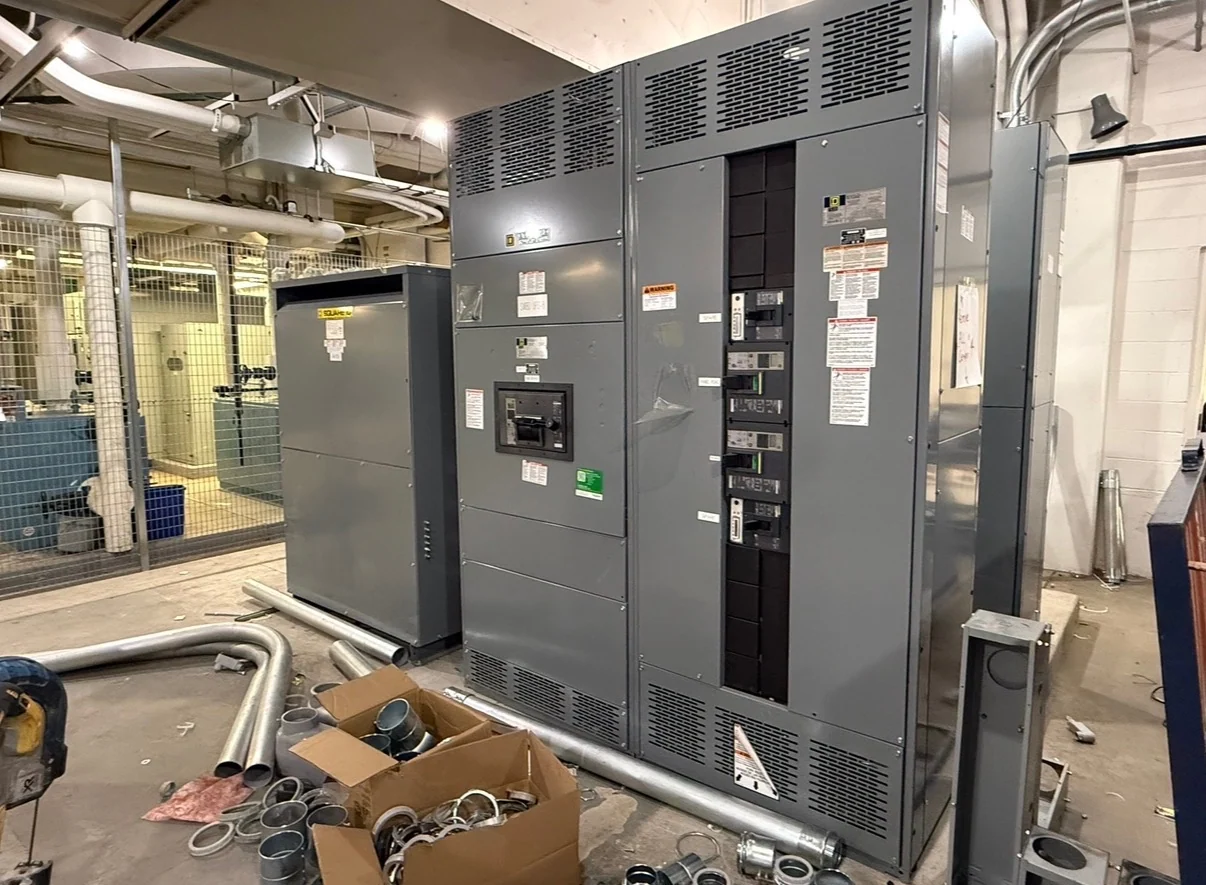
Start With the Distribution System
Switchgear specifications should begin with the electrical system, not with a preferred enclosure or device name. Document the nominal voltage, phase arrangement, frequency, grounding method, source configuration, calculated demand, continuous load, and anticipated growth. Identify whether the assembly serves a service entrance, feeder, transformer, generator, motor load, or several functions. A one-line diagram, load schedule, site conditions, and installation location give a manufacturer the context needed to develop a workable new lineup. Switchgear Builders manufactures custom electrical switchgear in the United States, using American components and supplying projects through nationwide shipping; the final design remains dependent on the project documents and engineering review.
Match Current and Voltage Ratings
Continuous-current ratings apply to more than the main device. Review the bus, mains, feeders, neutral arrangement, connectors, and any devices that could limit the assembly. Compare calculated load with the specified rating while considering duty cycles, diversity assumptions, future circuits, ambient conditions, and conductor termination requirements. Voltage class must also match the actual system and insulation needs; nominal system voltage alone may not describe every equipment requirement. A custom switchgear quote should state the intended ratings for each section, identify assumptions, and distinguish required capacity from optional future provisions instead of treating a single ampere value as a complete specification.
Define Fault Duty and Protection
Available fault current is a central switchgear design input because it affects protective-device interrupting ratings, bus bracing, enclosure construction, and coordination decisions. Provide the utility or source fault information, transformer impedance data, generator contribution where applicable, system grounding details, and the point at which the assembly will be installed. Engineers should review time-current characteristics and protection settings across mains, ties, and feeders so that the selected devices support the intended operating sequence. Short-circuit current ratings and interrupting ratings are related but not interchangeable; the project specification should identify which rating applies to each component and assembly.
Account for Environment and Physical Interfaces
An accurate specification includes the place where the equipment will be installed. Identify indoor or outdoor exposure, enclosure requirements, altitude when relevant, ambient temperature, moisture, dust, corrosive conditions, seismic or anchorage criteria, and access limitations. Provide room dimensions, working clearances, cable entry direction, conduit locations, floor loading information when available, shipping splits, lifting constraints, and the route from receiving to the electrical room. These details influence section dimensions, doors, ventilation, finish, and service access. Confirm field interfaces with the electrical engineer, installer, utility, and qualified rigging parties before drawings are finalized, because a sound electrical rating can still fail if the lineup cannot be installed or connected as planned.
Build a Quote Package That Can Be Reviewed
A useful request for switchgear pricing should include the one-line diagram, equipment schedule, specifications, fault-study inputs, control schematics, metering requirements, communication needs, preferred device functions, enclosure conditions, shipping destination, and requested documentation. State whether the project calls for fixed or drawout arrangements, main-tie-main operation, source interlocking, bypass functions, or other features only when the design team has defined them. Also identify the required approval sequence, drawing format, test records, nameplate data, spare spaces, cable termination details, and responsibility for field installation or commissioning. Clear inclusions and exclusions make competing proposals easier to compare without assuming that an unlisted feature is included. Switchgear Builders can manufacture new custom equipment to the supplied requirements and ship nationwide in the United States, but component selection, drawings, testing scope, applicable standards, and any UL 891 applicability or project-specific listing must be confirmed for the individual project.