Start with the Facility's Electrical Mission
Switchgear selection begins with what a facility must keep energized, how power enters the site, and how loads change during normal operation. A manufacturing plant may prioritize motor starting and process continuity; a hospital may separate essential electrical systems; a data center may organize redundant power paths; a commercial building may need flexible tenant distribution. These are planning distinctions, not automatic equipment specifications. A useful project definition identifies sources, nominal voltage, phase and wire arrangement, continuous current, available fault current, grounding method, environmental exposure, and the operating sequence expected for mains, ties, generators, or other sources.
Match Equipment to Load Behavior
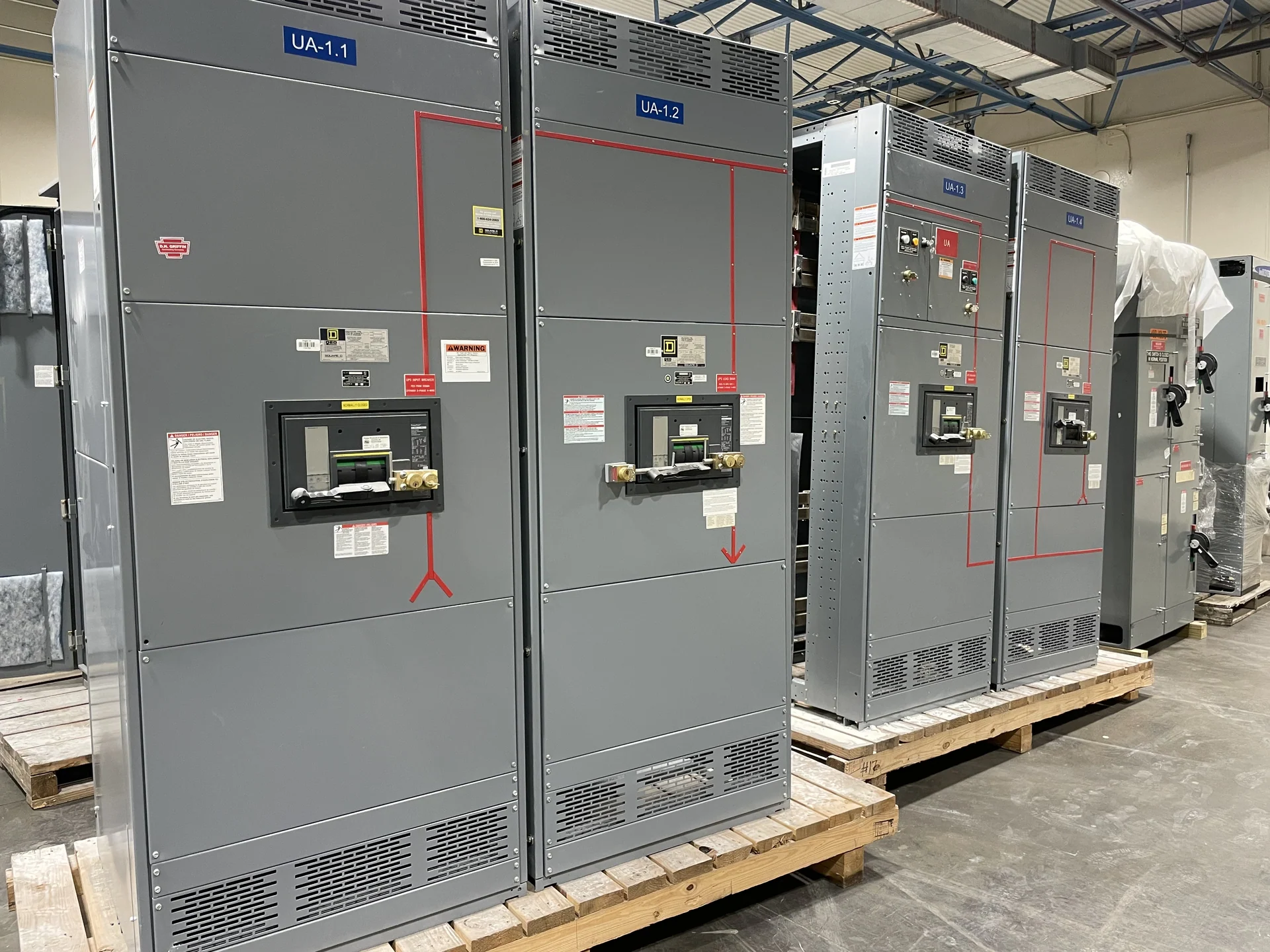
The same enclosure concept cannot be selected responsibly for every industry because connected loads impose different electrical and mechanical demands. Motors can create starting current and may require coordinated starters, drives, or feeder protection. Electronic loads can make power quality, neutral loading, and monitoring questions more important. Pumps, compressors, process heaters, laboratory equipment, and building services each affect feeder grouping and future capacity differently. During design review, list major load categories, starting methods, diversity assumptions, expansion allowances, and shutdown consequences. That information helps Switchgear Builders develop new custom switchgear to the project's one-line diagram and installation interfaces rather than forcing a generic lineup.
Plan Reliability Around Operations
Reliability is an operating objective that must be translated into a defined distribution arrangement. Some facilities need source separation, a bus tie, selective transfer, or generator interfaces; others need straightforward feeder protection and maintainable access. The design team should document which loads are critical, whether interruption is acceptable during transfer, who may operate switching devices, and what interlocks or control signals are required. Maintenance access, spare space, cable entry, lifting routes, room clearances, and outage boundaries also matter. A manufacturer quote should identify these requirements explicitly, because a lineup that fits electrically may still conflict with the room, sequence, or maintenance plan.
Account for the Installation Environment
Industry and site conditions influence enclosure decisions, layout, materials, and documentation. Indoor electrical rooms call for careful attention to access, ventilation, working space, cable routing, and equipment movement. Outdoor or process locations may introduce weather, dust, moisture, corrosion, temperature, washdown, or area-classification questions that require project-specific engineering. Utilities, airports, campuses, water facilities, and industrial plants can also impose owner standards or service-interface rules. Provide the intended location, elevation if relevant to the engineering basis, environmental conditions, foundation or housekeeping-pad details, and installer constraints so the manufacturer can identify open design questions before fabrication.
Coordinate Protection and Documentation
A complete industry application review connects equipment ratings with the broader electrical study and construction package. Engineers should coordinate breaker or switch duties, bus continuous current, short-circuit withstand or current rating as applicable, grounding and bonding, metering, protective settings, and time-current relationships across upstream and downstream devices. The submittal package may need a one-line diagram, elevations, plan views, wiring diagrams, device schedules, terminal information, bills of material, and project-defined test records. Switchgear Builders can manufacture new equipment custom to the supplied requirements, using American components and coordinating documentation for review; each project's applicable standards and any UL 891 requirement must be confirmed specifically.
Prepare a Practical Manufacturer Inquiry
When requesting a quote for industrial power distribution or another electrical distribution application, send the latest one-line diagram, load schedule, equipment schedule, fault-current information, dimensions, connection details, control narrative, metering requirements, environmental data, and destination. Note whether the request covers a complete lineup or defined sections, and identify owner, utility, engineer, and installer review points. Ask for assumptions, exclusions, required approvals, shipping splits, lifting provisions, and the documents included with the new equipment. Switchgear Builders manufactures and supplies custom switchgear in the United States and ships nationwide; project-specific scope, component details, and delivery expectations should be confirmed in the quotation.