Plan the Project Around Its Actual U.S. Site
Planning switchgear for a particular state begins with the electrical duties, installation conditions, and delivery requirements of the individual project. Start with the installation address, owner requirements, utility interface, electrical room conditions, and the responsibilities of the engineer and installer. A location affects more than freight: it can influence environmental exposure, seismic design questions, utility metering practices, access for delivery, and the authority having jurisdiction’s review process. Switchgear Builders manufactures new electrical switchgear in the United States, builds custom equipment to specification, uses American components, and supplies projects with nationwide shipping. The final design still requires project-specific engineering review.
State Requirements Belong in the Specification
A state-level inquiry should identify the governing electrical requirements, utility rules, adopted codes, and site conditions that apply to the particular installation. Those items may differ between a municipal building, manufacturing plant, campus, utility facility, and renewable-energy interconnection, even when they share the same state. Include nominal voltage, phase, frequency, grounding method, continuous current, available fault current, short-circuit duty, enclosure environment, feeder count, and protective-device preferences. Ask the project engineer to identify which requirements are mandatory and which are owner standards. This prevents a broad search for switchgear by state from substituting for a coordinated equipment specification.
City Planning Starts With Delivery and Installation Interfaces
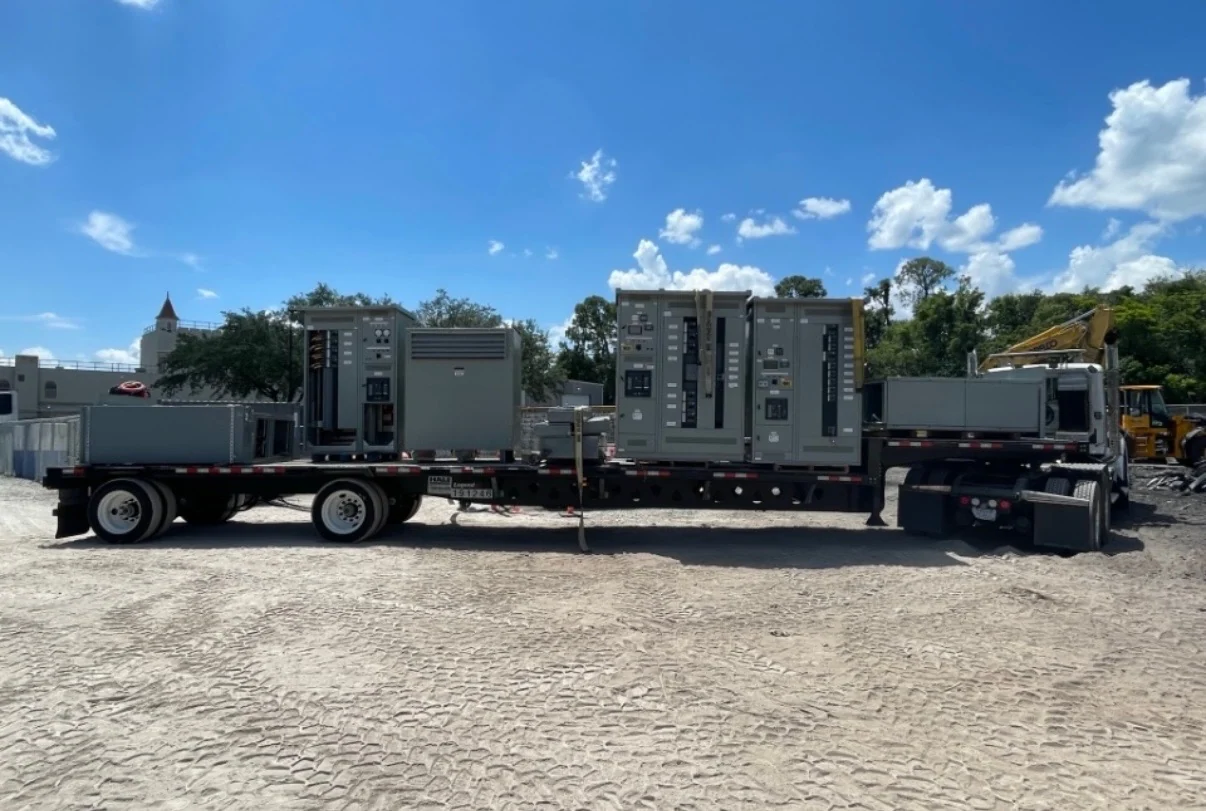
Switchgear by city should be evaluated through the site’s physical and logistical constraints rather than an assumption about nearby service. Before requesting a quote, document the delivery address, receiving hours, dock or curb conditions, doorway dimensions, turning space, floor loading, lifting path, equipment-room access, and whether the lineup must arrive in shipping sections. Coordinate these details with the electrical contractor and qualified rigging resources. A metropolitan project may have restricted access or staged construction, while a remote site may need additional receiving coordination. Nationwide shipping can support the U.S. project, but packaging, freight terms, transit estimates, and site responsibilities must be confirmed for the order.
Match the Equipment Package to the Distribution System
The right new switchgear package depends on the distribution arrangement at the destination, not simply its city or state. Provide the latest one-line diagram, load schedule, transformer information, source characteristics, feeder destinations, control voltage, metering needs, and operating sequence. For a main-tie-main concept, describe normal and alternate source behavior, interlocking intent, and whether the tie is manually or automatically operated. For generator, solar, or battery interfaces, identify the source controls and protection responsibilities early. Separate switchgear requirements from switchboard, panelboard, transfer-equipment, or motor-control needs so each assembly is specified for its actual role.
Coordinate Reviews, Documentation, and Project Decisions
A useful location-based quote request gives the manufacturer enough information to expose decisions before fabrication. Send drawings, dimensions, ratings, device schedules, control schematics, preferred component families, cable-entry direction, finish or enclosure expectations, and required submittal documents when available. Identify who approves drawings, who witnesses or reviews testing, and which records belong in the closeout package. If the project may involve UL 891, treat applicability, construction requirements, and any listing or verification as matters to confirm for that specific assembly; do not assume the standard applies to every switchgear project. Clear review ownership helps the project team resolve drawing comments and reduce redesign risk.
Request Nationwide Supply With Complete Site Information
When contacting Switchgear Builders for a U.S. electrical distribution project, state the location and explain what the site requires instead of relying on a generic local search result. Include the equipment type, electrical ratings, lineup dimensions, source and feeder arrangement, environmental conditions, documentation expectations, destination access, and desired commercial follow-up. The manufacturer can then evaluate a custom build and identify questions that need engineering or installer input. Confirm manufacturing details, component-origin information, shipping scope, freight terms, and any project-specific availability directly. This approach gives customers a defined technical basis for buying new switchgear directly from the manufacturer and planning delivery to the project site.