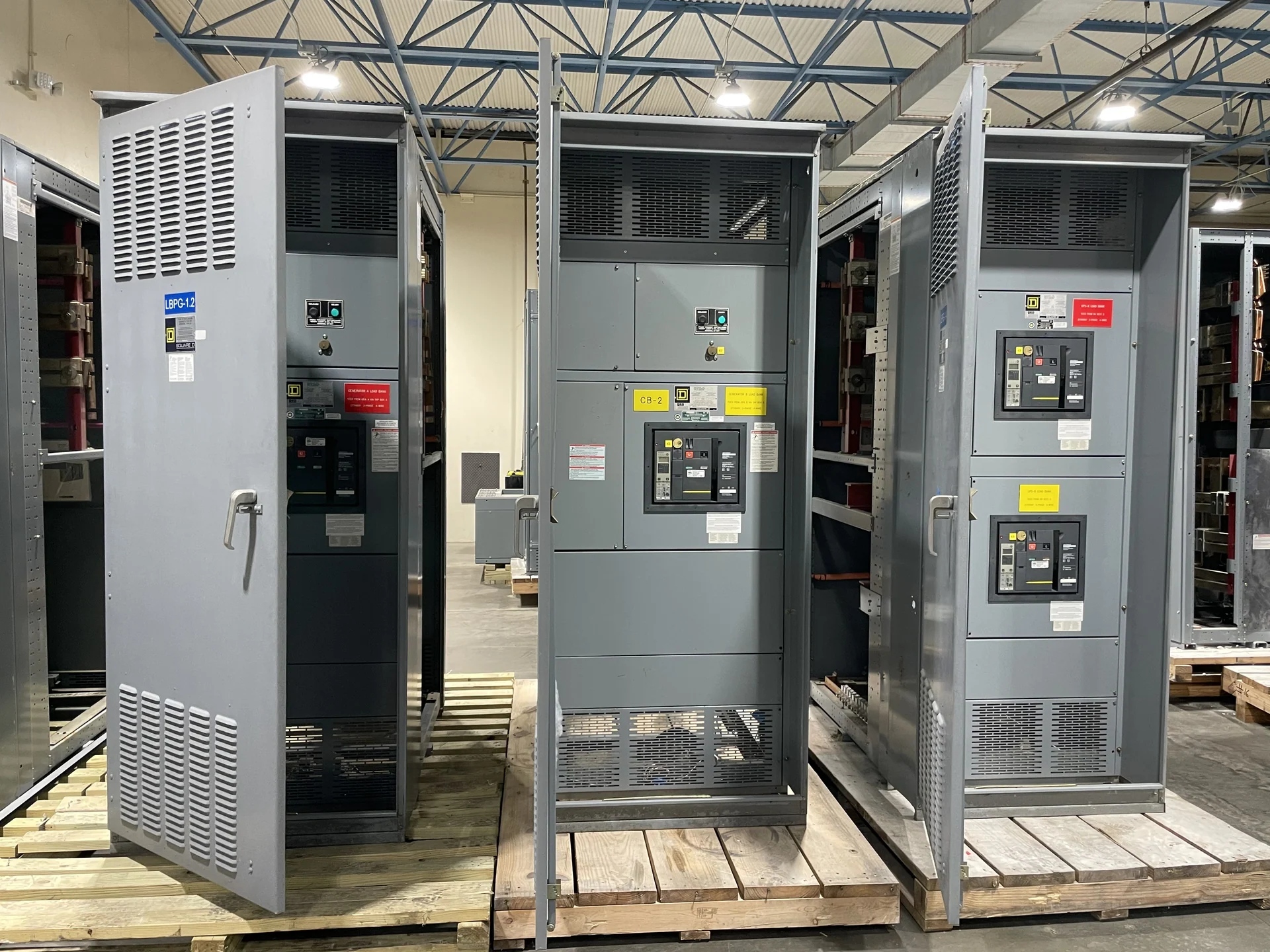
Start With the Distribution System
When you buy electrical switchgear, begin with the system it must control and protect rather than with a cabinet name. Gather the one-line diagram, nominal voltage, phase and wire arrangement, grounding method, continuous load, available fault current, and source information. Also identify whether the equipment serves a service entrance, feeder, generator, transformer, or another defined interface. These inputs let an electrical engineer and the manufacturer distinguish switchgear from other distribution assemblies and develop a custom scope instead of guessing at a catalog configuration. Switchgear Builders manufactures new electrical switchgear in the United States, custom to specification, using American components and offering nationwide shipping for coordinated project delivery.
Define the Equipment Type and Ratings
Equipment type should follow the operating duty and installation conditions. A buyer may need a low-voltage lineup with mains and feeders, a medium-voltage arrangement for incoming distribution, or a coordinated assembly serving a transformer or generator interface. Specify nominal system voltage separately from equipment voltage class, then document continuous current, interrupting or short-circuit requirements, bus material, protective-device families, and any required metering. Include indoor or outdoor placement, enclosure conditions, cable entry, access, dimensions, and working-clearance constraints. The manufacturer can review these requirements with the project engineer and identify questions before a quote is finalized; no rating should be inferred from the phrase buy new switchgear alone.
Prepare a Useful Manufacturer Quote Request
A precise quote request makes comparison easier and reduces assumptions. Send the latest one-line diagram, equipment schedule, load data, fault-study information when available, control schematic or sequence, preferred device details, room or pad dimensions, and site location. State whether drawings, submittal documents, wiring diagrams, test records, freight coordination, or field installation interfaces belong in the requested scope. Identify required ship-to access, unloading responsibilities, and any split-lineup or lifting constraints. Ask the electrical switchgear manufacturer to list inclusions, exclusions, design assumptions, approval points, and project-specific requirements clearly, so the purchasing team can evaluate scope rather than compare unlike prices.
Coordinate Protection and Controls
Buying the enclosure is only part of buying a workable distribution system. Protective devices must be selected and reviewed against available fault current, conductor limits, transformer characteristics, downstream devices, and the intended operating sequence. A coordination study may establish settings and time-current relationships, while an arc-flash study may influence device settings, labels, or operating procedures; those studies remain project engineering responsibilities. Define main-tie-main logic, source interlocks, shunt or undervoltage functions, metering, alarm contacts, communications, and control power explicitly where applicable. Request a drawing review before fabrication so device locations, terminal points, and interfaces match the installer’s plan.
Review Construction and Documentation
Before placing an order, review the proposed arrangement for service access, cable bending space, bus transitions, grounding and bonding points, ventilation, lifting provisions, and movement through the receiving route. Confirm what American components are included and what technical data will accompany the new assembly. If a specification references UL 891, treat applicability and any listing or project capability as items to confirm for that specific design; do not assume the reference applies to every switchgear type. Agree on drawing approval, inspection points, electrical checks, functional testing, record formats, and revision control before the manufacturer begins fabrication.
Plan Shipping and Project Handover
Nationwide shipping requires practical coordination between the manufacturer, purchaser, carrier, site representative, and qualified rigging personnel. Confirm the destination, receiving hours, dock or gate limitations, equipment sections, estimated weights, lifting points, packaging expectations, freight terms, and who will inspect the shipment. At receipt, compare sections and documentation with the approved scope, photograph visible shipping damage, and preserve records for the project team. Installation, energization, and field acceptance should follow the engineer’s documents, applicable site requirements, and qualified electrical practices. Buying direct from Switchgear Builders keeps the technical conversation centered on a new custom assembly, its interfaces, and the information needed to deliver it correctly.