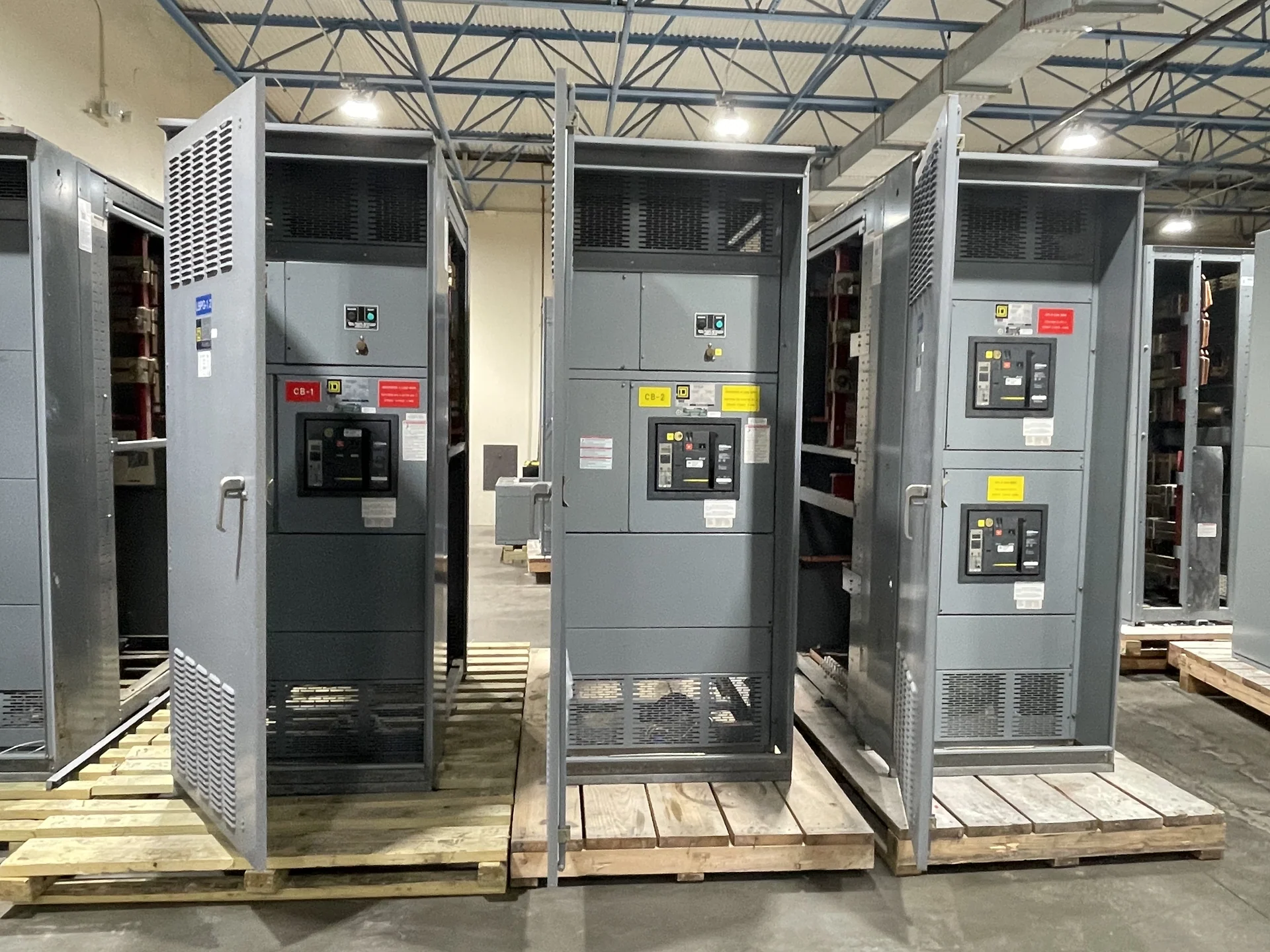
Start with the Tucson project electrical scope
A Tucson electrical distribution project should begin with a clear equipment specification rather than a generic request for switchgear. Identify whether the assembly serves a commercial building, industrial process, campus, or another facility; describe the incoming service, nominal voltage, phase and wire arrangement, grounding method, main device, feeder count, and expected load profile. Include the one-line diagram, site address, utility information, available fault current, room dimensions, cable-entry direction, and installation constraints. These inputs allow an American manufacturer to evaluate a new custom assembly built to the project's actual interfaces, with American components and nationwide shipping coordinated around the specified destination.
Coordinate service entrance and utility metering
Service-entrance switchboards in Tucson need a deliberate review of the utility interface before fabrication begins. The design team should confirm the service point, utility metering arrangement, meter compartment dimensions, sealing or access expectations, service disconnect configuration, and responsibility for CTs, meter sockets, instrument transformers, or related components. Utility requirements can vary by project and may change how the lineup is divided, where conductors terminate, and which drawings require review. A manufacturer can use the approved electrical information to develop a new switchboard package, while the engineer and utility retain responsibility for confirming the applicable service requirements.
Define mains, feeders, and available fault current
Feeder planning should connect calculated loads to the physical and electrical arrangement of the new switchboard. List each feeder destination, conductor size and entry path when known, protective device type, continuous-load assumptions, future-space needs, and any selective-coordination objectives. The available fault current at the equipment location is equally important because it informs the specified short-circuit duty of the assembly and the interrupting ratings of individual protective devices. These values must come from the project's qualified electrical analysis and be checked against the final design for the Tucson installation.
Plan the Tucson installation interface
A technically suitable lineup can still create field problems if its installation interfaces are left vague. Document the electrical room footprint, working clearances, door and panel swing, housekeeping pad or anchorage concept, overhead and side access, ventilation conditions, conduit or busway routes, shipping splits, lifting provisions, and the path from receiving to the final room. Tucson site conditions should be reviewed by the project team for heat, dust, moisture exposure, and other environmental factors that affect enclosure selection and placement. The manufacturer can then align enclosure details, section dimensions, labels, and shipping information with the approved construction plan.
Review drawings, controls, and documentation
Before a Tucson order is released, request a coordinated document set that matches the scope being purchased. Useful items may include a one-line diagram, elevation, plan view, device schedule, feeder schedule, control schematic, terminal plan, nameplate information, component data, and installation or maintenance notes. If the design includes a main-tie-main arrangement, shunt trip, undervoltage release, metering, alarm contacts, or remote indication, state the operating sequence in plain language and identify the responsible control power source. Any project-specific standard, inspection requirement, or UL 891 applicability should be reviewed and confirmed for that project rather than assumed from the equipment category.
Request a manufacturer-built switchboard quote
For a useful quote, send the manufacturer a concise package containing the project location in Tucson, delivery contact, requested equipment type, electrical ratings, service and feeder schedule, utility notes, dimensions, environmental conditions, drawings, testing expectations, documentation requirements, and desired commercial terms. Ask the quote to identify inclusions, exclusions, assumptions, shipping scope, and any decisions still needed before fabrication. Switchgear Builders manufactures new electrical switchgear in the United States, builds custom to specification, uses American components, and supplies equipment for nationwide shipment. Final scope, configuration, availability, and delivery estimates remain specific to the reviewed project.