Start with Colorado Service Conditions
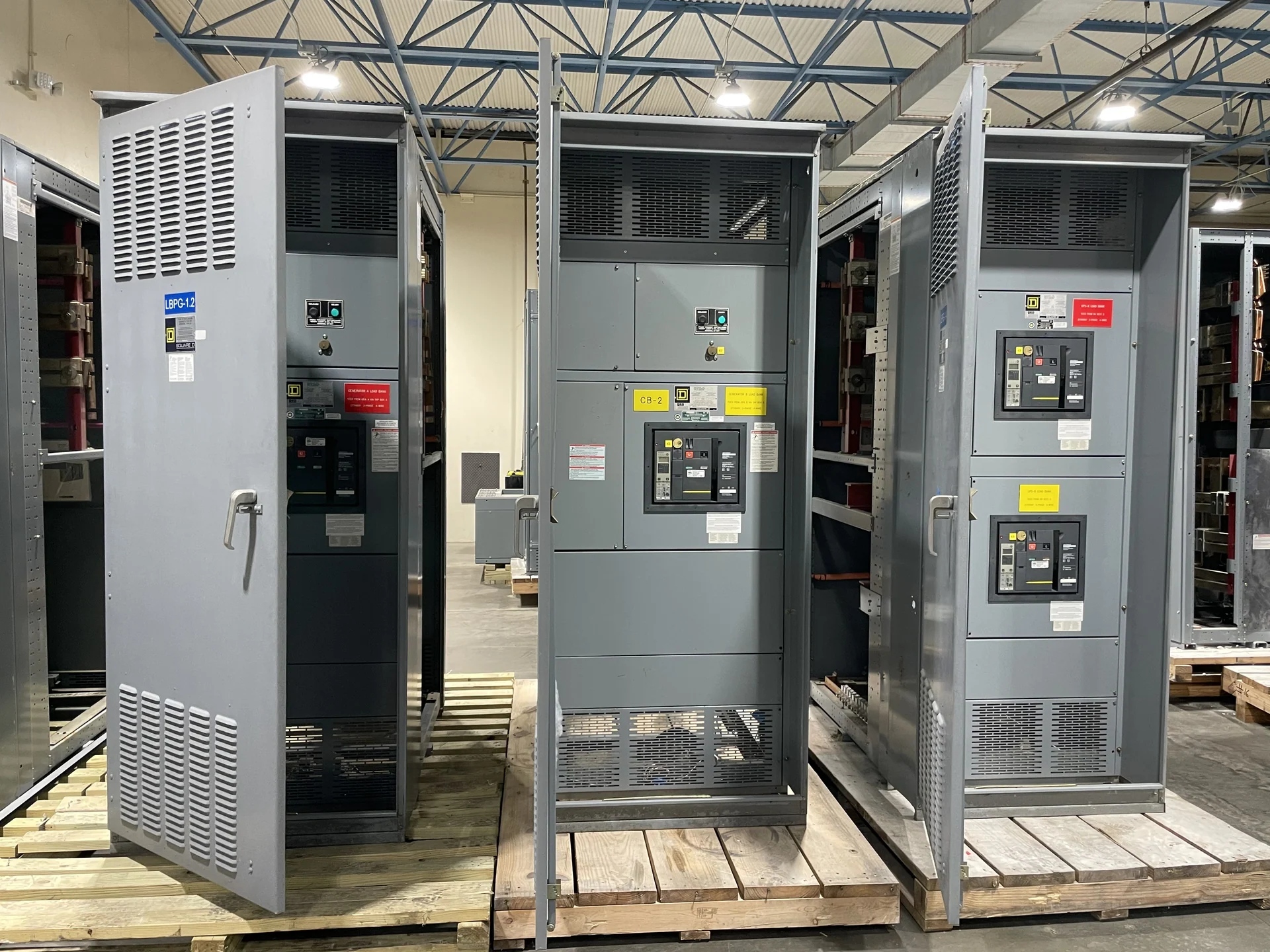
Planning Colorado switchgear for a commercial or industrial project begins with the service information, not a preferred enclosure or breaker arrangement. Identify the utility source, nominal voltage, phase and wire configuration, grounding method, service size, available fault current, and whether the installation is new construction, an expansion, or a replacement. Altitude, temperature, weather exposure, and the electrical-room environment can affect equipment selection and installation details, so the design team should document those conditions before requesting a manufacturer quotation. Switchgear Builders manufactures, builds, and supplies new electrical switchgear in the United States, custom to project specifications, with American components and nationwide shipping.
Define the Service-Entrance Arrangement
A service-entrance switchboard must coordinate the incoming utility connection with main disconnecting means, feeder circuits, metering provisions, and downstream distribution. For a Colorado commercial building, the lineup might need space for a main breaker, several feeder breakers, and future circuit capacity; an industrial facility may instead require larger feeders, motor-load coordination, or a source arrangement established by the engineer. Provide the one-line diagram, equipment schedule, utility requirements, conductor entry direction, and desired lineup dimensions. Confirm who supplies metering sections, current transformers, auxiliary devices, and field-installed connections, because those boundaries influence both drawings and installation work.
Coordinate Utility Metering and Disconnects
Utility metering is a project interface that deserves early review rather than an assumption about a standard layout. Ask the serving utility and engineer to identify meter compartment requirements, instrument-transformer provisions, sealing or access expectations, service disconnect configuration, labeling, and the location of the utility-side and customer-side terminations. The equipment specification should distinguish utility-furnished items from manufacturer-furnished items and show how metering wiring reaches the intended terminals. A clear responsibility matrix helps prevent a physically complete switchboard from lacking a required interface when it reaches the Colorado job site.
Check Fault Duty, Feeder Protection, and Grounding
Available fault current is a central selection input for service-entrance equipment. The design record should state the calculated value at the service, the protective-device interrupting ratings, the assembly short-circuit rating or withstand requirement that applies, and the assumptions used for transformer and utility data. Review feeder protection, selective coordination objectives, grounding and bonding connections, and any arc-flash study inputs with the responsible electrical engineer. Do not select a main or feeder device from amperage alone: continuous load, conductor ampacity, motor starting, source characteristics, and the complete time-current relationship can change the appropriate configuration.
Design for Colorado Installation Conditions
Physical planning matters as much as the electrical schedule. Confirm indoor or outdoor placement, enclosure environment, working clearances, ventilation, roof or wall penetrations, cable-bending space, housekeeping pads, anchorage, lifting points, shipping splits, and the route from unloading to the final room. Colorado projects may involve different elevations, climate exposures, and site access conditions, but the equipment should be designed from documented project data rather than a geographic assumption. Include room drawings, door and corridor dimensions, floor loading information when relevant, and the installer’s preferred cable-entry method so the manufacturer can coordinate a buildable lineup.
Prepare a Manufacturer Quote Package
A useful request for a new Colorado switchgear quote combines technical, physical, commercial, and delivery information in one package. Send the latest one-line diagram, load summary, fault-current study, protection requirements, utility correspondence, metering details, floor plan, elevations, control schematics, preferred components, documentation list, destination, and requested shipping split. Identify whether the project needs submittal drawings, wiring diagrams, bills of material, test records, or witness arrangements, and state which engineer or authority will review each item. Switchgear Builders can evaluate the defined scope for a custom build and coordinate nationwide shipment; project-specific availability, delivery estimates, and any applicable standard or listing requirement must be confirmed during quotation and engineering review.