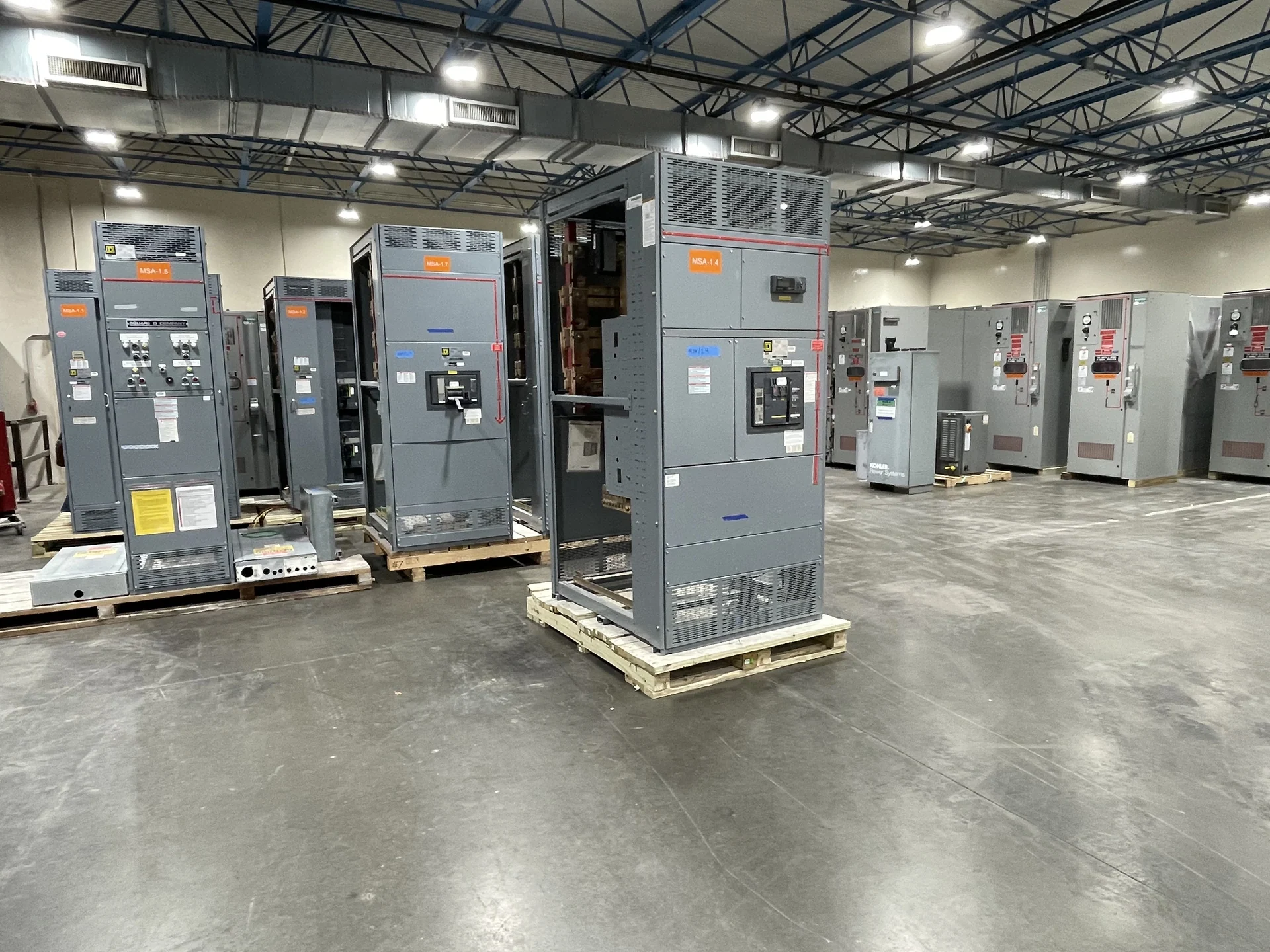
Denver Commercial Distribution Starts with a Defined Scope
A Denver commercial electrical distribution project should begin with a clear description of the building, service arrangement, major loads, and planned expansion. Low-voltage switchgear for commercial building distribution may serve a main service, feeders, tenant areas, mechanical systems, or a combination of these functions. The one-line diagram, electrical specifications, utility information, and available fault-current data provide the starting point for equipment selection. Switchgear Builders manufactures new electrical switchgear in the United States, custom to project requirements, using American components and offering nationwide shipping. A useful inquiry identifies the intended application rather than relying on a generic catalog description or an assumed standard lineup.
Service Ratings and Available Fault Current
Service rating is more than a single ampere number. The design team should reconcile calculated demand, continuous loads, conductor capacity, main-device selection, bus rating, service voltage, phase and wire arrangement, grounding method, and expected future capacity. Available fault current at the equipment location must also be established so protective-device interrupting ratings and the assembly short-circuit requirement can be evaluated together. For a Denver electrical distribution project, the utility service point and transformer arrangement can affect these inputs. The manufacturer can use the approved one-line diagram and study information to develop a custom equipment package, while the engineer of record confirms the final design and applicable requirements.
Feeder Protection and Coordination
Feeder protection should be reviewed as part of the distribution system, not selected in isolation. Each feeder schedule should identify load type, conductor information, protective-device rating, trip or fuse requirements where applicable, and the downstream equipment it supplies. Time-current coordination and arc-flash study inputs may influence device choices and settings, but those decisions belong to the qualified project team. A commercial lineup might separate tenant feeders from mechanical loads or reserve space for planned circuits; whether that arrangement is appropriate depends on the drawings and operating goals. Clear device identification, control wiring, metering provisions, and interlocking expectations help turn the protection concept into buildable equipment.
Equipment Room Space and Installation Interfaces
Physical planning is essential when specifying switchgear for a commercial building in Denver. Provide the available room dimensions, equipment orientation, wall and door conditions, cable-entry direction, working clearances, ventilation constraints, housekeeping pad or floor details, and the path from receiving to the electrical room. The lineup must also be considered alongside other equipment, structural elements, and maintenance access. Shipping sections, lifting points, shipping dimensions, and field-connection locations should be coordinated before fabrication. A custom manufacturer can review these interfaces against the submitted layout, but site measurements and installation requirements must come from the project team and qualified installers.
Planning for Loads That May Change
Future loads deserve explicit treatment instead of an informal request for extra capacity. Identify likely tenant changes, electrification plans, additional mechanical equipment, electric-vehicle infrastructure, or building expansion as planning assumptions, then decide whether the design needs spare feeder positions, reserved bus capacity, larger service equipment, or a defined replacement strategy. Extra space and capacity can affect enclosure dimensions, cost, fault-duty analysis, and coordination settings, so each allowance should be documented. Switchgear Builders can build new equipment to the project specification, while the owner, engineer, and contractor determine which future provisions are justified for the Denver site.
Requesting a Project-Specific Manufacturer Quote
To request a useful quote for Denver Colorado switchgear, send the equipment schedule, one-line diagram, specifications, service and feeder ratings, fault-current information, enclosure environment, dimensions, control requirements, metering needs, documentation expectations, destination, and desired shipping arrangement. Note whether the project requires review of UL 891 applicability or another project-defined standard; applicability and any listing or capability must be confirmed for the specific assembly rather than assumed. Switchgear Builders supplies new custom electrical switchgear from the manufacturer with American components and nationwide shipping. The quote should identify scope, exclusions, drawings, testing expectations, freight terms, and approval steps so the project team can compare proposals accurately.