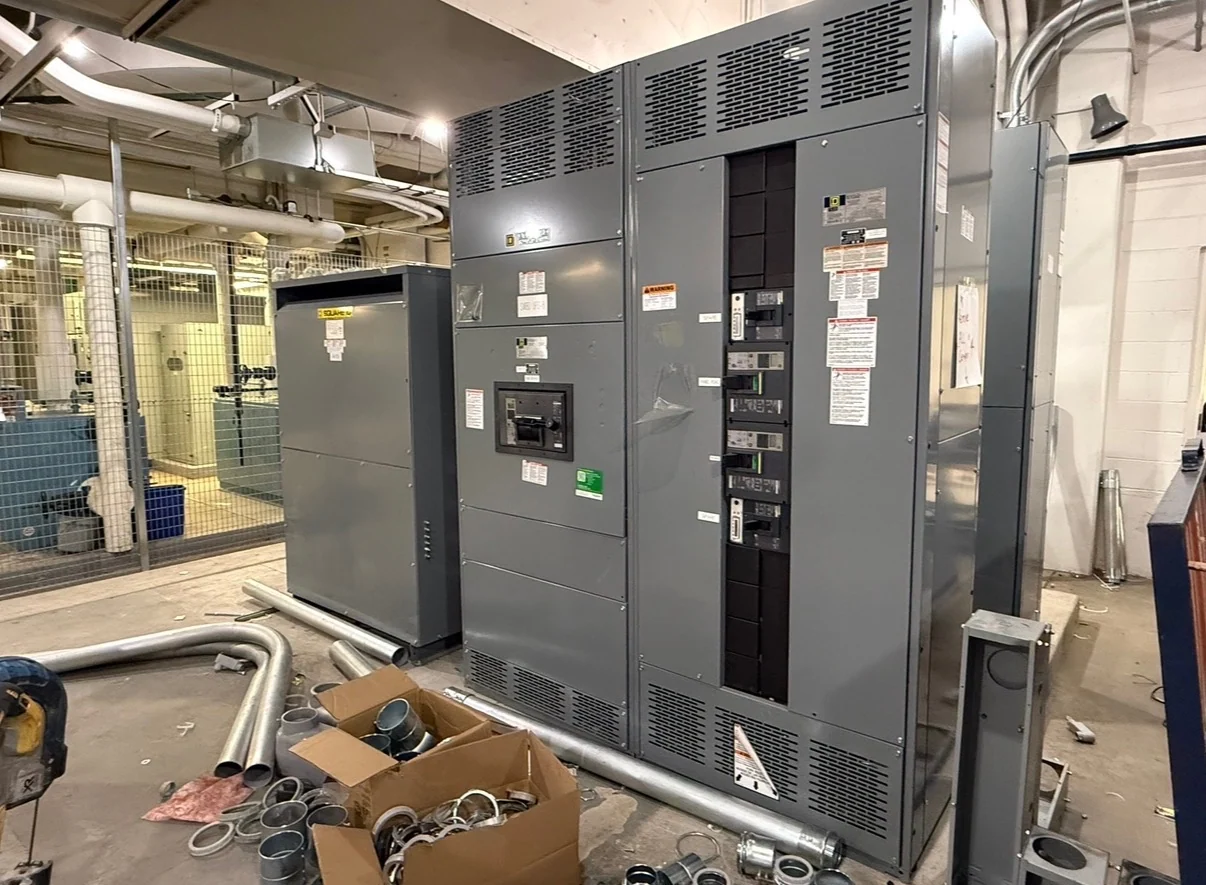
Start with the Commercial Building Distribution Plan
A Fort Wayne commercial-building project needs low-voltage switchgear selected around the electrical system, not around a generic catalog description. Begin with the one-line diagram, service arrangement, nominal voltage, phase and wire configuration, frequency, grounding method, calculated loads, and available fault current. Identify whether the lineup will serve tenant distribution, lighting, mechanical equipment, life-safety-related loads, or a combination. A manufacturer can then review a coherent equipment scope and build new switchgear custom to the approved requirements, using American components and coordinating the equipment package for shipment anywhere in the United States.
Define Service and Feeder Ratings
Service and feeder ratings should reflect calculated continuous loads, demand assumptions, motor characteristics, non-linear loads, and reasonable future capacity rather than an arbitrary ampere number. Specify the main device, feeder devices, bus rating, interrupting ratings, and the assembly short-circuit current rating or withstand requirement as applicable to the design. Compare the calculated available fault current with each protective device rating and document the source of those values. If the building will expand or be divided among tenants, show spare spaces, reserved sections, and connection points explicitly so capacity decisions remain visible during review.
Coordinate Protection and Operating Sequences
Commercial switchgear should fit the protective-device coordination study and the intended operating sequence. Provide time-current information, upstream utility data when available, transformer impedance, downstream equipment ratings, and the engineer's desired selectivity objectives. Main-tie-main or other source arrangements require clear normal, emergency, and maintenance positions, along with interlocking logic and control-power details. Metering, shunt functions, undervoltage features, ground-fault protection, and communications should be listed only when the project requires them. Final settings and interfaces belong in the approved engineering documents, not in assumptions made from the building address.
Fit the Equipment Room and Installation Path
Before requesting a quote, measure the electrical room and the route from receiving to the final installation position. Record wall locations, door openings, turning limitations, floor elevations, housekeeping pads, cable entry direction, working space, maintenance access, ventilation needs, and any structural limits. The lineup may need shipping sections or a defined split arrangement, with lifting points and weights coordinated with the qualified rigging plan. For a Fort Wayne project, local construction documents and the authority having jurisdiction should establish site requirements; the manufacturer should receive those requirements rather than infer them from location alone.
Prepare a Precise New Switchgear Quote Request
A useful quote request should include the latest one-line diagram, equipment schedules, floor plan, elevation or room drawing, load summary, fault-current information, sequence of operation, device schedule, metering requirements, control schematics, environmental conditions, and requested documentation. State whether the equipment is indoor or outdoor, the enclosure expectations, cable termination arrangement, finish requirements, and any project-specific testing or witness provisions. Ask the manufacturer to identify assumptions, exclusions, drawing-review milestones, shipping terms, and component-origin information. This creates a comparable basis for purchasing new low-voltage switchgear directly from the builder instead of comparing mismatched scopes.
Coordinate Delivery and Project Review
Switchgear delivery is part of the installation plan, so provide the Fort Wayne destination, receiving hours, site contact, unloading capability, access restrictions, and whether the shipment must be divided. Nationwide shipping can be coordinated around the approved configuration, packaging, freight responsibilities, and project schedule, but transit estimates and availability must be confirmed for the specific order. Review submittal drawings before fabrication, resolve redlines through the designated engineering channel, and agree on inspection and electrical test records. If UL 891 applies to the project, confirm its applicability, required construction, and any listing or documentation expectations for the particular assembly rather than assuming a blanket status.