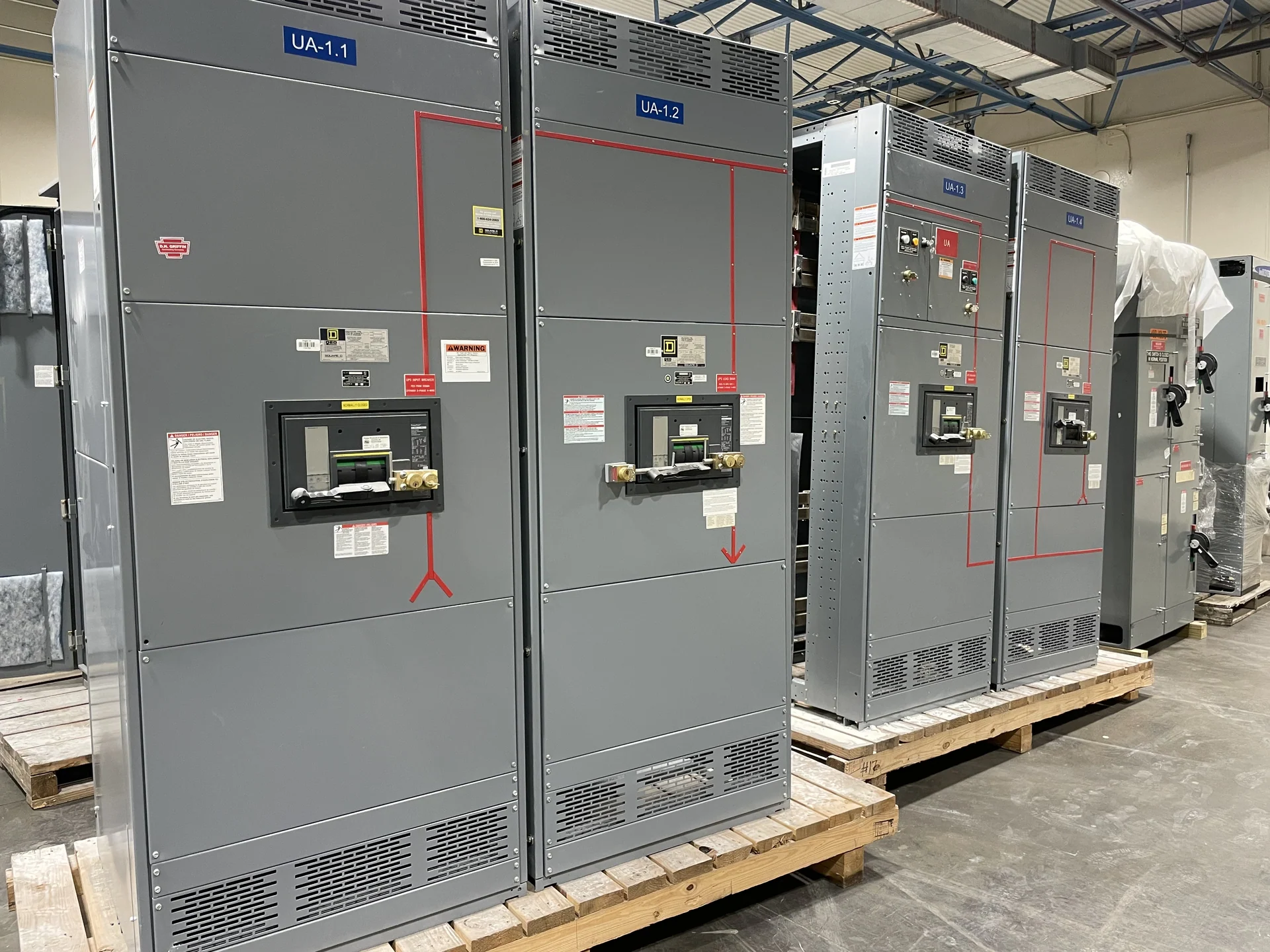
Start With the Healthcare Electrical Mission
A healthcare electrical project in Eugene, Oregon begins with the facility’s essential electrical systems, not with a generic switchgear catalog. The design team should identify which clinical, life-safety, communications, environmental, and support loads require alternate-source power, how those loads are grouped, and which operations may be shed during a source limitation. A one-line diagram, load schedule, grounding method, nominal voltage, phase arrangement, available fault current, and expansion allowance give a manufacturer the context needed to develop new distribution and transfer equipment custom to the project. Switchgear Builders manufactures, builds, and supplies new electrical switchgear in the United States with American components and nationwide shipping, subject to the project’s technical definition and review requirements.
Separate Essential Loads by Operating Consequence
Healthcare backup power planning becomes clearer when essential loads are divided by consequence and operating sequence rather than placed on one undifferentiated emergency bus. Patient-care areas, fire protection, evacuation support, medical systems, critical ventilation, refrigeration, information technology, and building services can have different restoration priorities and starting characteristics. The engineer should document normal source connections, alternate source connections, transfer timing expectations, selective coordination objectives, and any loads that must remain isolated. A custom lineup may need distinct mains, feeders, bus sections, metering, control wiring, or interlocks, but each choice depends on the approved electrical design, equipment ratings, and the authority having jurisdiction for the particular site.
Define the Transfer Sequence Before Fabrication
Transfer equipment should be specified through an explicit operating narrative. That narrative can describe how loss of the normal source is detected, when an alternate source is accepted, which transfer devices operate, what inhibits a transfer, how retransfer is initiated, and how manual controls interact with automatic logic. Open-transition and other transition strategies create different momentary interruption and coordination questions, while source interlocking helps prevent an impermissible connection between sources. Include generator start contacts, permissives, bypass or maintenance provisions if required, alarm points, remote indications, and test modes in the control review. The manufacturer can then align the new switchgear assembly, terminal points, device arrangement, and documentation with the approved sequence rather than guessing from a product name.
Plan Outages and Installation Interfaces
A Eugene healthcare renovation or expansion needs an outage plan that treats the existing electrical system and the new equipment as connected work packages. Gather existing drawings, field-verified dimensions, cable entry directions, termination space, equipment access routes, lifting constraints, working clearances, and the proposed cutover order. Identify temporary power responsibilities, shutdown approvals, testing boundaries, and the parties responsible for installation, settings, commissioning, and final acceptance. These details affect enclosure dimensions, shipping splits, bus arrangement, control terminations, and the order in which a lineup can be installed. They also reveal conflicts early, before a custom switchgear design is released for fabrication.
Coordinate Ratings, Standards, and Documentation
The equipment specification should reconcile continuous current, interrupting or short-circuit duty, voltage class, insulation requirements where applicable, environmental conditions, enclosure expectations, grounding and bonding, protective-device coordination, and the system’s frequency and phase. Drawings should show the lineup footprint, elevations, one-line arrangement, breaker or switch positions, cable compartments, control circuits, nameplates, and terminal schedules. If a project invokes UL 891, confirm its applicability, construction requirements, and any project-specific listing or verification with the responsible parties; it should not be assumed for every switchgear or switchboard application. Test plans and acceptance criteria should likewise be agreed for the particular assembly, with recorded results included in the project documentation.
Request a Manufacturer-Built Equipment Package
For a practical quote on new switchgear serving a healthcare backup-power project in Eugene, provide the latest one-line diagram, load and fault studies when available, source and generator data, transfer philosophy, protective-device schedule, physical constraints, environmental information, control points, metering needs, documentation list, destination, and required review milestones. Explain whether the scope is new construction, an addition, or replacement within an operating facility, while avoiding assumptions about existing equipment condition or compatibility. Switchgear Builders can review the defined requirements and build custom new electrical switchgear with American components for shipment nationwide. Final configuration, applicable requirements, shipping arrangements, and any project-specific certifications or listings must be confirmed before manufacture and delivery.