Start With the Healthcare Electrical Scope
Essential electrical distribution for healthcare begins with a clear definition of which spaces, systems, and loads require continuity during a source interruption. A hospital or outpatient facility may separate life-safety, critical, equipment, and normal branches, but the actual categories and operating sequence come from the project design, applicable authorities, and facility requirements. Before a manufacturer develops new switchgear, provide the one-line diagram, service characteristics, source information, load schedule, fault-current study inputs, grounding method, environmental conditions, and required interfaces. This information keeps a switchgear application grounded in the electrical design rather than in a generic healthcare template.
Coordinate Transfer Equipment and Sources
Transfer equipment must be evaluated as part of the distribution system, not as an isolated cabinet. The design team should identify normal and alternate sources, allowable interruption, transfer and retransfer sequences, bypass or maintenance provisions, source interlocking, and any synchronization or paralleling functions that apply. Coordination also includes generator controls, upstream protective devices, downstream feeders, automatic transfer switches, and manual operating points. A new custom lineup can be arranged around these interfaces, with control wiring, terminal schedules, metering, and communication points defined before fabrication. Each sequence should be reviewed by the responsible electrical engineer and facility stakeholders before release.
Build the Lineup Around Critical Loads
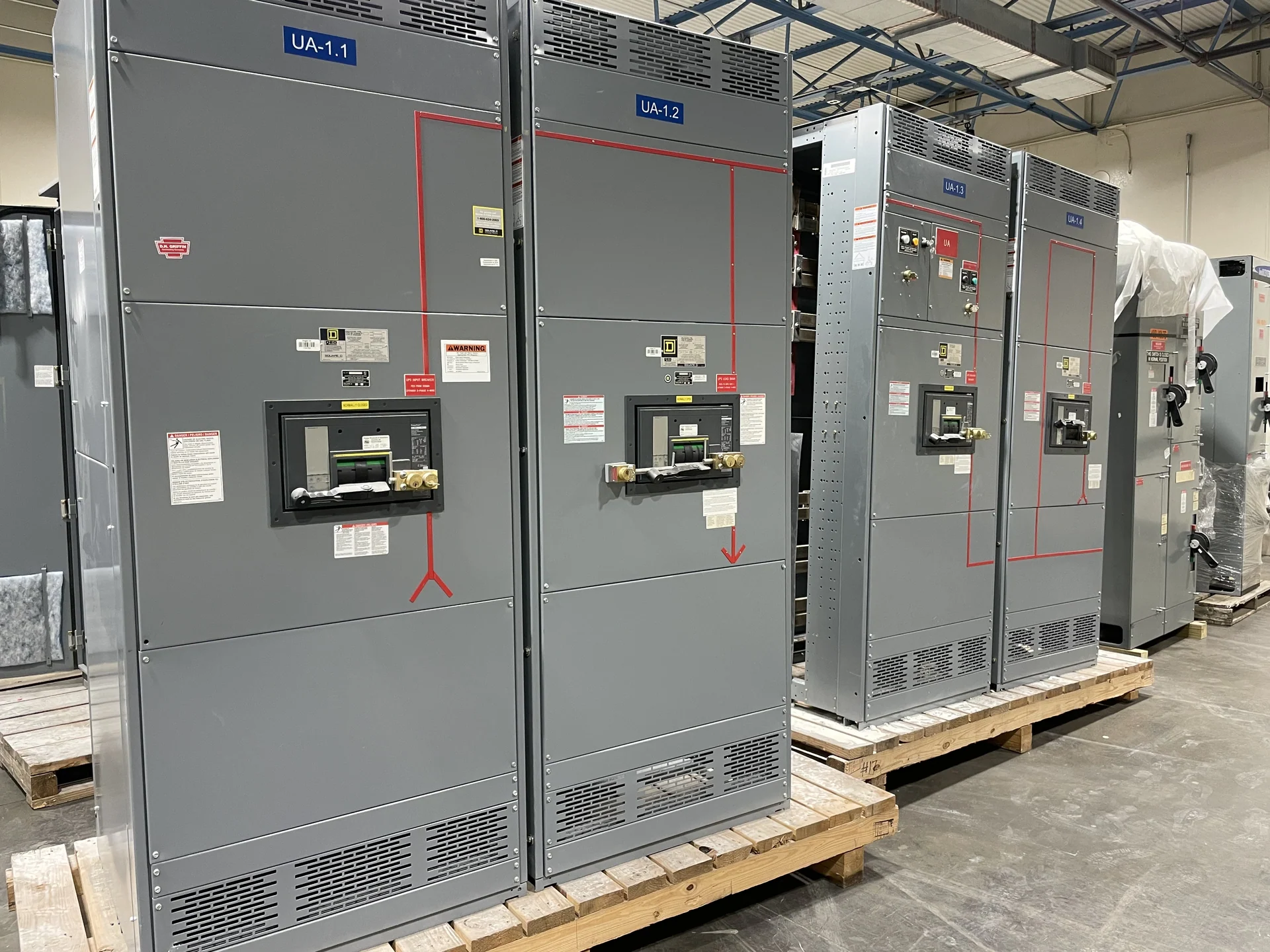
A useful healthcare switchgear layout makes branch separation and maintenance access visible in the physical arrangement. Main devices, ties, feeder breakers, transfer equipment, bypass components, and metering should be assigned space according to the approved one-line diagram and the intended operating sequence. Consider cable entry, bending space, room clearances, door swings, equipment movement, lifting points, ventilation, and access for testing. If the project includes future feeders or phased construction, reserve capacity only when it is shown in the requirements. The manufacturer can build new equipment custom to the specified dimensions and interfaces, using American components where requested and documented for the project.
Review Protection, Grounding, and Fault Duty
Healthcare distribution requires disciplined review of available fault current, interrupting ratings, short-circuit withstand, continuous current, selective coordination objectives, grounding and bonding, and protective settings. These values should come from the project studies and utility or generator data rather than assumptions based on facility type. Pay particular attention to source changes, transformer impedance, generator contribution, feeder lengths, and tie operation because each can alter fault duty and coordination. The equipment specification should identify the responsible party for settings, field studies, and final commissioning. Where a low-voltage switchboard assembly may fall within UL 891, applicability and any project-specific listing or verification must be confirmed for that exact design.
Plan Documentation and Verification
A healthcare equipment package should make review and installation decisions traceable. Useful submittal content may include an updated one-line diagram, front elevation, enclosure dimensions, device schedule, control schematic, terminal plan, nameplate information, bus and conductor details, shipping splits, installation notes, and a project-defined inspection and test plan. Verification can include visual workmanship checks, wiring continuity, insulation checks where appropriate, device operation, interlock logic, metering inputs, and transfer sequence demonstrations. Acceptance criteria and witness requirements belong in the project documents. New switchgear is manufactured to the agreed scope, then packaged for the destination and shipped nationwide within the United States according to project logistics.
Prepare a Focused Manufacturer Inquiry
For a useful quote, send the manufacturer more than a facility name. Include the application and location for shipment, system voltage and frequency, phase and wire configuration, source details, current and fault ratings, enclosure environment, lineup dimensions, cable entry direction, device types, transfer equipment interfaces, control voltage, metering, communications, documentation, inspection expectations, and required delivery coordination. Identify whether the project is new construction, an expansion, or a replacement so physical interfaces and outage planning receive proper attention. Switchgear Builders manufactures new electrical switchgear in the United States, custom to specification, and can review the supplied requirements for an equipment scope and nationwide shipping plan without assuming unprovided ratings or approvals.