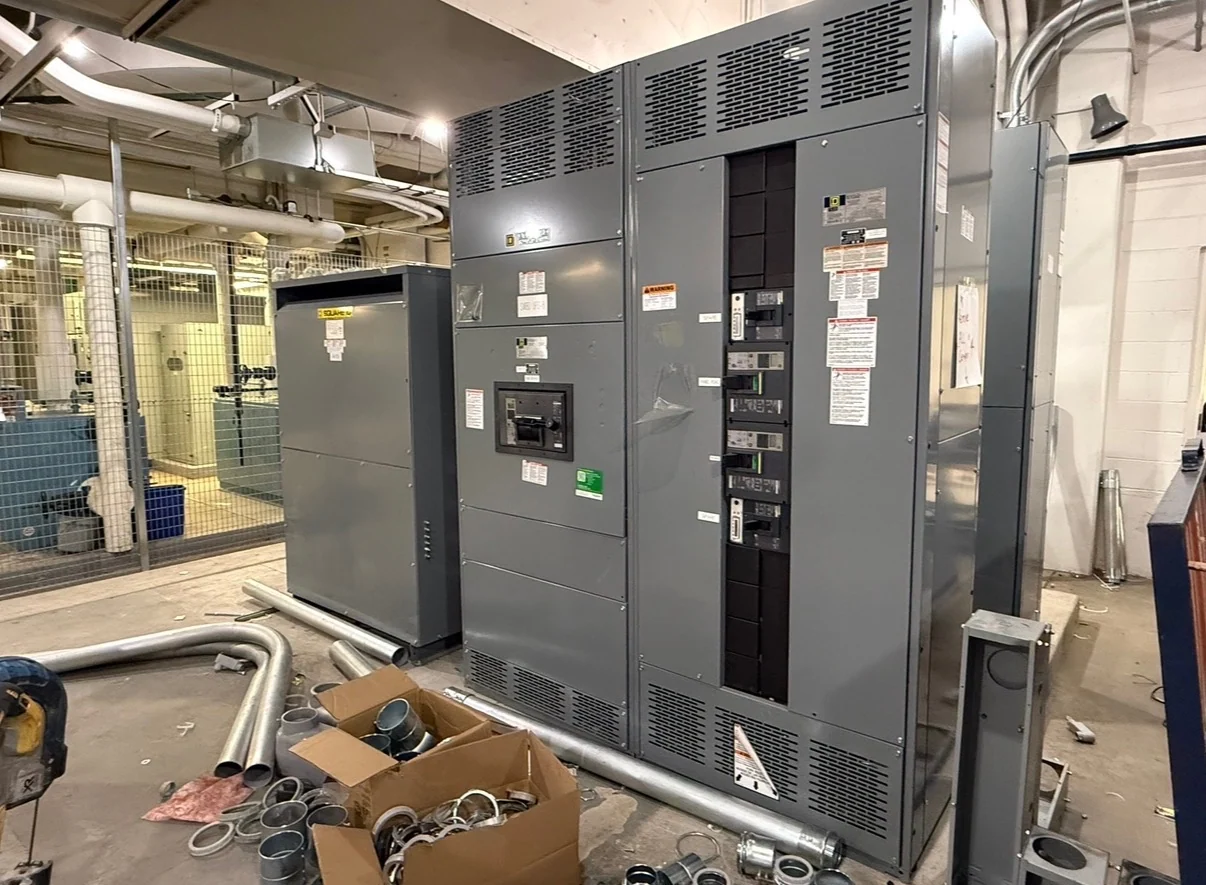
Fabrication Begins with a Defined Equipment Package
Switchgear fabrication translates an approved electrical concept into an enclosure and structural assembly that can be coordinated with the rest of a project. Before metal is cut, the manufacturer needs the applicable one-line diagram, lineup arrangement, device schedule, dimensions, cable-entry direction, environmental conditions, and installation interfaces. Those inputs establish where barriers, doors, lifting provisions, gland plates, supports, and access panels belong. Switchgear Builders manufactures new electrical switchgear in the United States, custom to specification, using American components and nationwide shipping. The final design still requires project-specific engineering review so fabrication reflects the actual equipment, ratings, and site constraints rather than a generic cabinet.
Material Selection and Preparation
Material preparation affects fit, durability, grounding continuity, and the quality of later assembly work. A fabrication package should identify enclosure material, thickness, finish system, hardware, internal supports, partitions, and any corrosion or environmental requirements supplied by the project team. Flat stock and structural members can then be marked, cut, drilled, and organized against controlled drawings before forming. Dimensions deserve particular attention around breaker compartments, bus supports, cable bending space, terminal areas, and removable covers. When American components are specified, their interfaces and manufacturer data should be reconciled with the enclosure layout before release, since connector patterns and clearances can change the metalwork.
Forming, Joining, and Structural Accuracy
Forming and joining create the enclosure geometry that carries doors, barriers, devices, and internal assemblies. Bends must preserve intended clearances and keep mating surfaces aligned; drilled holes and mounting patterns must match the selected hardware and equipment interfaces. Joining methods should be chosen for the material, access, required rigidity, grounding path, and appearance specified for the project. Fabricators also account for distortion, edge treatment, fastener access, and the movement needed to install or remove components. A practical inspection sequence checks diagonal dimensions, door operation, panel fit, mounting points, and continuity provisions before the enclosure is released for electrical assembly.
Layout for Service and Installation
A well-fabricated lineup supports installation and future maintenance without pretending that every project has the same room or operating sequence. The layout should be checked against working space, equipment access, cable routing, lifting and moving paths, conduit or busway interfaces, and the contractor’s installation method. Doors and panels need deliberate swing, removal, and fastening provisions; internal partitions should support the specified separation and access requirements. The fabricator coordinates these physical decisions with electrical engineering, protective-device selection, control wiring, and grounding details. Any field constraint that changes dimensions, shipping splits, or entry locations should be resolved before fabrication drawings are approved.
Finishing, Identification, and Documentation
Finishing is more than a visual step: surface preparation, coating selection, masking, cure requirements, and touch-up instructions should match the project environment and documented material requirements. Identification details can include nameplates, circuit labels, device references, warning information, lifting marks, and shipping-section designations, with wording coordinated against the approved drawings. The documentation package may include fabrication drawings, enclosure layouts, bills of material, revision records, and inspection or test records that are actually defined for the project. Clear records help the installer distinguish each section, verify interfaces on receipt, and resolve questions without relying on assumptions about a standard configuration.
Quality Checks Before Nationwide Shipping
Before a new switchgear assembly leaves the manufacturer, the project team should agree on the inspection points, dimensional checks, electrical checks, documentation, packaging, and shipping responsibilities. Fabrication review can confirm enclosure dimensions, hardware installation, doors and panels, bus and device clearances, grounding provisions, labeling, finish condition, and lifting points; electrical and functional checks follow the applicable project test plan. If UL 891 is specified, its applicability and any project-specific listing or verification must be confirmed for that particular assembly rather than assumed from the word switchgear. Nationwide shipping also requires destination details, shipping splits, protection against handling damage, and receiving access to be coordinated in advance.