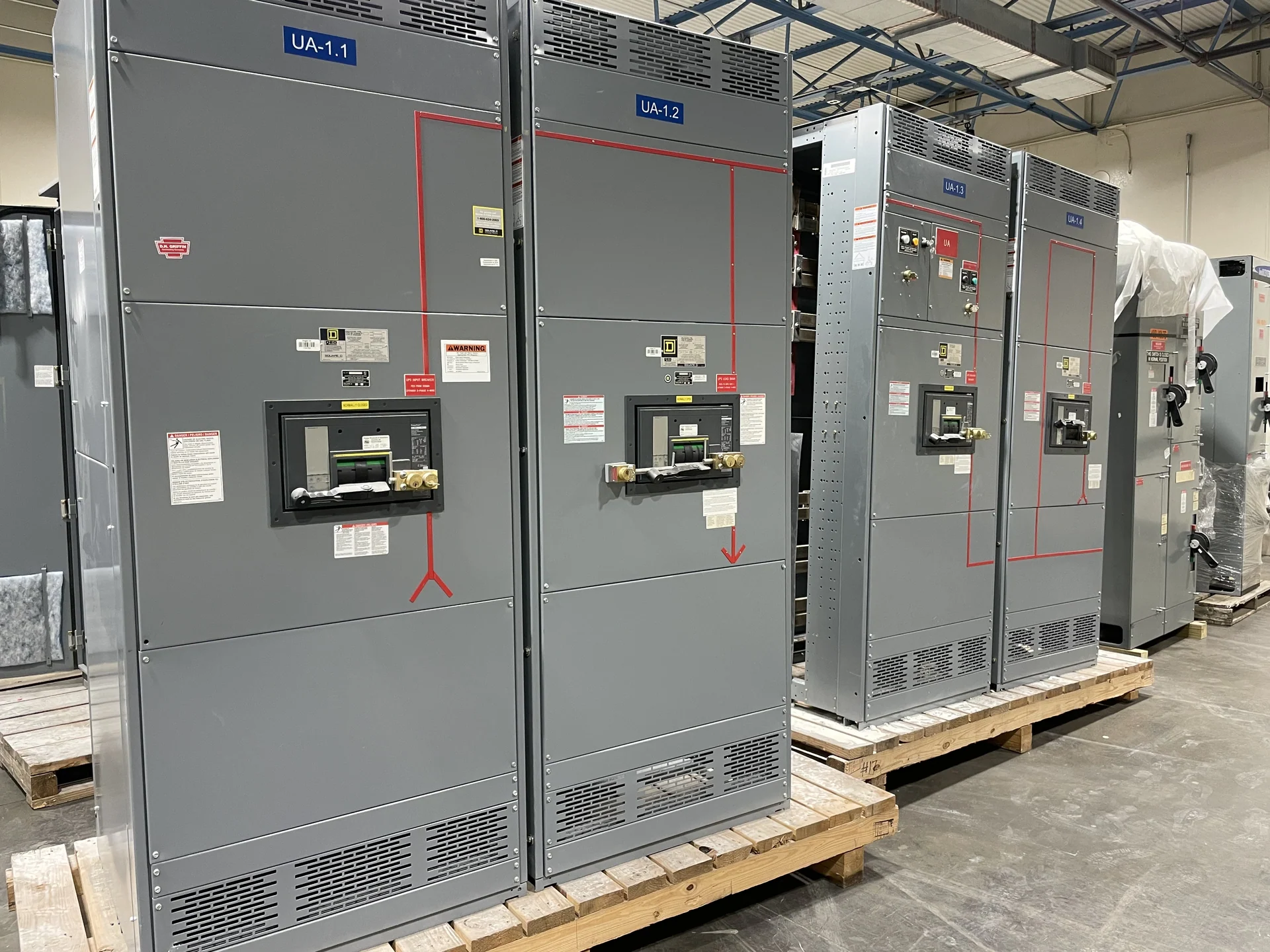
What a Factory Acceptance Test Should Prove
Switchgear factory acceptance testing is a planned review of a new assembly before it leaves the manufacturing process. The purpose is not to substitute for field commissioning; it is to confirm that the built equipment matches the approved drawings, specified devices, wiring information, and agreed functional behavior. A useful FAT plan identifies each inspection or test, its acceptance basis, the responsible participant, and the record that will be issued. For custom electrical equipment fabrication, this discipline gives the customer and manufacturer a shared checkpoint instead of relying on a visual impression at shipment. It also creates an orderly opportunity to resolve questions about labels, terminal assignments, operating sequences, and document revisions while the assembly remains available for controlled inspection.
Define the FAT Scope Before Production
The FAT scope should be settled during engineering review, before test personnel are waiting for unresolved decisions. Start with the latest one-line diagram, schematics, panel and enclosure drawings, device schedule, bill of materials, nameplate information, and approved exceptions. Add the specified voltage and current characteristics, source arrangement, control power, metering, protective devices, interlocks, communication points, and shipping splits that apply to the project. If a standard or project specification governs a particular verification, name it precisely and confirm its applicability rather than treating every switchgear type as interchangeable.
Plan Witnesses, Hold Points, and Safety
A practical witness plan separates checks that require customer or engineer attendance from checks the manufacturer can document routinely. The schedule should state whether each activity is a witness, review, or hold point, how observations will be recorded, and what happens if an item is incomplete. Participants should agree on who may approve a deviation and how revisions are controlled. Testing is performed by qualified personnel under an appropriate safety procedure, with equipment isolated or in a defined test state; an accepted FAT does not remove the installer’s duty to follow site safety practices and commissioning requirements.
Visual, Mechanical, and Wiring Checks
Begin with a systematic inspection of the enclosure, compartments, doors, barriers, labels, hardware, bus supports, grounding provisions, cable-entry points, lifting features, and shipping sections. Compare device identities and locations with the approved layout, then trace control wiring from terminal to terminal against the schematic. Check wire numbers, ferrules, terminal tightness, fuse or breaker identification, polarity markings, and separation of power and control circuits where the design requires it. Record discrepancies by drawing reference, location, and disposition so corrections can be verified rather than merely discussed.
Electrical and Functional Verification
The electrical portion should use a project-specific test list, not a generic pass statement. Depending on the equipment and agreed scope, it may include continuity, insulation checks, point-to-point verification, control-power checks, device operation, indication, metering input simulation, alarm contacts, trip circuits, interlocks, and source-transfer or main-tie-main sequence simulations. Protective settings should be compared with the approved coordination information when they are part of the supply. Any test voltage, instrument, setup, expected response, measured result, and exception should be recorded clearly, with engineering review required for unexpected behavior. Simulated inputs should be identified as simulations, and the final record should distinguish a successful equipment response from conditions that can only be proven after field connections are complete.
FAT Records, Corrections, and Shipment Release
A complete FAT package normally brings together the approved test procedure, attendance or witness record, instrument identification where required, completed check sheets, measured results, marked-up drawings, photographs when useful, and a punch list. Open items need an owner, disposition, and verification method; a signature alone does not explain whether a correction affects wiring, settings, dimensions, or field work. Before release for nationwide shipping, the customer and manufacturer should confirm the accepted configuration, packing and shipping splits, lifting information, destination details, and which final checks remain for the qualified installer after receipt.