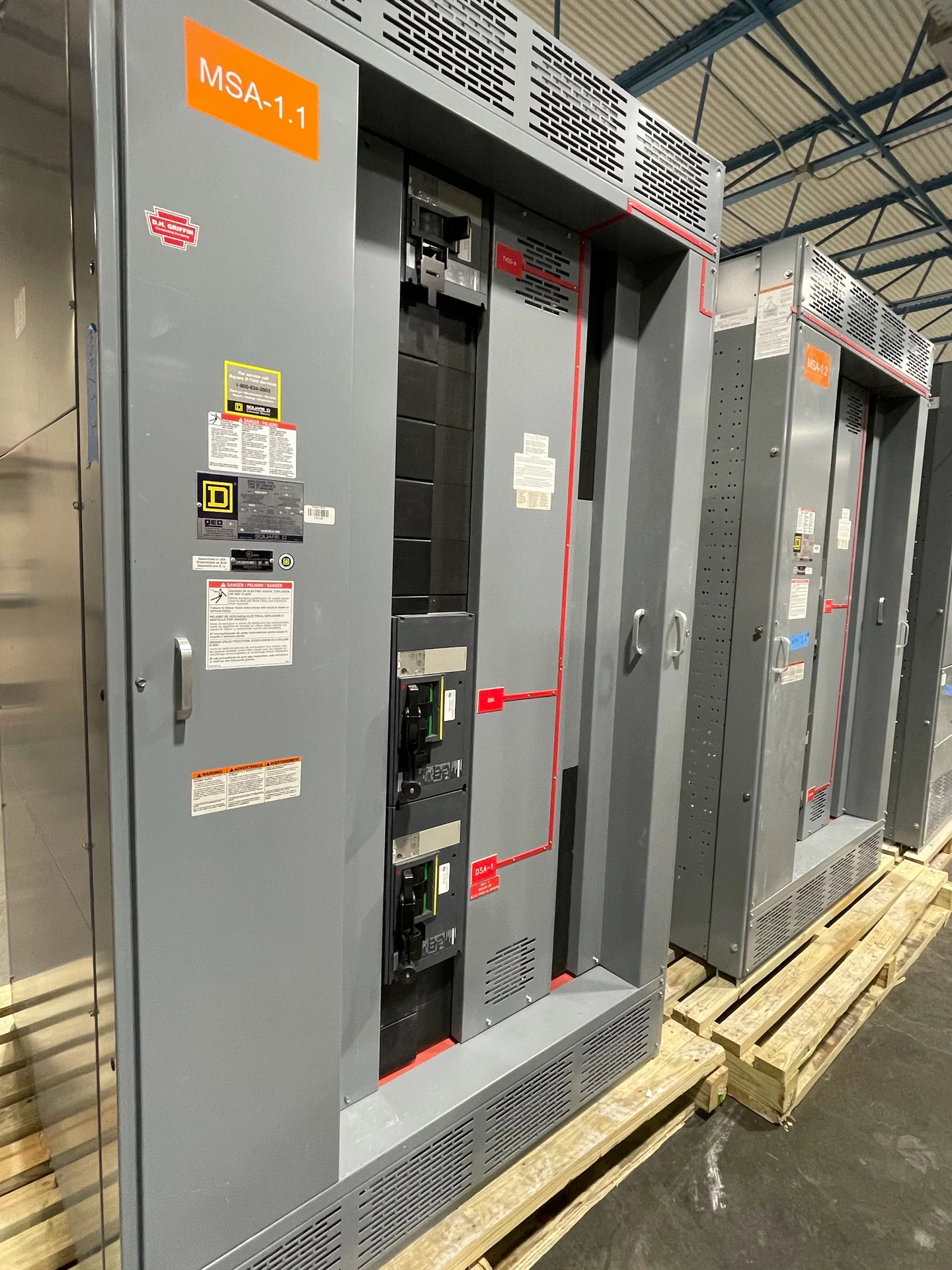
Factory Acceptance Testing in Plain Terms
Factory acceptance testing, often called FAT, is a project-defined review of newly manufactured electrical equipment before it leaves the manufacturer for the jobsite. For switchgear, the program can combine visual inspection, document review, wiring checks, and agreed functional demonstrations. Its purpose is not to replace engineering design, installation inspection, or commissioning. Instead, it gives the project team a structured opportunity to compare the completed assembly with approved drawings, specified devices, control logic, and acceptance criteria while the equipment remains accessible for questions and corrections. The exact scope should be agreed before testing begins. A good procedure also states what evidence will be retained, who may accept an exception, and how a failed demonstration will be repeated after correction. That agreement should also identify the equipment lineup or cell being tested, the prerequisite energization state, and the person authorized to place each exception on hold. Separating those details prevents a verbal demonstration from becoming an ambiguous acceptance record.
What a Switchgear FAT Should Confirm
A useful FAT starts with a clear list of items to verify. Typical topics may include enclosure dimensions, nameplate information, bus and compartment identification, device labels, terminal markings, conductor routing, mechanical operation, interlocks, control power behavior, indication, metering interfaces, and remote signals. Electrical checks might include continuity, insulation-related checks, or other tests selected for the equipment and project. The team should distinguish observations from pass or fail criteria, identify any test limitations, and record results against drawing revisions so a later reviewer can understand exactly what was examined. For example, a breaker control test can trace a local command through auxiliary contacts, status indication, and a remote point, while a metering check can compare displayed values with the approved point list. Such a test should state whether simulated inputs are used.
Planning the Witness and Test Procedure
Before scheduling a factory acceptance test, the manufacturer and project representatives should establish the approved documentation set, test instruments or methods, responsible participants, witness expectations, and sequence of demonstrations. An engineer may provide the operating narrative, while the manufacturer demonstrates the equipment response and records results. Contractors can contribute installation-interface questions, such as cable entry, control terminations, lifting provisions, or shipping splits. If a customer cannot attend, the parties can define whether recorded evidence, signed reports, or a remote witness is acceptable for that project.
FAT Versus Site Commissioning
FAT and site commissioning answer different questions. At the factory, the team can inspect assembly details and exercise selected functions in a controlled setting before shipment. At the site, qualified personnel must address receiving condition, anchorage, field wiring, cable terminations, grounding interfaces, source connections, protective settings, system coordination, and interaction with other installed equipment. A factory demonstration cannot prove the final installation is correct, and a site test cannot retroactively substitute for an omitted factory check. The project test plan should define these boundaries so responsibilities are not assumed.
Records, Exceptions, and Closeout
The value of FAT depends on disciplined records. A report can identify the equipment designation, drawing revision, test date, attendees, instruments or methods used, observed results, exceptions, and disposition of each open item. If a discrepancy appears, the parties should describe the condition precisely, assign an owner, and state whether retesting or document revision is required. Shipment should follow the project’s agreed release process rather than an informal assumption that every question is closed. Final reports, marked drawings, and approved changes form a practical handoff for installation and commissioning. Photographs are useful when they show terminal strips, labels, or corrected workmanship, but they should be indexed to the same item numbers as the written report. That makes later review faster for installers who were not present.
Defining FAT for a New Custom Build
For a custom switchgear quote, provide the one-line diagram, equipment schedule, control schematics, source and feeder arrangement, desired operating sequence, communication or metering interfaces, applicable site conditions, and documentation expectations. Switchgear Builders manufactures new electrical switchgear in the United States, builds equipment custom to specification, uses American components, and ships nationwide. The manufacturer and project team can then identify which inspections and demonstrations fit the actual design. Any requirement involving UL 891, listing, or other standards must be reviewed for applicability and confirmed for the specific project rather than assumed.