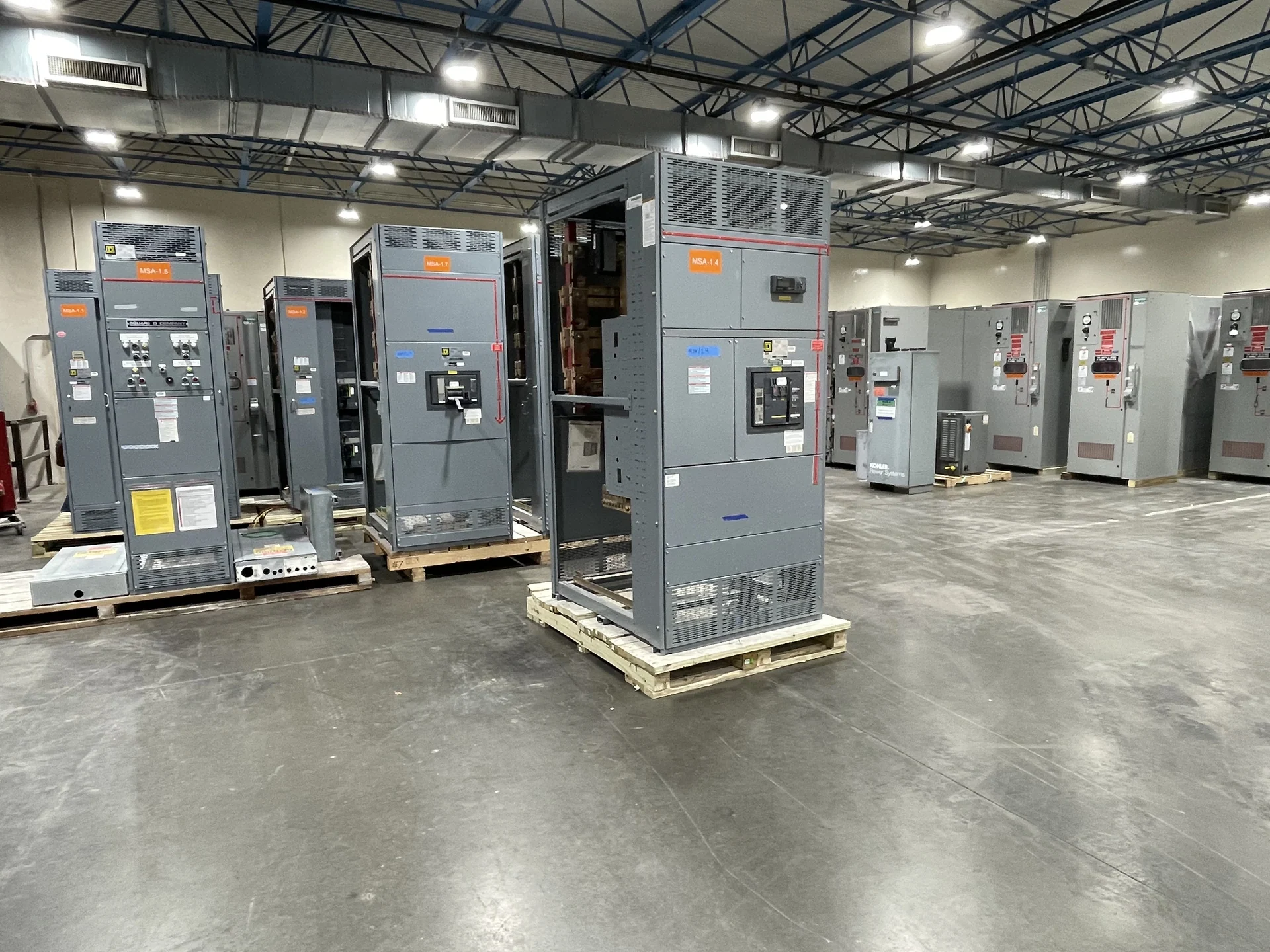
Start With a Qualified Condition Assessment
Switchgear modernization should begin with facts about the installed lineup, not a preferred component list. A qualified electrical professional can document nameplate data, one-line relationships, enclosure dimensions, bus arrangement, cable entrances, grounding, protective devices, control circuits, and the equipment’s operating environment. Inspection records, drawings, maintenance history, fault-current information, and known nuisance trips help separate a problem that can be addressed through a defined upgrade from a condition that calls for a newly engineered assembly. Switchgear Builders manufactures new electrical switchgear in the United States, custom to specification, so an assessment can become a practical design requirements rather than an assumption about fit.
Separate Upgrade Scope From Replacement Scope
An upgrade may address a defined portion of a distribution lineup, such as protective-device coordination, metering, control logic, or an interface that no longer matches the system. A replacement approach considers the complete electrical and physical boundary: voltage class, continuous current, short-circuit duty, feeder count, working clearances, cable routing, source arrangement, and installation access. Comparing the two paths on the same engineering basis exposes trade-offs in outage planning, field modifications, testing, documentation, and future expansion. The decision should follow the assessment and project requirements, with any compatibility conclusion confirmed by the responsible engineer and installer.
Define Protective Devices and Controls Precisely
Modernization decisions often turn on protection and control details that are easy to describe too broadly. Identify each main and feeder function, device type, interrupting or withstand duty as applicable, trip or relay functions, sensing inputs, metering points, auxiliary contacts, interlocks, communications, and the intended operating sequence. A coordination study may establish target settings, while a controls narrative explains normal, alternate-source, tie, alarm, and trip behavior. Those documents should be reconciled with the one-line diagram and panel layout before fabrication. If new controls are required, specify terminal identification, wire segregation, test points, and installer interfaces so field commissioning can follow a clear plan.
Engineer the New Assembly Around the Site
A new custom lineup must fit the electrical system and the route into its final room. Provide the manufacturer with room dimensions, access doors, rigging limits, floor and anchorage information, cable pull direction, ventilation conditions, environmental exposure, service clearances, and the location of adjacent equipment. Electrical equipment fabrication also depends on conductor material, bus joints, barriers, enclosure construction, device access, and the separation of power and control wiring. American components can be incorporated when required by the project specification, with component selection and origin documented for review. Drawings should show interfaces that affect civil, mechanical, electrical, and installation work before release.
Plan Testing, Documentation, and Cutover
A modernization project is not complete when a lineup leaves manufacturing; the acceptance plan should be defined before production. Agree on dimensional and workmanship inspections, wiring checks, continuity or insulation checks where applicable, device operation, interlock logic, metering indications, and the records required for turnover. The project team should also assign responsibility for field isolation, demolition, temporary power, cable terminations, protection-setting verification, energization, and post-installation checks. A staged cutover can reduce uncertainty, but its sequence depends on the facility and cannot be promised without engineering review. The manufacturer can prepare new equipment and coordinate nationwide shipping details around the approved scope, destination, packaging, and receiving requirements.
Build a Decision Package for a Quote
A useful modernization inquiry gives the manufacturer enough information to distinguish a conceptual discussion from a buildable scope. Include the existing and proposed one-line diagrams, photographs, nameplates, layout drawings, schedules, available fault-current data, load calculations, protection study inputs, control narratives, utility or owner standards, environmental conditions, preferred components, documentation requirements, destination, and the desired division of installation responsibilities. State whether the project is evaluating a partial upgrade, a complete new lineup, or alternatives. Switchgear Builders can review the information as a new-equipment manufacturer and develop a custom-to-specification path using American components and nationwide shipment planning, subject to project-specific confirmation.