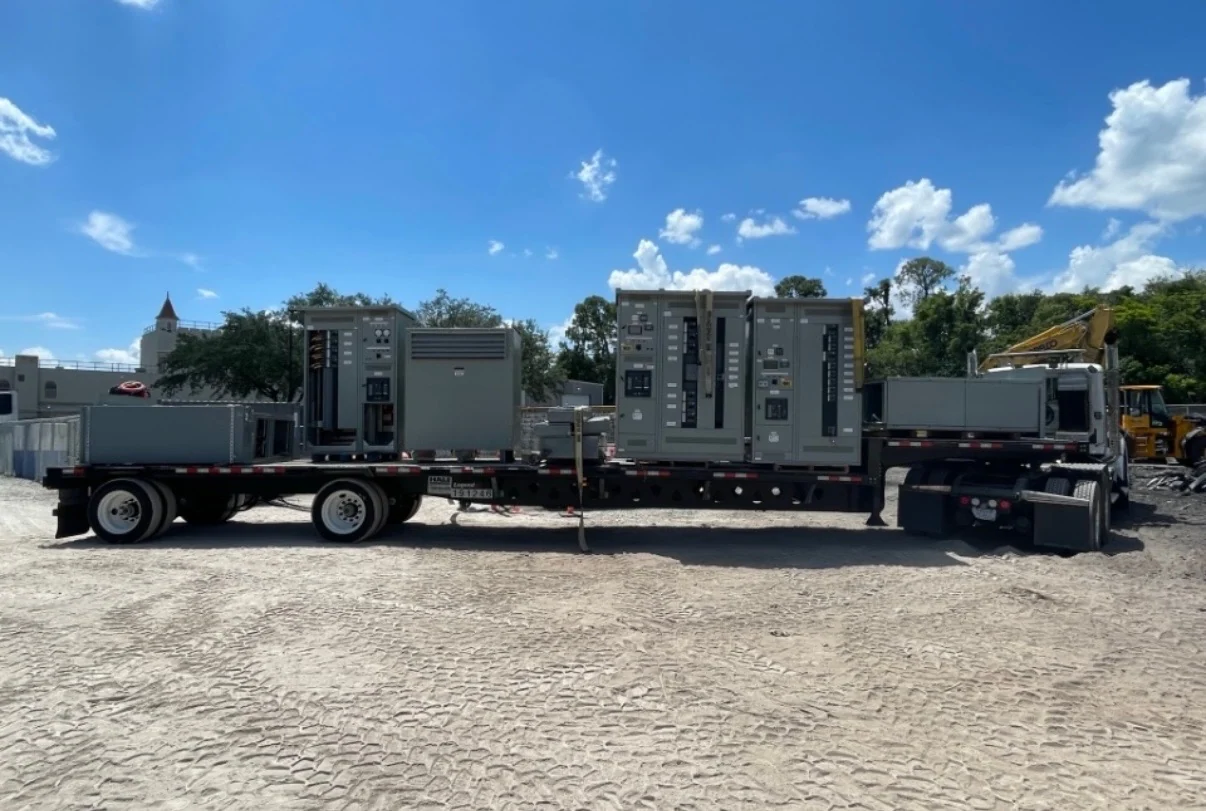
What a Fusible Switchboard Does
A fusible switchboard organizes incoming power, feeder disconnects, and overcurrent protection in a common distribution assembly. Each fusible switch combines a switching function with fuses selected for the circuit duty, while the enclosure, bus, barriers, and cable spaces provide the physical arrangement needed for installation. The right design starts with the system voltage, phase and wire configuration, continuous load, available fault current, grounding method, feeder count, and the way operators must access each disconnect. A manufacturer can build new electrical distribution equipment to those project inputs rather than treating a nominal ampere size as a complete specification.
Start With the Electrical Schedule
A useful fusible switchboards selection package pairs the one-line diagram with a feeder schedule and site information. Identify the main source, each feeder load, conductor size and material, motor or transformer inrush where relevant, continuous and noncontinuous loads, required spare spaces, and the calculated fault current at the equipment location. Confirm whether the switchboard serves service equipment, a distribution section, or downstream branch equipment, because the source interface and documentation can change. Dimensions, cable-entry direction, working clearances, room access, environmental exposure, and wall or floor mounting constraints should be supplied before layout approval. For each feeder, record the fuse family, ampere rating, phase arrangement, conductor termination method, and whether routine isolation requires access from the front or rear.
Fuse Coordination and Selectivity
Fuse selection is not simply a matter of matching a fuse ampere number to a breaker size. The engineer should review time-current characteristics, available fault current, conductor protection, transformer and motor starting behavior, and the desired relationship between upstream and downstream devices. Selective coordination may require comparing manufacturer data across the complete distribution path, including service fuses, mains, and feeder switches. A custom build should document the specified fuse class, interrupting capability, rejection or mounting arrangement, and any required adjustment or substitution limits so the installed protection remains traceable to the approved design. Where feeders serve motors or transformers, note starting or energizing conditions in the coordination review so nuisance operation is not confused with a fault.
Feeder Layout and Maintainability
Maintainable feeder arrangements depend on more than placing switches in a row. Group circuits logically, leave practical wire-bending space, separate power and control conductors where the design requires it, and identify how a qualified worker will inspect, isolate, and replace a fuse. Door swing, handle access, labeling, barriers, bus joints, neutral and grounding provisions, and spare capacity all affect the usable lineup. Drawings should show device locations and connection points clearly, while the installation team should verify field clearances, conduit paths, anchorage, and lifting or handling needs before the equipment is released for fabrication. A spare-fuse plan should identify quantities, storage location, labeling, and the procedure for matching replacements to the approved fuse class and interrupting duty.
Documentation, Review, and Verification
Before fabrication, ask the manufacturer to align the quotation and submittal package with the approved one-line diagram, device schedule, physical layout, nameplate information, wiring diagrams where applicable, and agreed inspection or test records. Review every feeder designation, fuse specification, bus rating, enclosure requirement, metering provision, and utility interface against the project documents. If a project invokes UL 891 or another standard, the engineer and manufacturer must confirm that the requirement applies to this particular assembly and define any needed evidence; it should not be assumed from the product name alone. Leave a clear record of installed fuse identifiers in the drawings and maintenance file, including any restrictions on substitutions after commissioning.
Buying New Equipment From a U.S. Manufacturer
Switchgear Builders manufactures new electrical distribution equipment in the United States, builds custom to specification, uses American components, and supplies projects with nationwide shipping. For a quote, provide the one-line diagram, load and fault information, desired fuse and switch details, dimensions, destination, schedule expectations, and documentation requirements. The manufacturer can then clarify the proposed scope, identify open engineering questions, and coordinate packaging and freight planning for the approved configuration. Confirm project-specific availability, shipping terms, receiving access, and any field responsibilities rather than assuming they are included in every quotation. The lineup schedule should distinguish active feeders from reserved spaces so future work does not obscure present protection.