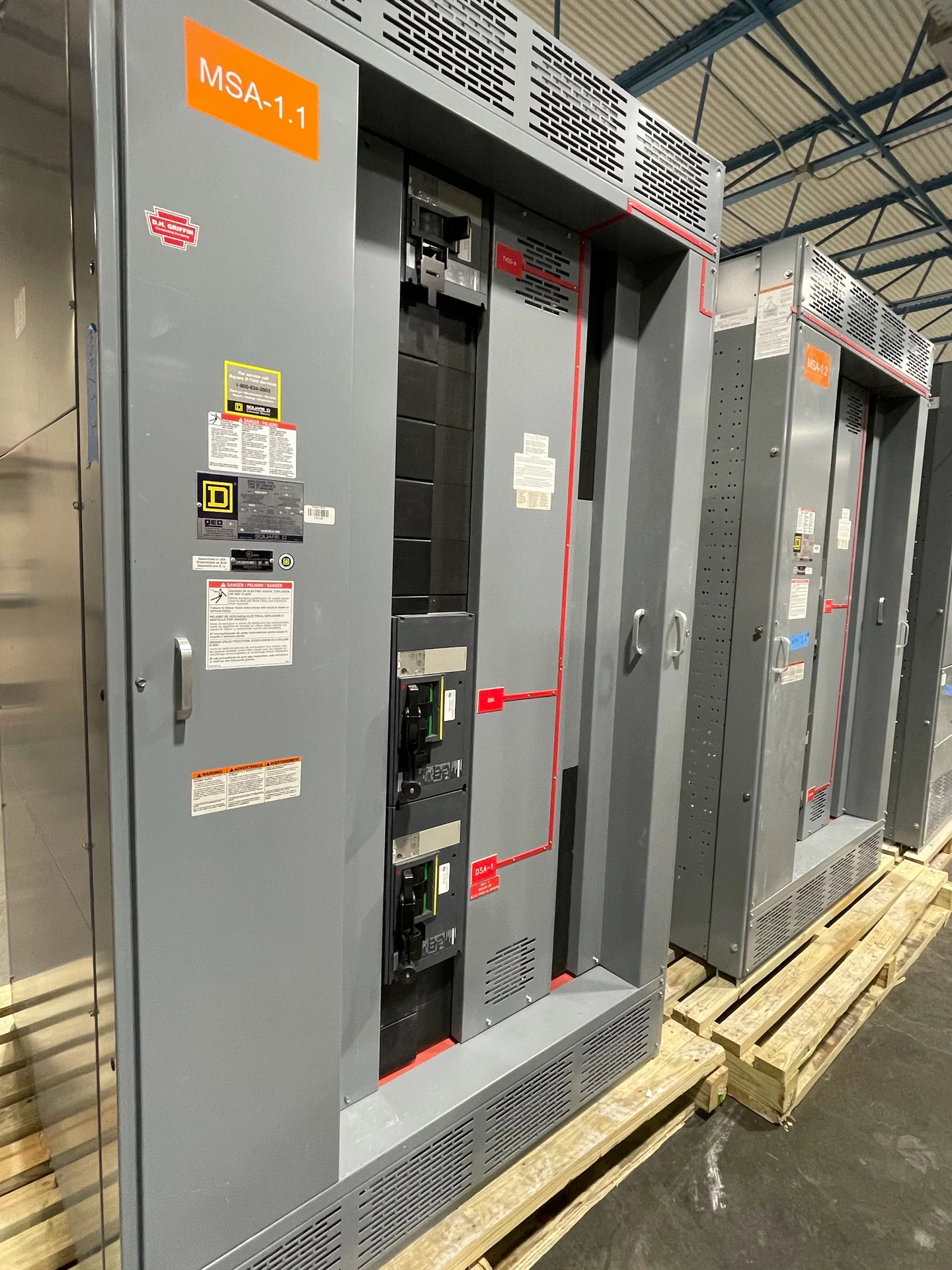
A practical definition of a switchboard
A switchboard is a low-voltage electrical distribution assembly that receives power at a main incoming connection and routes it to multiple outgoing circuits. Its core job is organized distribution: the mains section accepts the source, bus structure carries power within the assembly, and feeder devices direct power toward downstream panels, equipment, or other loads. A switchboard can also provide a practical point for isolation, overcurrent protection, metering, and orderly conductor termination, depending on the engineered design. The correct arrangement depends on the system voltage, available fault current, service configuration, load schedule, space, and applicable project requirements.
How mains and feeders work together
The main section establishes how incoming power enters and is controlled before it reaches the distribution bus. Feeder sections then divide that available power into separately protected outgoing circuits, each coordinated with the downstream conductors and loads it serves. This arrangement makes a distribution system easier to organize than a collection of unrelated connections, while still requiring careful engineering of conductor sizes, protection settings, phase arrangement, neutral treatment, grounding, and termination space. A project team should provide the source information and load details before a manufacturer finalizes a custom switchboard design.
Switchboard versus switchgear
People sometimes use switchboard and switchgear interchangeably, but the terms can describe different construction approaches and applications. Switchgear is a broader category of electrical equipment for switching, protecting, controlling, and distributing power; a switchboard is one type of distribution assembly within that larger conversation. The distinction can affect compartmentalization, device arrangement, accessibility, ratings, clearances, and the standards or specifications selected by the engineer. A useful equipment request should name the intended assembly and operating requirements rather than rely on a label alone, so the manufacturer can review the actual one-line diagram and project criteria.
Information needed for a custom build
For a meaningful switchboard quotation and design review, provide the latest one-line diagram, service or distribution location, system voltage and phase information, incoming source details, feeder count, load descriptions, available fault-current data when established, and the desired arrangement of incoming and outgoing devices. Physical constraints matter as well: available width and depth, working clearances, cable-entry direction, conduit routing, environmental conditions, access preferences, and shipping limitations can influence the enclosure and layout. The specification should also identify metering, control, communication, labeling, and documentation needs instead of leaving those decisions implicit.
Design review and project-specific requirements
A switchboard should be reviewed as part of the complete electrical distribution system, not as an isolated box. Engineers and installers need to coordinate protection and coordination studies, conductor routing, grounding and bonding details, maintenance access, installation sequence, and the interface with downstream equipment. If a project references UL 891, the applicability of that standard and any listing or capability must be confirmed for the specific design; it should not be assumed from the word switchboard alone. Local authority requirements, owner specifications, and the adopted electrical code also need project-specific review before release.
Why a manufacturer-built assembly can help
A customer buying a new switchboard from Switchgear Builders can provide the project inputs for a custom-to-spec manufacturing review rather than adapting a generic description to an unknown installation. We manufacture, build, and supply new electrical switchgear in the United States, using American components and supporting nationwide shipping. Confirm the configuration, applicable requirements, component availability, price, and delivery expectations for the specific project during quotation and engineering review. Final equipment details remain subject to the approved drawings, component selections, engineering review, and requirements established for the individual project.