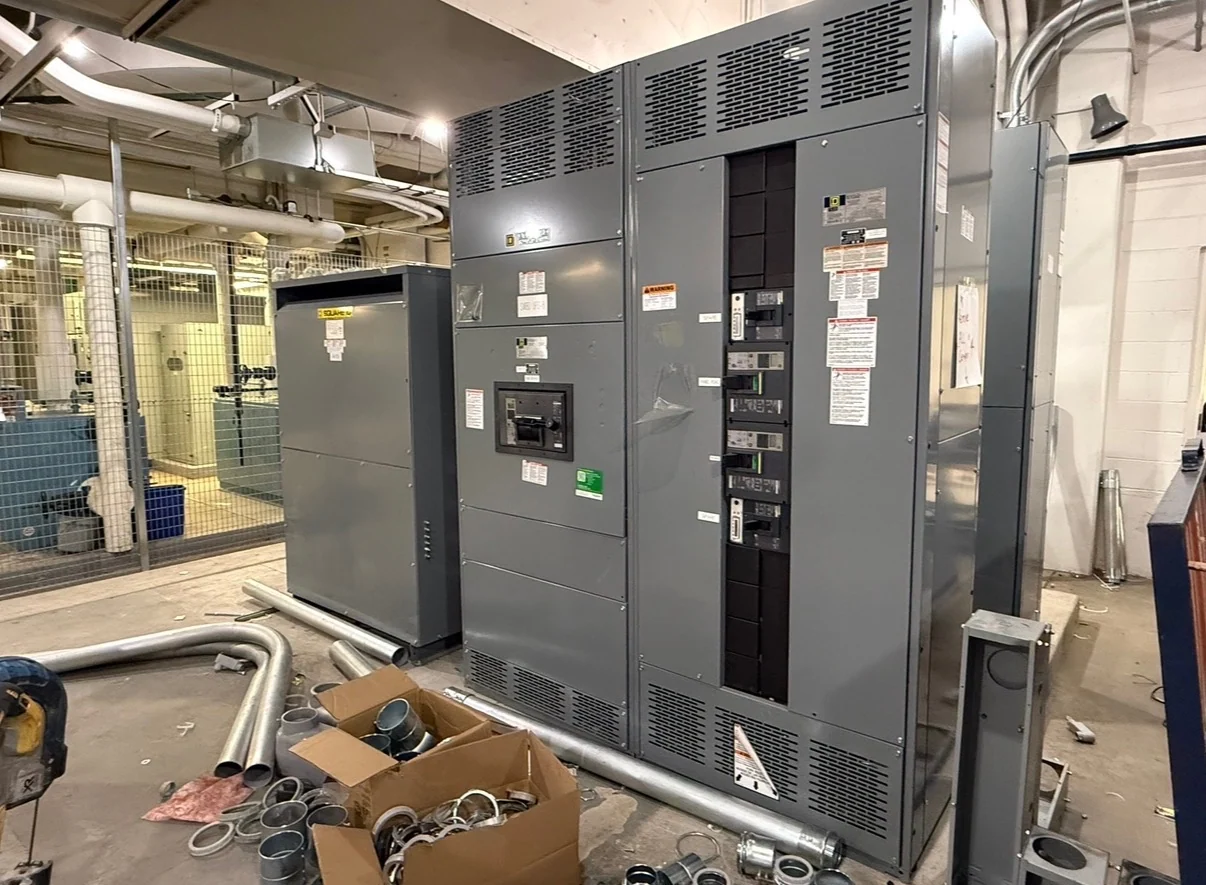
Switchboard definition in a power system
A switchboard is an electrical assembly that receives power from one or more sources and distributes it to outgoing circuits through switching and protective devices. A typical arrangement brings conductors into a main section, connects them to a bus system, and routes feeder circuits to downstream loads. The enclosure provides an organized physical structure for those components, while barriers, covers, labels, and clearances help define how the assembly is accessed and operated. The exact arrangement depends on the project one-line diagram, service interface, voltage, current, fault duty, metering needs, and installation environment rather than on the word switchboard alone.
What a switchboard contains
The functional building blocks of a switchboard may include a main disconnect or main protective device, feeder circuit breakers or fusible switches, bus conductors, neutral and grounding provisions, metering equipment, control wiring, and cable termination spaces. Not every assembly contains every item, and the selected devices must match the electrical design. Bus arrangement affects how power is collected and divided; protective devices must be selected for the calculated load and available fault current; and the enclosure must suit indoor or outdoor exposure. Drawings should identify device positions, conductor entry, maintenance access, and the interfaces installers must provide.
Switchboard versus switchgear
Switchboard and switchgear are related terms, but they should not be treated as interchangeable labels. Both can distribute power and incorporate switching and protection, yet construction, compartmentation, device arrangements, ratings, operating features, and applicable project requirements can differ substantially. A specification should identify the intended equipment category and define the required performance rather than relying on a casual synonym. Engineers and procurement teams should compare the one-line diagram, short-circuit calculations, access requirements, installation space, and maintenance approach before selecting an assembly. When a manufacturer builds new equipment to specification, those inputs guide the proper configuration instead of allowing terminology to determine the design.
Ratings and design inputs
A useful switchboard specification starts with system facts: nominal voltage, phase and wire arrangement, frequency, continuous current, available fault current, grounding method, service or feeder role, environmental conditions, and the required number of circuits. It should also address main and feeder device types, metering, surge protection if applicable, control power, cable entry, enclosure requirements, dimensions, and future circuit space. Coordination studies may affect protective-device settings and selection. The final equipment design remains project-specific, so the responsible electrical engineer should confirm calculations, working clearances, utility requirements, and any applicable standards before fabrication proceeds.
Ordering a new switchboard from a manufacturer
Customers seeking to buy a new switchboard from an American manufacturer should submit the one-line diagram, equipment schedule, site conditions, dimensional constraints, desired delivery destination, and documentation requirements with the inquiry. A custom quote is more useful when it also states whether the assembly is service equipment, identifies incoming and outgoing conductor details, lists each feeder device, and describes metering or control sequences. Switchgear Builders manufactures new electrical distribution equipment custom to specification, using American components and nationwide shipping. Project-specific availability, construction details, and any required review or testing should be confirmed in the quotation and approved drawings.
Documentation, inspection, and installation coordination
Before shipment, the project team should agree on the drawing package, nameplate information, wiring diagrams, device data, inspection points, and electrical or functional checks appropriate to the assembly. Receiving personnel can then compare the delivered sections with the approved layout, inspect packaging for visible damage, verify lifting and placement provisions, and preserve records for installation. The electrical contractor must coordinate anchorage, terminations, grounding, working space, and field testing with the design documents and local requirements. If UL 891 is specified, its applicability and any project-specific listing or construction requirement must be confirmed for this particular switchboard; it should never be assumed from the general term switchboard.