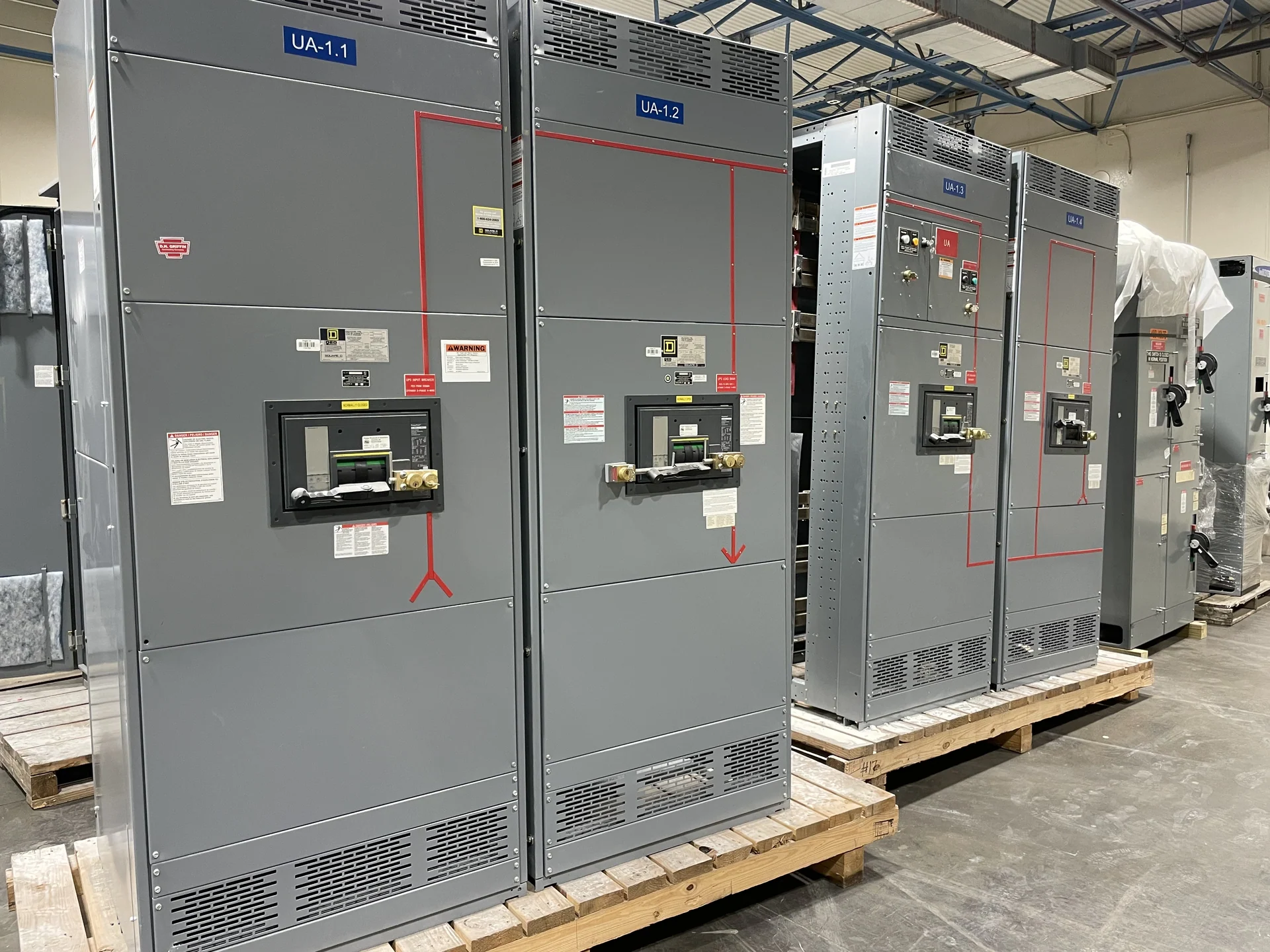
What an Automatic Transfer Switch Is
An automatic transfer switch, often abbreviated ATS, is electrical transfer equipment that moves a designated load between two power sources according to a defined control sequence. A typical arrangement has a normal source, an alternate source, switching devices, sensing circuits, controls, and load terminals. The switch does not create power; it coordinates the connection of the load to an available source while keeping source selection and interlocking under deliberate control. The exact construction depends on voltage, current, fault duty, source type, transition method, and the project’s electrical design.
How Source Transfer Works
During normal operation, the ATS monitors the designated normal source and keeps the load connected according to the programmed operating sequence. If the normal source falls outside project-defined conditions, the controller can initiate a transfer process after any specified time delay and source-availability checks. The alternate source must be ready and acceptable before the load is connected to it. When the normal source returns, a separate retransfer sequence may apply. Open-transition equipment briefly disconnects the load before connecting the other source, while a project may require a different transition approach; engineers must define the sequence rather than assume it. Document the sensing thresholds and time delays that initiate both transfer and retransfer for the project. Distinguish a failed source from a brief voltage disturbance so unnecessary transfers do not interrupt sensitive loads. Specify source-stabilization delay, engine-start signal behavior, and the alarm for an unavailable alternate source. Those details give technicians an operating description to evaluate.
Important ATS Specification Inputs
A useful automatic transfer switch definition must be tied to the application because the name alone does not establish a suitable configuration. A quote or design review should identify nominal voltage, phase and wire arrangement, continuous current, available fault current, source grounding, frequency, enclosure environment, service location, and the type of alternate source. It should also state whether the load includes motors, electronic power supplies, emergency circuits, or other equipment with special transfer behavior. Control power, sensing points, time delays, bypass provisions, and remote indications should follow the one-line diagram and operating narrative. Clear source labels and terminal identification reduce ambiguity during installation and commissioning. For three-pole or four-pole switching, document the neutral and source-grounding arrangement. Transformer, motor, and electronic-load inrush can affect transfer behavior even when steady current appears acceptable; a phase-rotation check also helps prevent unexpected motor direction after transfer.
Coordination With Distribution Equipment
An ATS is one part of a power distribution system, so its source and load connections must coordinate with upstream protective devices, downstream switchgear or switchboards, generators, and any required metering or controls. Engineers and installers should check conductor routing, termination space, working clearances, maintenance access, neutral switching, grounding and bonding, and the physical path for the finished assembly. Transfer logic also needs review: source interlocks, generator start contacts, permissive signals, load-shed functions, and return-to-normal behavior should be documented in language that the project team can test and operate consistently.
Building a New Custom ATS Assembly
For a new custom automatic transfer switch project, Switchgear Builders can use the customer’s one-line diagram, equipment schedule, control narrative, dimensions, connection details, and documentation requirements as the starting point for a manufacturer review. We manufacture, build, and supply new electrical switchgear in the United States, custom to specification with American components and nationwide shipping. Before fabrication, the project team must confirm source ratings, transfer behavior, applicable standards, installation conditions, and interfaces through engineering review. Commissioning records should capture simulated conditions, measured transfer intervals, source indications, alarms, and inhibit signals. Coordinate testing with the generator operator and facility representative, then reconcile the operating narrative with labels, settings, and as-built drawings.
Planning Installation and Verification
Before an ATS arrives, the electrical contractor should confirm the receiving route, lifting and placement method, feeder identification, termination materials, control conductors, source isolation procedures, and commissioning responsibilities. The project test plan can then define source-sensing checks, interlock verification, simulated source loss, generator-start signaling, transfer and retransfer timing, alarm indications, and documentation of results. Any requirement for a particular standard, listing, or inspection must be confirmed for the specific equipment and application; an automatic transfer switch label by itself is not evidence of universal approval or suitability.