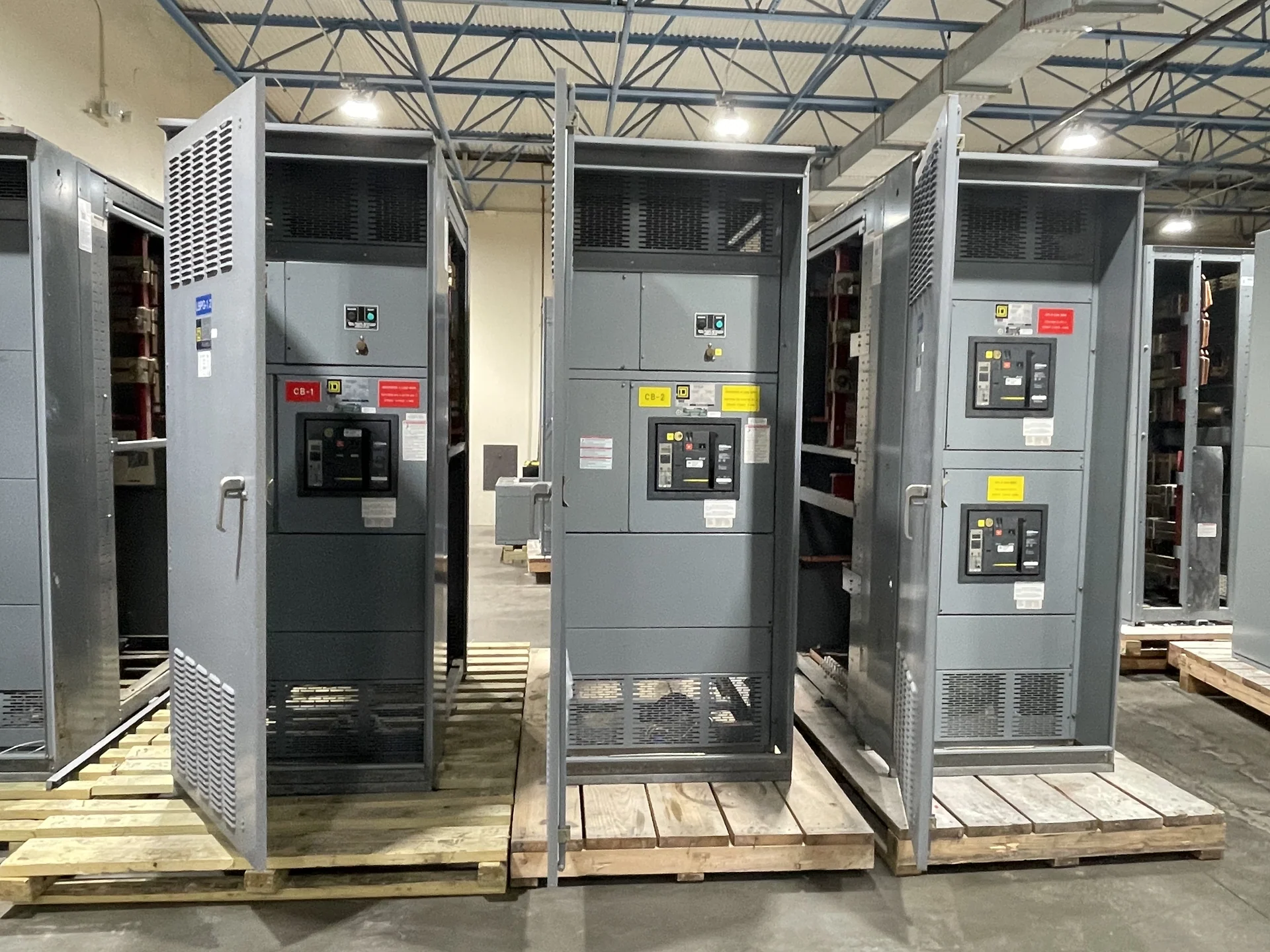
Load-Interrupter Switch Definition
A load-interrupter switch is a switching device designed to open and close a circuit carrying its intended load current under specified conditions. In practical terms, it provides a controlled means to energize or de-energize a feeder, transformer connection, or other distribution segment without treating the switch as a substitute for a circuit breaker. The phrase load-interrupter describes the switching duty; it does not, by itself, establish the device’s voltage class, continuous-current rating, enclosure construction, fault capability, or suitability for a particular installation. Those characteristics must be identified from the project design and equipment documentation. The distinction matters during equipment selection because a switching function and a protective function may appear in the same lineup while remaining separate responsibilities.
Normal Load Switching Versus Fault Interruption
Normal load switching occurs when the current is within the operating range the switch is designed to make or break. Fault interruption is different: a short circuit can produce current far beyond normal operating conditions, requiring an interrupting device and assembly with an appropriate rating for the available fault current. A load-interrupter switch may be paired with fuses or coordinated with upstream protective equipment, but the complete arrangement determines how abnormal current is cleared. Engineers should never infer breaker-level fault interruption from the word interrupter alone. The clearing device, not the switch name, must be matched to the calculated system duty and the coordination study.
Where the Device Fits in Distribution Equipment
Load-interrupter switches can be incorporated into metal-enclosed or other project-defined distribution assemblies to provide sectionalizing, feeder isolation, transformer switching, or source selection. The useful arrangement depends on the one-line diagram, switching sequence, grounding method, cable terminations, access requirements, and the protection scheme around the switch. A fuse combination may add fault-clearing capability, while a separate circuit breaker may provide adjustable protection elsewhere. The equipment schedule should identify each device’s function instead of relying on a broad label such as switchgear. This prevents a purchasing team from comparing unlike assemblies solely by catalog terminology or a single device label.
Ratings and Application Questions
A meaningful load-interrupter switch specification should address nominal system voltage, equipment voltage class, frequency, phase arrangement, continuous current, load type, switching duty, short-circuit conditions, insulation requirements where applicable, enclosure environment, and cable or bus interfaces. The design team should also state whether the switch must operate a transformer, motor, capacitor bank, or general feeder, because inrush, power factor, and switching transients can affect the application. Available fault current and protective coordination are essential inputs rather than details to resolve after fabrication. For replacement planning, existing drawings should be checked against field conditions, since conductor entry, phase spacing, and operating access can change the feasible arrangement.
Interlocks, Operation, and Maintenance Access
The operating sequence should explain when the load-interrupter switch may open or close, what source or tie conditions must be present, and how grounding provisions interact with switching. Mechanical or electrical interlocks can help enforce the intended sequence, but their logic must be defined from the project’s operating philosophy. Layout work should reserve access for handles, indicators, fuses where specified, cable compartments, and inspection points. A custom manufacturer needs these requirements, along with control schematics and installation constraints, before preparing a buildable arrangement. A quote request should identify whether operation is manual, remote, automatic, or limited to qualified personnel under the project procedures.
Selecting and Specifying New Equipment
When a project calls for a new assembly containing a load-interrupter switch, provide the manufacturer with the one-line diagram, system study inputs, device schedule, enclosure location, dimensions, incoming and outgoing conductor details, controls, metering, interlocks, and required documentation. Switchgear Builders manufactures custom new electrical switchgear in the United States, builds to project specifications with American components, and can coordinate nationwide shipping requirements. Any UL 891 applicability, listing pathway, or other project requirement must be reviewed and confirmed for the specific assembly rather than assumed from terminology. Shipping splits, lifting points, and final installation access should also be addressed early when the assembly is large or installed inside a constrained electrical room.