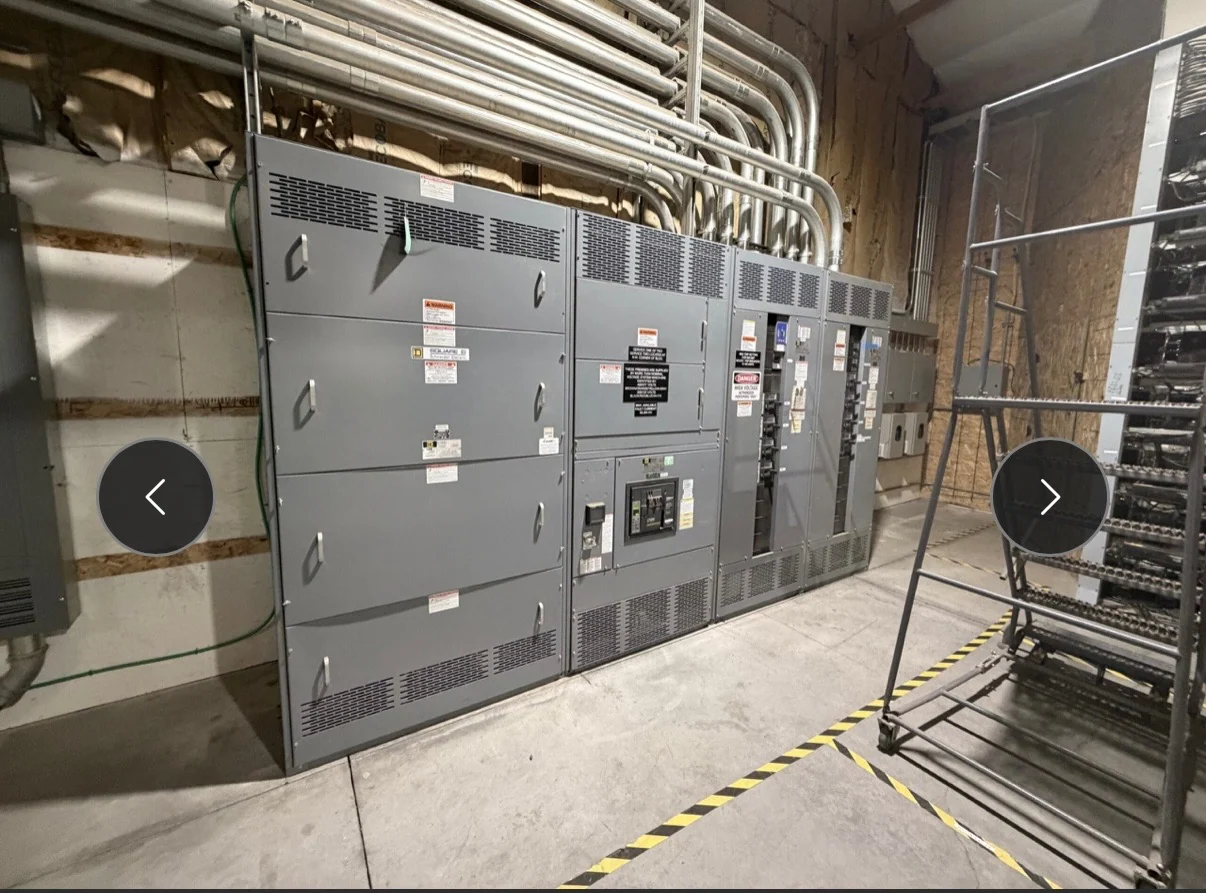
Start With the System Load
A 1,600-amp switchgear lineup should begin with the electrical study, not with the number in the product name. The design team needs the calculated continuous load, demand assumptions, motor and transformer characteristics, source arrangement, phase and frequency, grounding method, and expected operating modes. A 1,600 A continuous current rating may describe the main bus or a particular device, while feeders and sections can have different ratings. Confirm whether the project calls for switchgear, a switchboard, or another distribution assembly before requesting a manufacturer quote, because construction and application requirements are not interchangeable.
Define the 1,600-Amp Current Rating
The phrase 1,600 amp switchgear can refer to several related requirements: a 1,600 A main, a 1,600 A bus, a lineup carrying that service capacity, or equipment selected for a calculated load below that value with room for expansion. Identify each intended rating in the specification and on the one-line diagram. Ask the engineer to distinguish continuous current from temporary inrush, emergency loading, and future capacity. The manufacturer can then coordinate bus dimensions, conductor terminations, protective devices, metering provisions, and enclosure layout around the actual duty rather than treating 1,600 A as a complete design description.
Check Protective Device Ratings
Protective device selection must match the system voltage, available fault current, conductor ampacity, load characteristics, and coordination study. A 1,600 A main breaker is not automatically appropriate simply because the lineup has a 1,600 A bus. Review the device frame and trip functions, interrupting rating, sensor or rating plug details where applicable, feeder ratings, selective coordination objectives, and operating sequence. Provide time-current data and study assumptions with the inquiry when available. Any settings, interlocks, or control logic should be reviewed by the responsible electrical engineer before fabrication so the new equipment reflects the intended protection strategy.
Evaluate Available Fault Current
Available fault current is a separate design input from continuous current. Obtain the utility contribution, transformer impedance and size, generator or inverter contributions where applicable, conductor impedance, source configuration, and any tie or alternate-source conditions. The highest credible fault-duty case should be considered for the equipment specification and protective-device selection. State whether the project requires a particular short-circuit current rating, short-time withstand value, or other project-defined duty, then confirm the applicable construction and verification requirements. Switchgear Builders can build new custom equipment to the supplied project criteria, but the engineer of record must establish the governing values.
Plan for Load Growth and Physical Interfaces
Future capacity should be described in electrical and physical terms instead of an informal percentage allowance. Identify reserved feeder spaces, spare or future device positions, transformer and generator interfaces, bus-tie plans, metering compartments, cable entry direction, and termination requirements. Also provide room dimensions, working clearances, equipment access routes, floor or housekeeping-pad details, conduit locations, and lifting constraints. These inputs affect the lineup footprint and shipping sections as much as the 1,600 A current rating does. A practical design balances expansion flexibility against unused space, cost, heat considerations, and the installation conditions documented for the project.
Prepare a Complete Manufacturer Inquiry
For a useful quote on new 1,600-amp switchgear, send the latest one-line diagram, load schedule, fault-current information, voltage and frequency, phase and wire configuration, grounding details, equipment location, enclosure environment, device schedule, control schematics, metering needs, dimensions, documentation requirements, and destination for nationwide shipping. Identify the governing design standards and whether UL 891 applies; its applicability and any project-specific listing or verification must be confirmed for the actual assembly. Switchgear Builders manufactures custom electrical switchgear in the United States using American components and can review the stated scope before defining a buildable configuration and shipping plan.