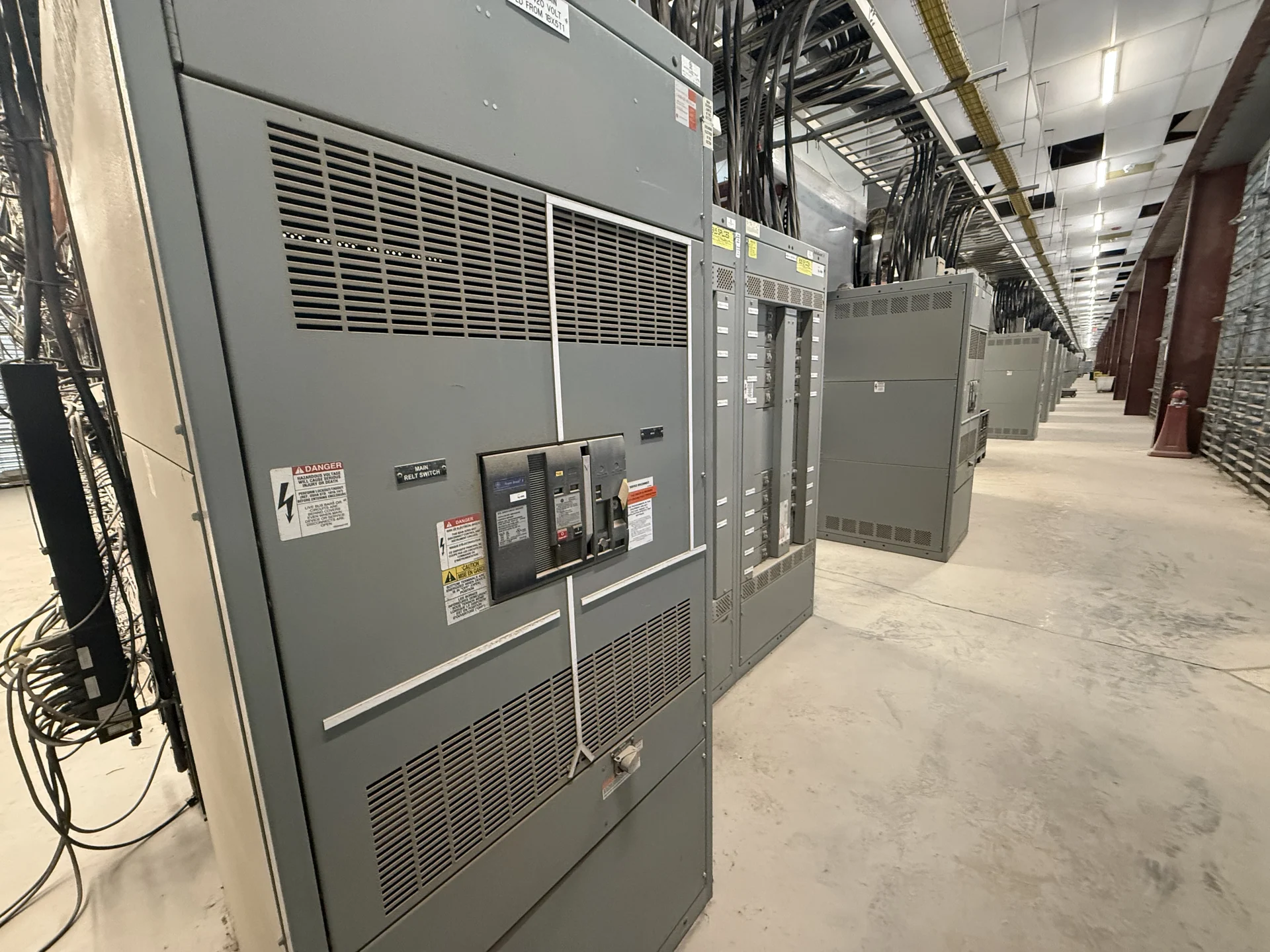
What a 2,000-Amp Rating Establishes
A 2,000-amp switchgear lineup is planned around the continuous current the assembly must carry, not simply the largest breaker nameplate. The design team should identify calculated demand, expected operating conditions, conductor terminations, bus arrangement, and any service or feeder diversity used in the engineering basis. A 2,000 A electrical distribution lineup may suit a main, tie, or feeder application, but the actual configuration depends on the one-line diagram and system study. Switchgear Builders manufactures new equipment in the United States, builds custom to specification, uses American components, and ships nationwide; the project documents determine what can be offered for a particular application.
Separate Continuous Current from Fault Duty
Continuous current rating and short-circuit capability answer different questions. The 2,000-amp figure addresses sustained load carrying, while available fault current determines the interrupting ratings of protective devices and the assembly's applicable withstand requirements. Request documents should identify utility data, transformer impedance, generator or inverter sources, grounding method, and the point in the distribution system being supplied. An engineer can then coordinate device ratings, bus supports, enclosure construction, and protection settings. A larger ampere rating does not automatically solve a fault-duty problem, and a suitable specification must be confirmed from project calculations rather than inferred from the headline size.
Choose the Lineup and Protective Devices
The one-line should show whether the 2,000-amp switchgear serves a single source, multiple mains, a bus tie, or several outgoing feeders. Breaker or switch selection affects interrupting duty, maintenance access, cable termination space, metering, interlocks, and the way selective coordination is reviewed. Specify normal and emergency source relationships, desired operating sequence, control voltage, trip or relay functions, and any communications requirements that belong in the equipment package. These choices should be made with the electrical engineer and installer, because a physically plausible lineup can still conflict with protection studies, utility requirements, or the intended installation sequence.
Account for Space, Connections, and Installation
A current rating is only one part of a buildable equipment specification. Provide available room dimensions, lineup orientation, access path, working-space constraints, incoming and outgoing cable directions, termination preferences, floor or housekeeping-pad conditions, and lifting or handling limitations. The equipment footprint must leave practical room for cable bending, device operation, inspection, and maintenance as required by the project design. Indoor and outdoor applications can require different enclosure and environmental decisions. Early coordination of these interfaces helps the manufacturer develop drawings that the engineer, electrical contractor, and site team can review before fabrication.
Plan Capacity for Present and Future Loads
Load growth should be documented rather than handled by selecting an oversized number without a distribution plan. Identify present calculated loads, anticipated additions, spare feeder positions, future circuit sizes, and whether the bus, main device, terminations, and room have matching expansion allowances. The design should also consider continuous-load assumptions, motor starting, harmonic-producing equipment, generator operation, and source-transfer conditions where applicable. A manufacturer can translate an approved equipment schedule into a custom lineup, but future capacity still requires engineering judgment: unused spaces, spare devices, and physical room are not interchangeable, and each should be described explicitly in the inquiry.
Prepare a Complete Manufacturer Quote Request
For a useful quote on new 2,000-amp switchgear, send the latest one-line diagram, load schedule, system voltage and frequency, phase and wire configuration, grounding information, available fault current, protection study inputs, enclosure location, dimensions, cable entry details, device schedule, metering or control requirements, drawings, testing expectations, shipping destination, and required commercial terms. Identify what is furnished by others and which interfaces need confirmation. Switchgear Builders can review a custom request for manufacture and nationwide shipment, while project-specific availability, scope, documentation, standards, and any applicable listing or certification requirements must be confirmed before an order is finalized.