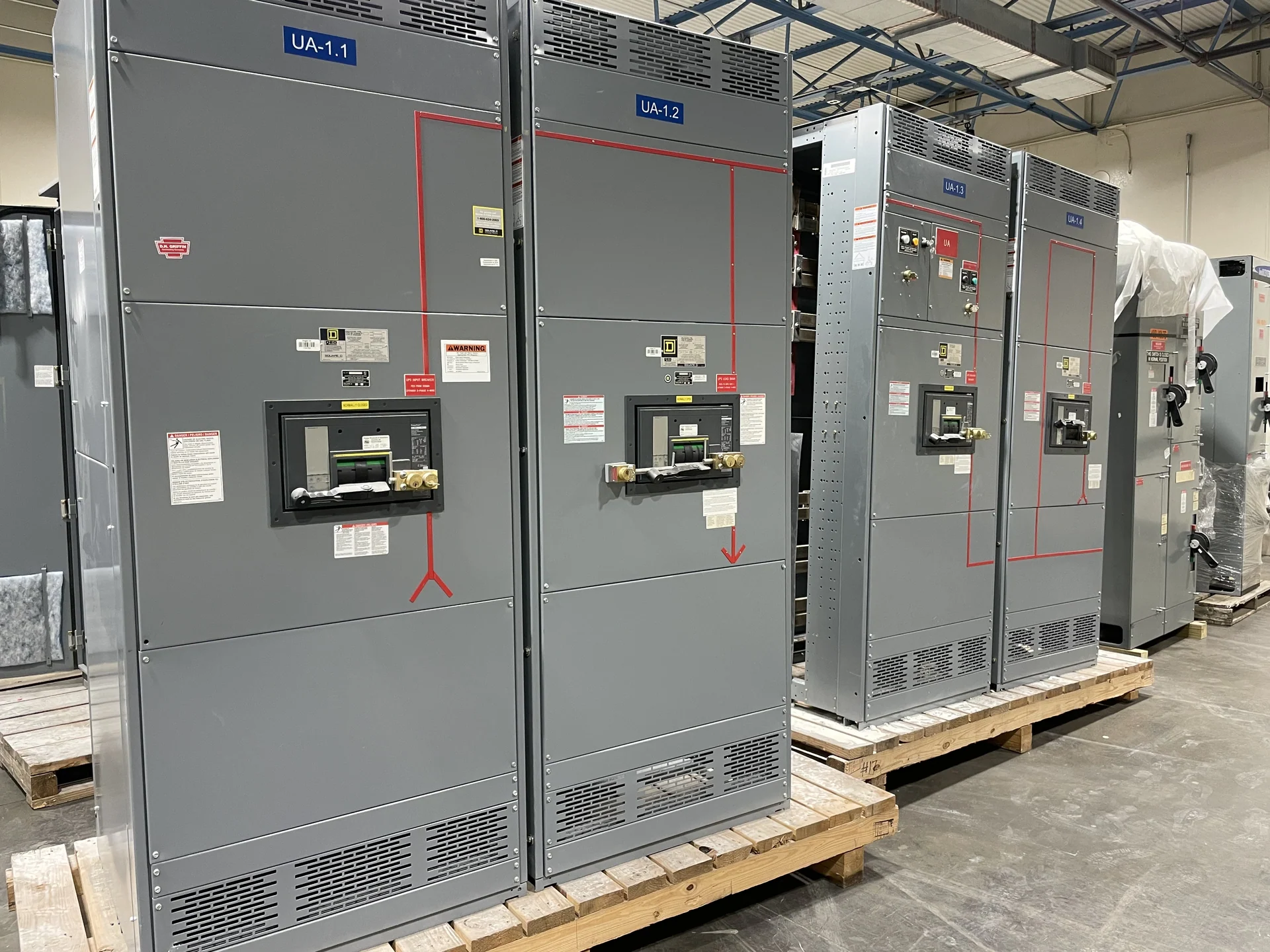
Start with the electrical system story
Working with Switchgear Builders begins with a clear description of the distribution system, not a product name alone. Explain whether the new assembly will serve a service entrance, feeder, generator interface, transformer, motor loads, or another defined function. A current one-line diagram is especially useful because it shows sources, buses, ties, feeders, grounding relationships, and protective devices. If the drawing is preliminary, label assumptions rather than presenting them as final. This context helps an American switchgear manufacturer understand the intended role of the equipment and identify questions before a custom design is developed.
Bring ratings and operating requirements
A productive switchgear project inquiry includes the electrical values that govern equipment selection: nominal system voltage, frequency, phase and wire arrangement, continuous current, available fault current, and the required interrupting or withstand duty where applicable. Provide transformer data, utility information, grounding method, feeder loads, and protective-device preferences when available. Also describe normal and alternate source operation, desired interlocking, metering, control power, and remote indications. These inputs do not replace an engineer's review; they give the manufacturer a disciplined basis for discussing project fit and identifying missing design information.
Describe the physical installation
Physical constraints can change a workable lineup into a redesign, so share the available room dimensions, access route, equipment orientation, cable-entry direction, working clearances, and mounting or foundation conditions. Note indoor or outdoor exposure, ambient conditions, ventilation concerns, elevation requirements, corrosion considerations, and any seismic or site-specific criteria that the project documents impose. Existing interfaces should be described with measured dimensions and photographs or drawings when appropriate. Switchgear Builders builds new equipment custom to specification, while the installing team and qualified design professionals remain responsible for confirming field conditions and installation requirements.
Define controls, documents, and review points
Tell the manufacturer how the lineup is expected to operate and what the project team must review. Useful material can include a control narrative, sequence of operations, breaker or switch schedule, relay functions, metering points, terminal requirements, communications protocol, and preferred device identification. Identify the drawings and records needed for submittal coordination, installation, commissioning, and maintenance. If UL 891 may apply, state that in the inquiry so its applicability, construction requirements, and any project-specific listing or verification can be evaluated rather than assumed. Agreeing on review points early clarifies who will assess drawings, resolve comments, and authorize release.
Make the commercial scope comparable
A useful conversation also separates equipment scope from responsibilities around it. State the project location, requested shipping destination, receiving limitations, desired shipping sections, lifting constraints, freight assumptions, and who will coordinate unloading and rigging. Identify whether the inquiry concerns a complete lineup, an expansion, a replacement interface, or a coordinated distribution package, and attach the specifications that govern the request. Ask that any proposal identify included devices, drawings, testing, packaging, and exclusions in clear terms. Because configuration and component choices affect the manufacturer's price, a complete scope produces a more meaningful quote than a generic request for switchgear pricing.
Plan the next technical exchange
After the initial inquiry, organize open questions in a single review record and assign the responsible engineer, contractor, owner, and manufacturer contact for each decision. Revisions to the one-line diagram, ratings, dimensions, control sequence, or specification should be dated so everyone is discussing the same basis. Switchgear Builders manufactures, builds, and supplies new electrical switchgear in the United States, using American components and offering nationwide shipping; project-specific manufacturing details, configuration, documentation, and shipping arrangements should still be confirmed for the individual order. This approach keeps communication factual and supports a custom-to-spec equipment package without assuming services or results that have not been agreed.