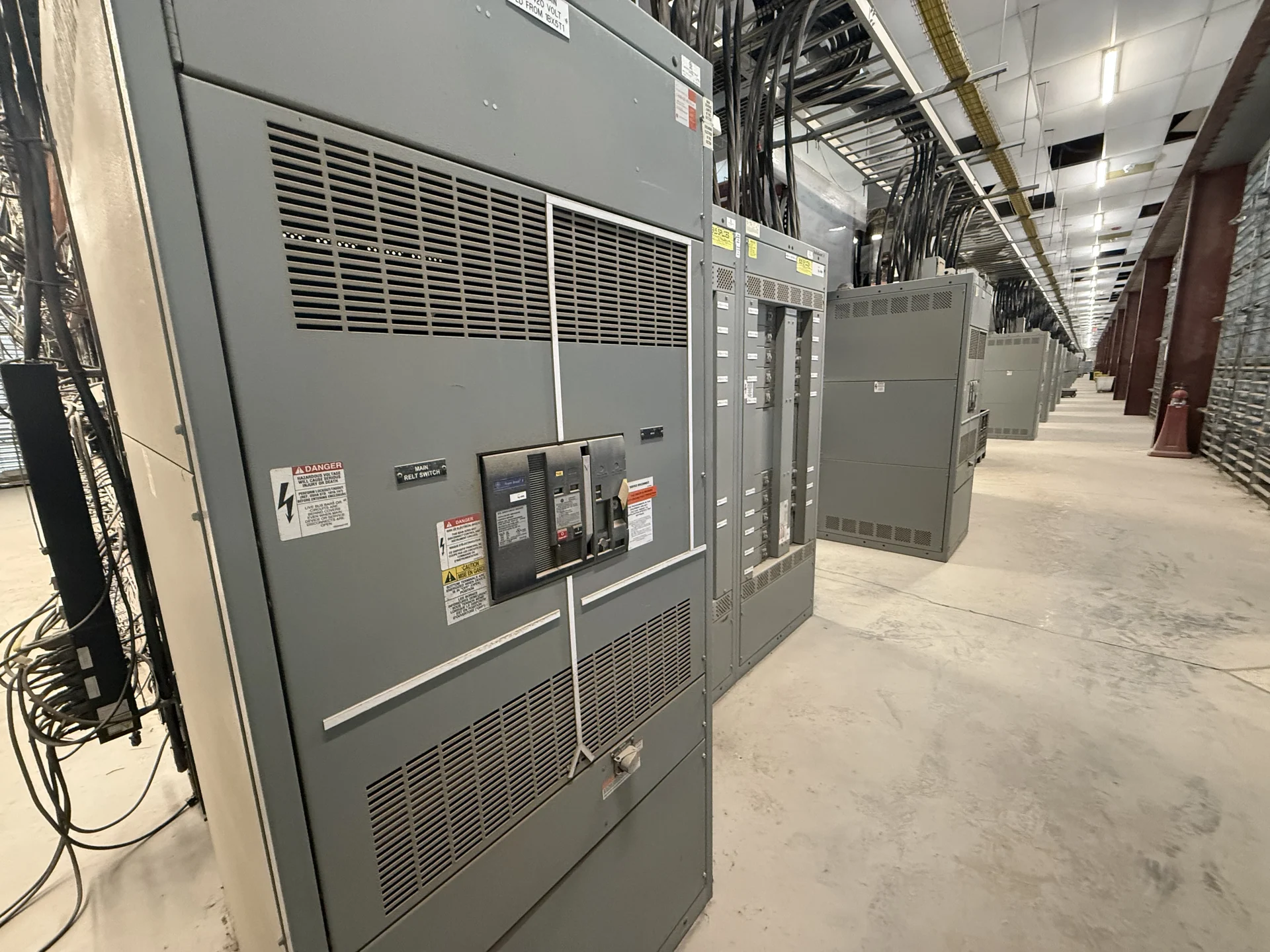
Start with the plant's operating requirements
Industrial switchgear companies should be compared against the same plant requirements, not just a price or a product name. Start with the electrical one-line diagram, nominal system voltage, phase and frequency, grounding arrangement, and the expected source and feeder connections. Describe major loads, including motors, drives, process equipment, and any planned expansion. Identify which loads must remain energized during maintenance or a source interruption, and which outages the plant can tolerate. These details help an industrial switchgear manufacturer understand the intended duty and identify questions that need engineering review before a new equipment configuration can be quoted.
Match the lineup to load and operating patterns
A load schedule helps distinguish the current required at each feeder from the capacity needed at the main and bus. Give manufacturers the calculated demand, motor starting information where relevant, and a realistic allowance for future circuits. For a plant with two sources, describe the intended operation of mains and bus ties, including whether sources may operate in parallel and which interlocks are required. Ask each manufacturer to identify assumptions about breaker arrangements, controls, metering, and spare space. A compact arrangement may use less room, while additional sections or service access may make future changes easier; the right balance depends on the site's operating plan.
Compare fault duty and protection on equal terms
Available fault current is a system calculation, not a value established by the equipment's continuous-current rating. Share the latest short-circuit study or the source and transformer data needed for the responsible engineer to evaluate fault duty, including significant motor contribution and relevant operating scenarios. Compare the proposed assembly's applicable short-circuit or withstand rating with the specified duty, and separately check each interrupting device's rating and application. Duration and other rating conditions matter when applicable. The engineer should also review protective settings and coordination with upstream and downstream devices; a higher interrupting rating alone does not establish selective coordination or an acceptable arc-flash result.
Account for the installation environment
Tell prospective manufacturers whether the lineup is intended for an electrical room or an outdoor location, and describe the actual exposure to heat, moisture, dust, corrosive substances, and condensation. Specify the required enclosure type and any site-specific hazardous-area or seismic requirements for review rather than assuming a standard enclosure covers them. Provide the available footprint, ceiling height, cable entry and exit, and path from delivery point to final position. Include required working clearances, door swing, ventilation, and maintenance access in the layout discussion. The engineer and installer should verify the final arrangement against applicable requirements and site conditions.
Ask for evidence and usable documentation
Request a documentation list before selecting a supplier: proposed one-line and elevation drawings, device schedules, connection details, control schematics, and installation and maintenance information may all matter to the project. Define which applicable standards, project specifications, and third-party listing or qualification requirements must be met, then ask for evidence specific to the offered assembly and configuration. Do not treat a component's credentials as proof for the complete lineup. Agree on the inspection and test plan, acceptance criteria, records, and any witness participation. Clarify who reviews submittals and who resolves comments before design and production proceed.
Compare complete scopes, not headline prices
Give each manufacturer the same inquiry package and compare responses line by line. Look for differences in equipment ratings, feeder count, protective devices, metering, controls, enclosure, documentation, testing, and shipping splits. Record exclusions and allowances as well as any assumptions that could change the scope after approval. Confirm whether studies, field installation, commissioning, unloading, and rigging are included or assigned to others. Ask how proposed component substitutions or drawing changes will be communicated and approved. Commercial terms, payment milestones, freight responsibility, and any warranty offered should be reviewed alongside technical fit, with questions resolved in writing before an order is placed.
Plan the inquiry and decision milestones
When requesting new industrial switchgear, send the project location, required scope, one-line, load information, fault-duty basis, environmental conditions, and drawings or dimensional constraints already available. Flag missing information so each manufacturer can state its assumptions instead of guessing. Share the desired need date and any outage or installation milestones, then ask for a project-specific schedule covering submittal review, material availability, production, testing, and shipment. Confirm the shipping destination, receiving access, and responsibilities for handling the equipment. Switchgear Builders supplies new switchgear; discuss the configuration, documentation, terms, and delivery arrangements for the particular project before making a purchasing decision.