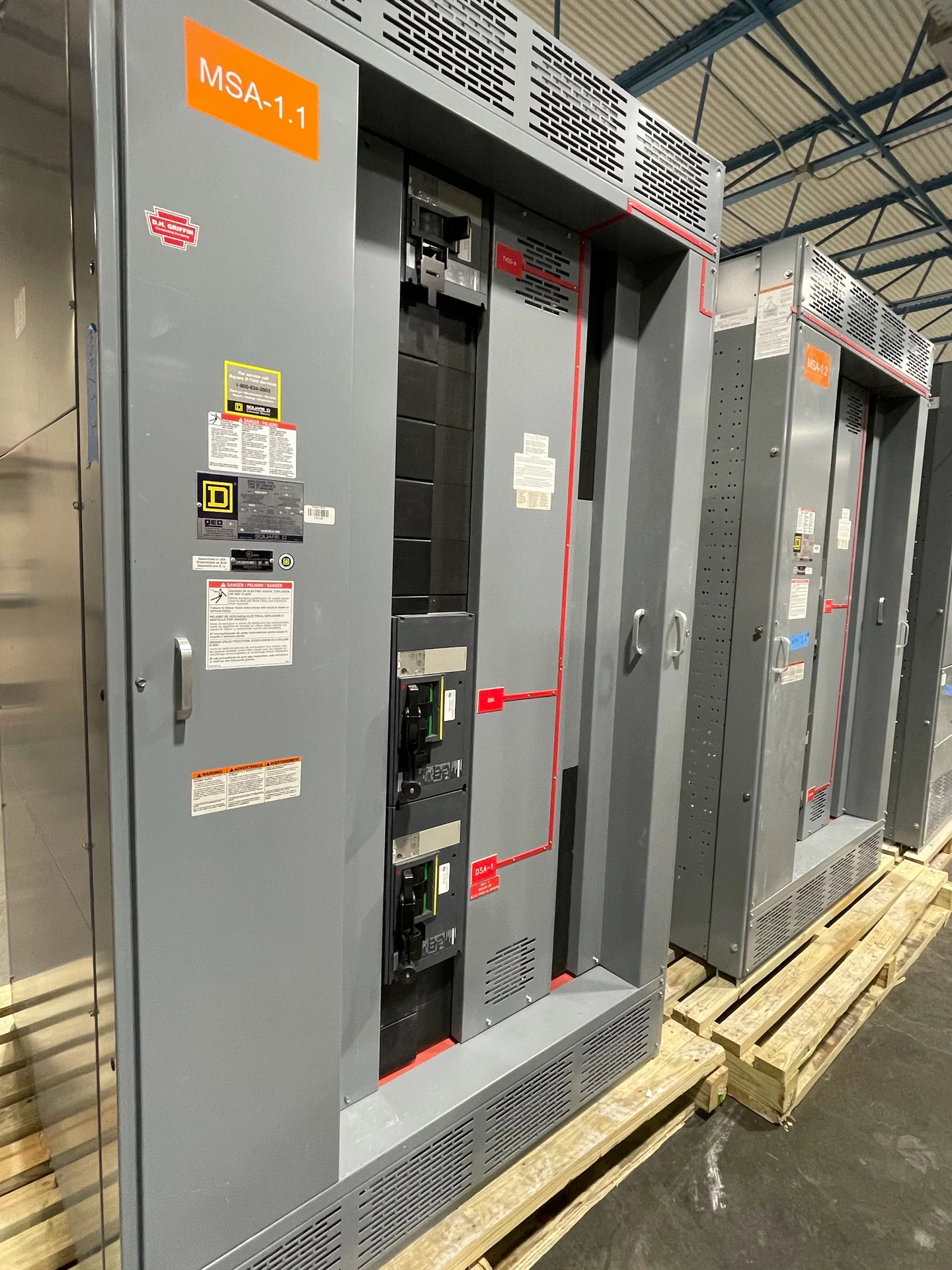
What In-Stock Availability Really Means
In-stock switchgear availability is a project question, not a product assumption. A new assembly may be physically complete, partly configured, reserved for another order, or unsuitable for a particular electrical system even when its general description sounds close. The practical starting point is to ask the manufacturer to verify current inventory against the requested equipment type, voltage, continuous current, short-circuit duty, enclosure arrangement, protective devices, and destination. Switchgear Builders manufactures new electrical switchgear in the United States, builds custom to specification, uses American components, and ships nationwide; those capabilities do not by themselves establish that a specific lineup is ready to ship.
Define the Equipment Before Asking
A useful availability inquiry describes the equipment precisely enough for an engineering and production review. Include the one-line diagram or a clear source-and-feeder description, nominal voltage, phase and wire configuration, frequency, grounding method, main and feeder requirements, available fault current, continuous load, enclosure environment, dimensions, cable-entry direction, and any metering or control interfaces. Identify whether the request concerns switchgear, a switchboard, transfer equipment, or another distribution assembly; similar terminology can hide important construction differences. If drawings are available, include them with revision dates so a manufacturer can compare a possible in-stock configuration with the actual design intent.
Check Rating and Configuration Fit
Physical presence is not the same as electrical suitability. Confirm that every proposed assembly has the required equipment voltage class, bus and device ratings, interrupting or withstand duty as applicable, frequency, phase arrangement, grounding provisions, and environmental enclosure requirements. Review the number and type of mains, ties, feeders, breakers, switches, fuses, meters, relays, and control circuits rather than relying on an abbreviated nameplate description. An apparent match can still require engineering changes if cable compartments, bus orientation, interlocks, access clearances, or protection settings differ from the project documents. Qualified design professionals should approve any substitution before an order or installation decision.
Ask What Can Be Supplied Now
When contacting the manufacturer, separate questions about physical inventory from questions about configuration completion. Ask whether the identified equipment is complete, which components are included, what drawings and test records accompany it, whether modifications are possible, and what review is required before release. Request confirmation of the actual quantity, configuration revision, and condition of documentation rather than treating a generic availability statement as a commitment. If a ready configuration does not fit, a custom-built new lineup may be the more controlled path because its bus layout, protection, controls, dimensions, and interfaces can be developed around the project specification instead of forcing the design to fit an unrelated assembly.
Coordinate Shipping and Site Readiness
Availability also depends on whether the destination can receive the equipment safely and whether the shipment can be divided into practical sections. Provide the U.S. delivery address, receiving hours, dock or crane information, access restrictions, unloading responsibility, indoor or outdoor placement, and any required lifting or rigging coordination. Confirm packaging, shipping splits, approximate weights when available, lifting points, freight terms, and inspection steps at receipt with the manufacturer and project team. Nationwide shipping supports customer procurement across the United States, but the buyer remains responsible for coordinating site access, installation planning, and qualified handling arrangements.
Use a Written Availability Confirmation
Before purchasing new electrical distribution equipment, turn the conversation into a written, project-specific confirmation. The record should identify the manufacturer, equipment description, ratings, included components, drawing status, documentation scope, shipping destination, commercial exclusions, and the conditions that could change availability. Do not infer a delivery date, price, certification, or listing from a catalog description or an informal message. If UL 891 may apply, ask the project engineer and manufacturer to confirm its relevance and the applicable construction and documentation requirements for that particular assembly. A clear confirmation reduces substitution risk and gives procurement, engineering, and installation teams the same reference point.