Start with the Airport’s Critical-Load Strategy
Airport backup power switchgear should begin with a project-defined list of loads, not with a preferred enclosure or transfer sequence. Runways, airfield lighting, terminal life-safety systems, navigation support, communications, security, baggage systems, and tenant services may have different continuity requirements. The electrical engineer should identify which loads require backup, how they are grouped, and whether separate sources or distribution paths are needed. That information gives a manufacturer a useful basis for a new custom lineup rather than a generic airport power distribution assumption. Record whether each critical load tolerates a momentary interruption, requires an ordered transfer, or needs continuous availability. Separate airfield circuits, evacuation functions, air traffic support, and security controls because their operating owners may approve different restoration procedures.
Coordinate Normal and Emergency Sources
The source-transfer interface must describe what happens when normal utility power is unavailable, returns, or becomes unacceptable under the project’s operating logic. Inputs may include utility service characteristics, generator or alternate-source ratings, grounding arrangement, phase and frequency, transfer equipment location, and the desired open- or closed-transition behavior where applicable. Interlocking, controls, sensing, bypass provisions, and manual operating procedures should be reviewed together by the engineer, transfer-equipment specialist, installer, and switchgear manufacturer. For parallel generators or multiple emergency feeders, identify source priority and conditions that prevent inadvertent paralleling. State what operators should see during failed start, transfer timeout, source restoration, and manual bypass.
Match Protection to the Distribution Study
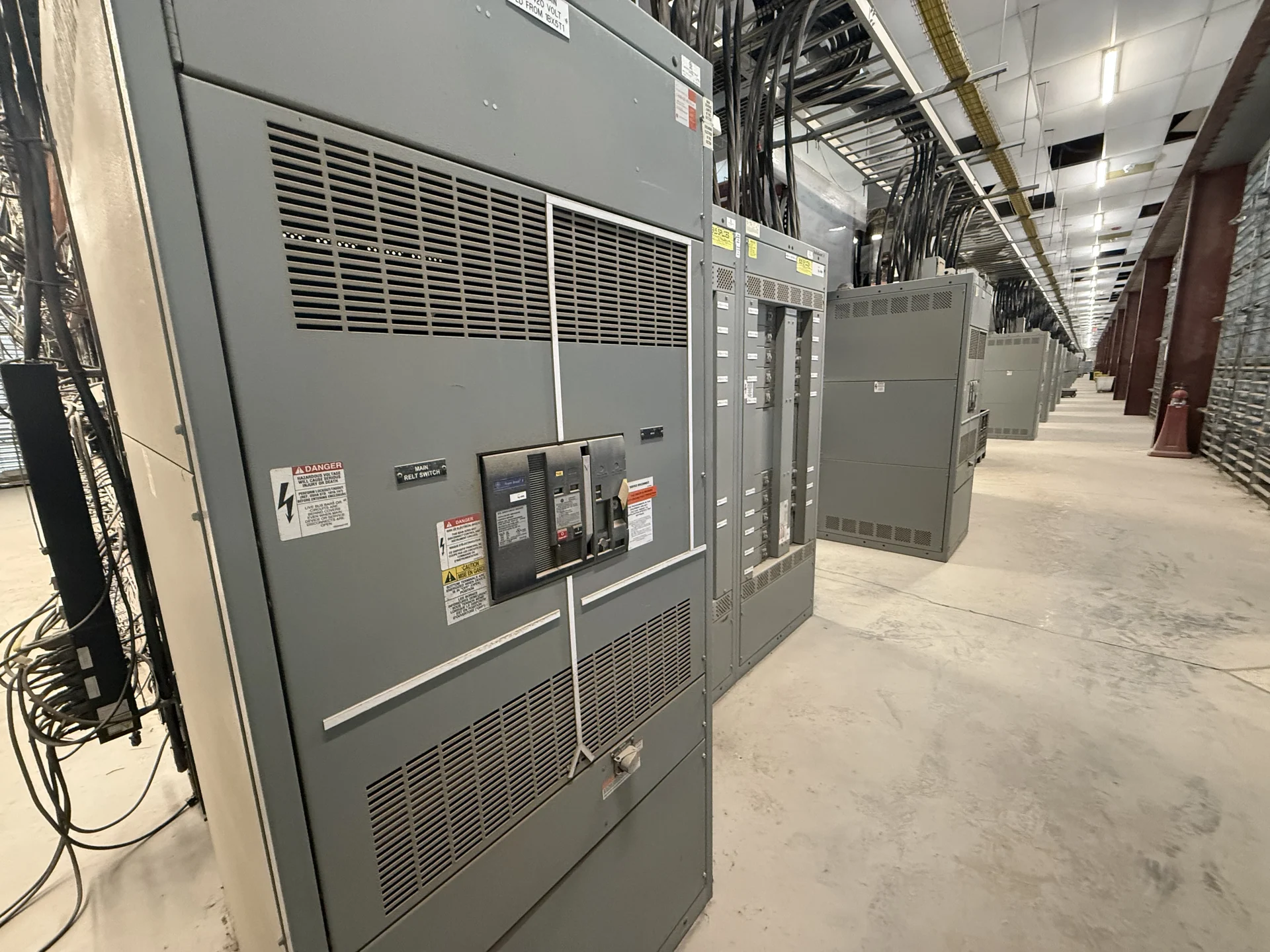
Airport backup power equipment needs protective devices selected against calculated load current, available fault current, source contribution, conductor ampacity, and downstream coordination objectives. A generator may contribute fault current differently from a utility source, so settings and interrupting or withstand requirements cannot be copied from the normal-source lineup without review. Provide the single-line diagram, short-circuit study inputs, coordination criteria, grounding details, and any arc-flash study assumptions with the quote request. Final ratings and settings remain project-specific engineering decisions.
Design Around Existing Airport Interfaces
Replacement or expansion work at an airport often has to fit a defined room, feeder path, outage plan, and installation sequence. Share available dimensions, cable-entry direction, bus connections, equipment access route, working clearances, anchorage expectations, environmental conditions, and the location of upstream and downstream devices. A custom builder can then coordinate doors, barriers, metering, control wiring, terminals, and shipping sections with the physical interfaces shown in approved drawings. Field verification by qualified project personnel is essential before fabrication. For renovations, label retained feeders, temporary connections, and new terminations on a cable and interface schedule. This helps installers sequence isolation, verify phase identification, and distinguish a temporary construction source from the permanent emergency path.
Define Controls, Testing, and Records
A practical submittal package should make the backup operating sequence understandable to operators and installers. Identify source-available signals, permissives, interlocks, alarm points, remote indications, metering, communications requirements, and local controls. Agree in advance on inspection points, continuity checks, insulation checks where applicable, functional demonstrations, witness participation, and the format of recorded results. If the project references UL 891, confirm whether it applies to the specific assembly and what listing or verification requirements must be satisfied; applicability is not automatic for every switchgear project.
Plan U.S. Manufacturing and Delivery
Switchgear Builders manufactures, builds, and supplies new electrical switchgear in the United States, custom to specification, with American components and nationwide shipping. For an airport project, a quote request should identify the destination, receiving restrictions, security or appointment requirements, unloading responsibility, shipping split preferences, lifting points, and the approved delivery contact. Include the latest one-line, equipment schedules, dimensions, control narratives, and documentation list so the manufacturer can evaluate the requested scope and clarify delivery and installation responsibilities. Coordinate the delivery plan with the airport construction manager and qualified rigging personnel, especially when equipment must pass through controlled access points or be staged during a restricted outage window. Receiving checks should compare shipping documents, section identification, visible condition, lifting provisions, and included drawings before placement. Installation, energization, and final settings remain responsibilities of qualified project personnel under the approved design.