Start with the Building’s Critical-Load Strategy
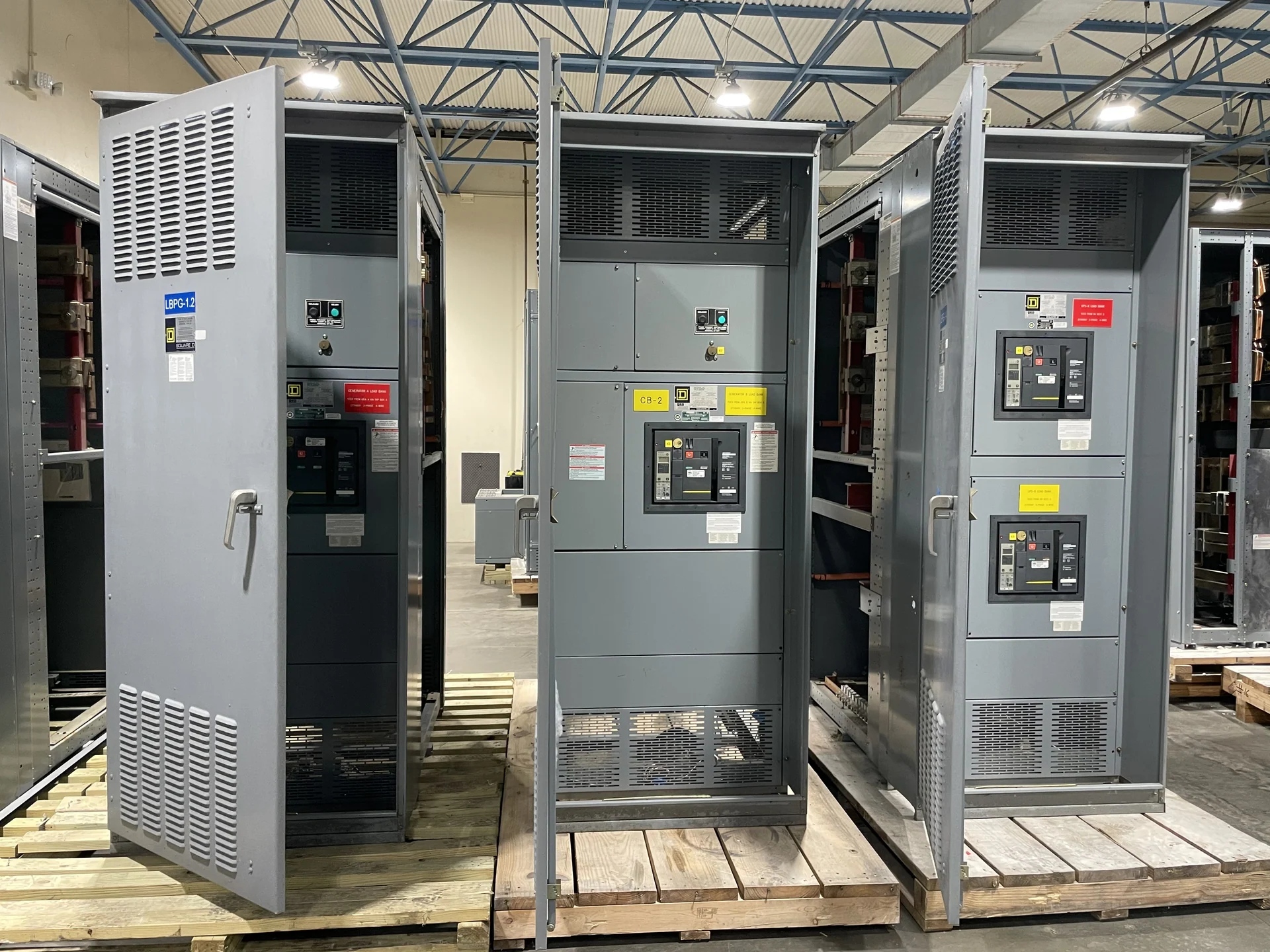
Backup power distribution for commercial buildings begins with a clear decision about which loads require an alternate source and how those loads should operate during an outage. A building may designate life-safety systems, fire pumps, elevators, security equipment, telecommunications, refrigeration, or selected tenant circuits, but the final grouping depends on the facility, occupancy, engineering documents, and applicable local requirements. A new switchgear assembly should reflect the planned source, feeder arrangement, normal and emergency operating states, and the physical interfaces that installers must connect. As an American electrical switchgear manufacturer, we build custom equipment to the project specification, using American components and arranging nationwide shipping for the completed equipment package.
Coordinate the Transfer Equipment Interface
A transfer switch changes the source serving a designated load; the surrounding distribution equipment must make that change workable electrically and operationally. The design team should identify normal and emergency source conductors, transfer-switch terminals, bypass or maintenance provisions where specified, neutral and grounding treatment, control contacts, source sensing, and any required permissives. It is also important to define whether a load is transferred individually, through a distribution section, or through a common emergency bus. These choices affect bus layout, feeder protection, compartment space, wireway access, and interlocking. Before a quote is finalized, provide the one-line diagram, transfer sequence, equipment schedule, and interface drawings so the manufacturer can resolve boundaries rather than guess at them.
Size Distribution Around Real Operating Conditions
Commercial-building backup power cannot be selected from generator nameplate information alone. Review continuous loads, motor starting current, elevator or pump behavior, nonlinear loads, phase balance, future circuits, and the way loads are restored after transfer. Available fault current must be established for each source and the protective devices must be evaluated for their interrupting duties and coordination with upstream and downstream equipment. Emergency-source capacity may require staged starting or load-shed logic, while sensitive electronic loads may require attention to voltage variation and grounding. A custom lineup can organize mains, feeders, metering, controls, and source interfaces, but ratings and settings remain project-specific engineering decisions documented by the responsible electrical professionals.
Plan Enclosures, Access, and Installation Interfaces
The electrical room and delivery route should be considered while the backup distribution equipment is being designed, not after fabrication. Confirm available wall length, working space, door swing, cable entry direction, overhead or underfloor routing, ventilation needs, lifting points, shipping splits, and the sequence for setting each section in place. Outdoor portions or equipment exposed to building-service conditions may require a different enclosure approach than an interior lineup. The project should also define labels, terminal locations, control wiring segregation, and access for commissioning and future maintenance. We can manufacture new switchgear custom to these documented dimensional and interface requirements, while the owner, engineer, contractor, and qualified rigging parties coordinate site readiness and installation responsibilities.
Define Testing, Documentation, and Review Gates
A useful commercial-building backup power package states what will be reviewed before release, what will be inspected during assembly, and what records will accompany the equipment. Typical project discussions cover drawing approval, device data, wiring identification, point-to-point checks, control-sequence simulation, continuity checks, insulation checks where applicable, and witnessed functional tests agreed in advance. The exact test plan should match the equipment scope and the owner’s acceptance requirements; it should not be assumed from a product label. If the specification references UL 891, confirm whether that standard applies to the particular assembly and verify any project-specific listing, construction, or evaluation requirements before ordering.
Prepare a Complete Manufacturer Quote Request
For a precise quote on new commercial-building backup power distribution equipment, send the manufacturer the project location, one-line diagram, normal and emergency source details, voltage and phase information, available fault current, continuous-current requirements, feeder schedule, transfer equipment information, enclosure environment, dimensions, metering and controls, documentation expectations, and shipping constraints. Identify whether the equipment supports a new installation, an expansion, or a planned replacement interface, and include photographs or field dimensions when they are reliable and permitted for design use. We manufacture and supply new custom switchgear in the United States, with American components and nationwide shipping; final scope, commercial terms, configuration, and delivery estimates must be confirmed for the specific project.