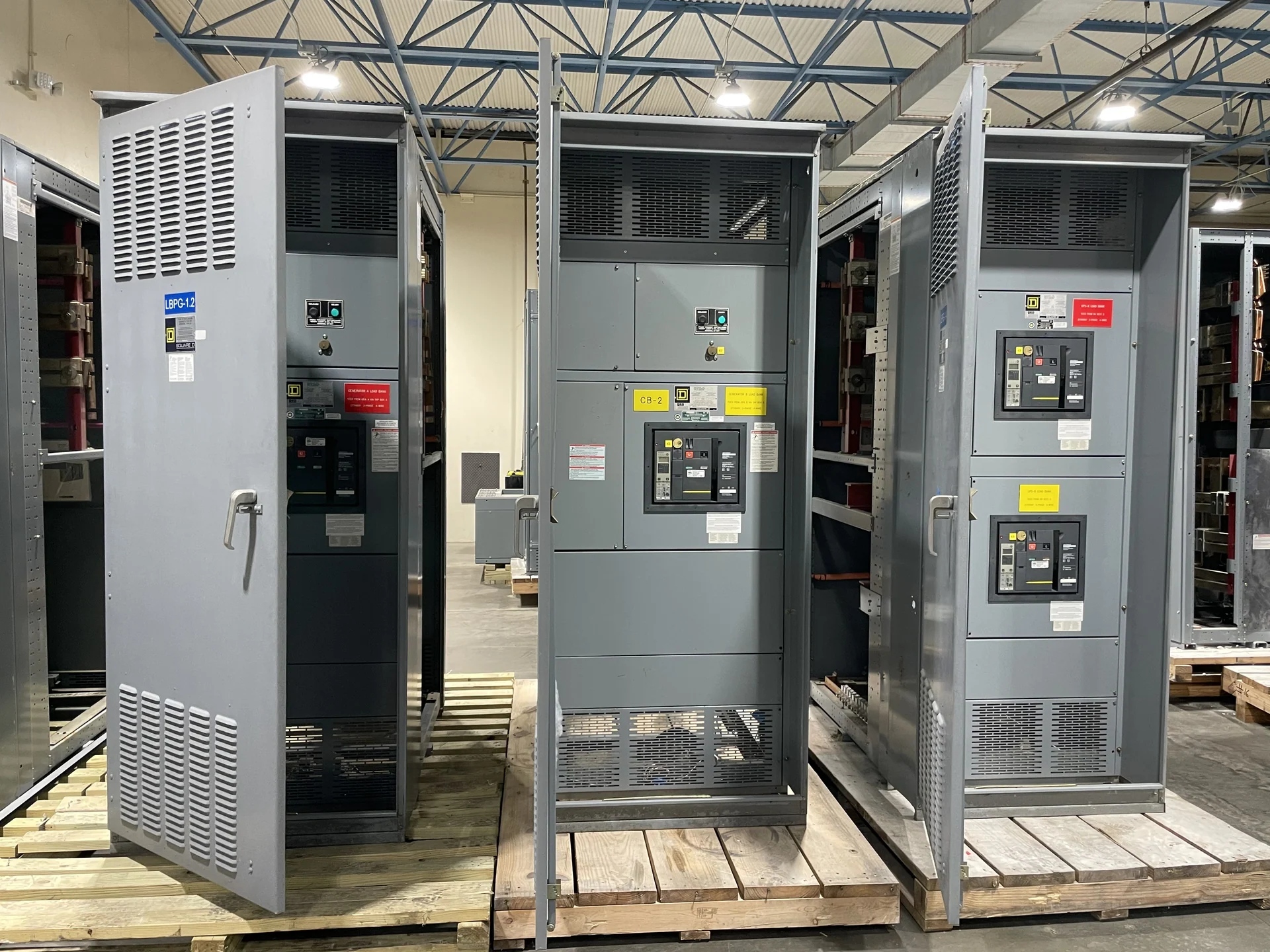
Start with the Data-Center Power Architecture
Switchgear for data centers should be defined from the electrical architecture outward, not selected from a generic equipment label. Begin with the utility service, generators, UPS systems, transformers, distribution buses, and critical loads shown on the project one-line diagram. Identify whether sources operate independently, share a tie, or require a defined transfer sequence. Record nominal voltage, phase, frequency, continuous current, available fault current, grounding method, and the protective devices connected to each lineup. This information lets a manufacturer evaluate a custom new assembly that fits the intended power path while keeping source interfaces, feeder destinations, and maintenance boundaries clear for the engineer and installing contractor.
Design Redundant Sources Without Assuming Interchangeability
Redundant data-center sources can improve maintainability, but redundancy is an operating concept that must be translated into specific interlocks, controls, and protection. A main-tie-main arrangement, for example, may require a defined normal position, permissive logic, source separation, and a controlled transfer sequence; those choices cannot be inferred from the name alone. Confirm whether paralleling, closed-transition transfer, synchronization, or generator-specific relaying is part of the design. The manufacturer can build new custom switchgear around the approved control narrative, provided the project team supplies the source characteristics, breaker functions, metering points, communication requirements, and limits on simultaneous source connection.
Coordinate Protection and Fault-Duty Inputs
A data-center lineup must be coordinated with the complete distribution system rather than rated in isolation. The design team should provide the latest short-circuit study or available fault-current information, transformer data, feeder lengths where relevant, protective-device types, and preliminary time-current settings. Review interrupting ratings, bus short-circuit withstand requirements, selective coordination objectives, and arc-flash study assumptions as separate but related questions. If the electrical design changes after quotation, the manufacturer needs the revised inputs before drawings are finalized. This disciplined exchange helps align custom bus arrangements, breaker selections, trip units, relays, and control wiring with the project’s engineering decisions instead of guessing at critical values.
Plan Maintainable Lineups and Room Interfaces
Maintainability depends on physical planning as much as on source logic. Confirm lineup dimensions, shipping splits, cable-entry direction, termination space, front and rear access, door swing, working clearances, ventilation needs, and the route from the receiving point to the electrical room. Data centers may also need staged energization, segregated power paths, or provisions for future feeders; each item affects enclosure layout and documentation. Provide the room plan, structural constraints, floor loading information when available, and lifting or rigging assumptions for review. Nationwide shipping can be coordinated for a U.S. destination, but packaging, freight terms, site access, unloading, and qualified handling responsibilities should be agreed for the specific project.
Specify Controls, Monitoring, and Documentation
Control and monitoring requirements should be written as functional behavior, not just as a device list. Define breaker open and close commands, permissives, source status, trip indications, alarms, metering values, remote interfaces, network protocols, and loss-of-control-power behavior. Identify whether signals land at terminal blocks, a plant control system, an energy-management platform, or another project-defined interface. A custom manufacturer package may include drawings, wiring schedules, device data, and test records when those items are included in the agreed scope. Review submittals against the approved one-line diagram and sequence of operations, then resolve discrepancies before fabrication so the delivered new equipment matches the data-center control strategy.
Work Directly with an American Manufacturer
Switchgear Builders manufactures, builds, and supplies new electrical switchgear in the United States, custom to specification, with American components and nationwide shipping. For a data-center inquiry, send the one-line diagram, equipment schedule, fault-duty information, physical layout, control narrative, environmental conditions, and documentation requirements rather than relying on a broad equipment description. The project team should also identify the engineer of record, installer, utility or authority interfaces, witness expectations, and any requested standard or listing review. UL 891 may apply to some switchboard projects, but its applicability, construction requirements, and any project-specific listing must be confirmed for the particular assembly; no blanket assumption should replace that review.