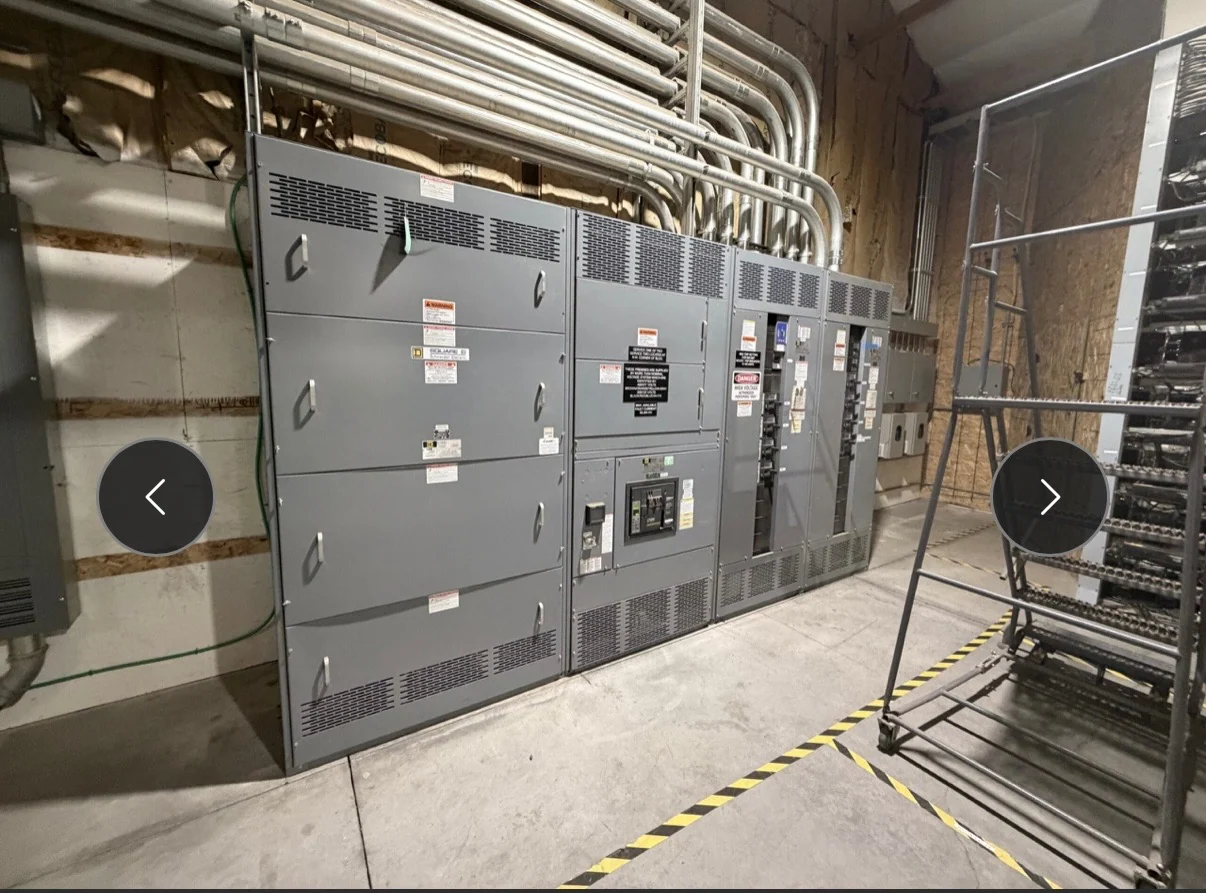
Start with the Data Center Power Architecture
Redundant data center power paths begin with a clear map of sources, transformation, distribution, and critical loads. A project team should identify utility services, generators where applicable, UPS equipment, switchgear lineups, downstream distribution, and the operating states that each path must support. The objective is not simply to duplicate equipment; it is to define whether paths remain electrically independent, where they may connect, and what happens during normal operation, maintenance, or a source interruption. Switchgear Builders manufactures each new switchgear assembly in the United States to the project specification, using American components and coordinating nationwide shipping for projects that need a defined equipment package.
Separate Paths Require Deliberate Interfaces
A dual-path design can lose its intended independence at a shared transformer, common bus, underspecified feeder, control circuit, or physical routing point. Review one-line diagrams for every normal and alternate energization route, then document which devices are permitted to close together and which combinations must be blocked. Source breakers, feeder breakers, bus sections, and tie devices should be evaluated as a coordinated operating scheme rather than isolated line items. The design team should also identify grounding arrangements, phase relationships, metering points, and communications needed to distinguish a true alternate path from a merely larger lineup.
Bus Ties Need an Explicit Operating Sequence
A bus tie can improve operating flexibility, but its value depends on the project-defined sequence for normal, emergency, and maintenance conditions. Engineers should state whether the tie is normally open or normally closed, which sources may feed each bus, how transfer decisions are authorized, and what prevents an unintended paralleling condition. Interlocks may involve mechanical devices, electrical logic, protective relays, or a combination selected for the application. A useful switchgear specification names the required states, permissives, alarms, and reset behavior so the manufacturer can coordinate compartments, control wiring, terminal points, and documentation with the approved design.
Design Maintenance Access into the Paths
Redundancy only helps during maintenance when personnel can isolate a defined section without removing the loads that the operating plan considers critical. Allow space for doors, breaker movement, cable work, testing, lifting, and safe access around the lineup, while coordinating the equipment footprint with room clearances and the movement route into the building. Specify which sections require independent access, how temporary connections are handled, and whether an outage window is acceptable for each task. Drawout arrangements, fixed devices, compartment boundaries, and terminal locations should be reviewed against the facility maintenance method before fabrication begins.
Coordinate Protection and Controls Across Both Paths
Protective coordination for redundant distribution should cover each source, bus section, tie, feeder, and downstream device in every credible configuration. Available fault current, continuous loading, interrupting duties, grounding, time-current relationships, and selective tripping objectives all influence device selection and settings. If the lineup interfaces with generators, UPS systems, automatic transfer equipment, or supervisory controls, provide the expected signals and operating priorities early. A manufacturer quote is more useful when it includes the latest one-line diagram, control narrative, device schedule, short-circuit information, physical dimensions, cable entry requirements, and the project documentation standard.
Plan Manufacturing, Review, and Delivery Inputs
A custom data center switchgear package should move through disciplined design review before material is committed and assembly is finalized. Confirm voltage class, current ratings, enclosure environment, bus arrangement, device types, interlocks, instrumentation, communications, labeling, lifting provisions, shipping splits, and receiving constraints. If UL 891 is applicable, treat it as a project-specific requirement and confirm its applicability, listing expectations, and available capability for the exact assembly; do not assume it applies to every switchgear project. Switchgear Builders can coordinate a new custom build around approved project information, then prepare the equipment for nationwide shipment with destination, packaging, freight, and site-access details addressed in the inquiry.