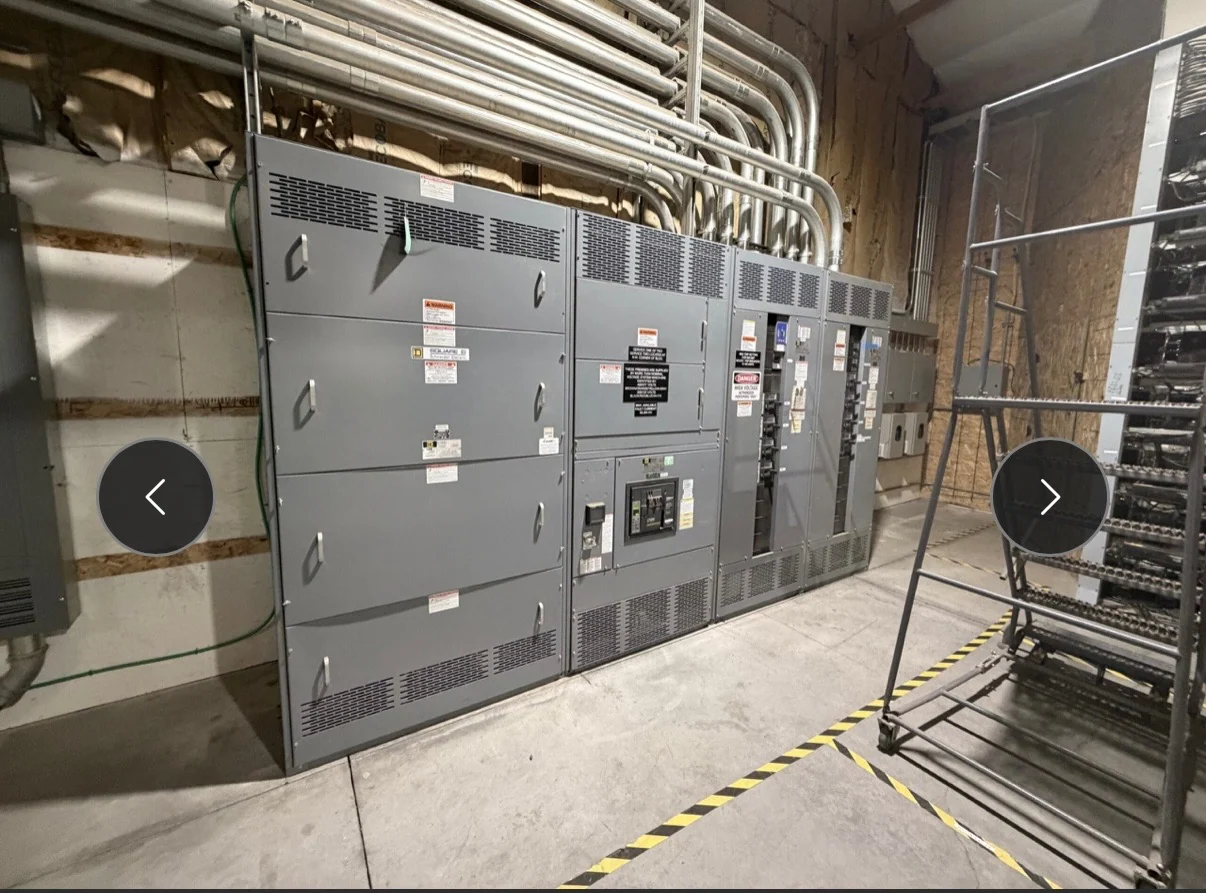
Start with the Hartford service interface
A service-entrance switchboard for a Hartford, Connecticut project begins with the relationship between the utility service, the building distribution system, and the equipment location. Before requesting a manufacturer quote, establish the nominal voltage, phase and wire arrangement, service conductors, service disconnecting means, metering approach, and available fault current. The project engineer or utility representative should confirm which interface details govern the design. Switchgear Builders manufactures new electrical switchboards in the United States, builds custom equipment to project specifications, uses American components, and ships nationwide; those capabilities support a defined project scope rather than replacing utility or engineering review.
Define the main device and disconnecting means
The main device is more than a label on a one-line diagram. Identify whether the service-entrance switchboard requires a main circuit breaker, fusible switch, multiple mains, or another project-defined arrangement, then document its continuous-current rating, interrupting capability, trip functions, neutral treatment, and operating access. Clarify whether the service has one incoming source or coordinated sections, and show how feeders leave the lineup. A useful specification also addresses the number of sections, cable entry and exit, conductor space, working clearances, and the physical path needed to move the new assembly into the Hartford facility.
Coordinate utility metering and protection
Utility metering can shape the switchboard layout, enclosure arrangement, and installation sequence. Confirm the Connecticut utility's current metering requirements with the responsible design and utility contacts, including meter compartments, instrument transformers where applicable, sealing or access expectations, and the point at which utility-owned conductors or equipment connect. Separately, coordinate feeder protective devices with the calculated load and available fault current so the selected devices are suitable for the project duty. A manufacturer can build around approved drawings and component selections, but the project team must supply the governing utility and engineering criteria before fabrication proceeds.
Plan feeders for present loads and change
List each feeder by destination, conductor arrangement, protective-device type, rating, termination method, and required spare capacity. Commercial projects may need tenant, mechanical, lighting, or emergency-related feeders, while industrial facilities can add motor loads, process equipment, or large future circuits; these are planning examples, not assumptions about a particular Hartford site. Check bus capacity, section dimensions, cable bending space, neutral and grounding provisions, heat-producing devices, and access for termination. If future expansion matters, state whether spare spaces, provisions, or physically separate sections are wanted rather than leaving capacity as an ambiguous promise.
Prepare drawings and site information
A precise quote request should include the latest one-line diagram, load schedule, service data, fault-current study or available fault-current value, site voltage and frequency, enclosure environment, dimensions, cable-entry direction, and required shipping sections. Add room drawings showing equipment footprint, working space, doors, ramps, rigging route, and final receiving constraints. Identify the reviewing engineer, electrical contractor, utility contact, and any required submittal format. For a Hartford delivery, provide the actual destination, access limitations, unloading responsibility, and desired freight terms so nationwide shipping can be planned against real site conditions instead of a generic location assumption.
Review the manufacturer proposal before release
Compare proposals on the same technical basis: incoming arrangement, main and feeder devices, bus and conductor materials, metering provisions, enclosure details, controls, labels, drawings, inspection points, testing scope, packaging, shipping splits, exclusions, and commercial terms. Ask which requirements are included, which depend on approved submittals, and which must be confirmed by the engineer or utility. Switchgear Builders can discuss a new custom service-entrance switchboard built to the submitted requirements and shipped across the United States. Confirm project-specific standards, any requested listing or certification, and all final acceptance criteria before authorizing production.