Plan the Florida Motor-Load Application First
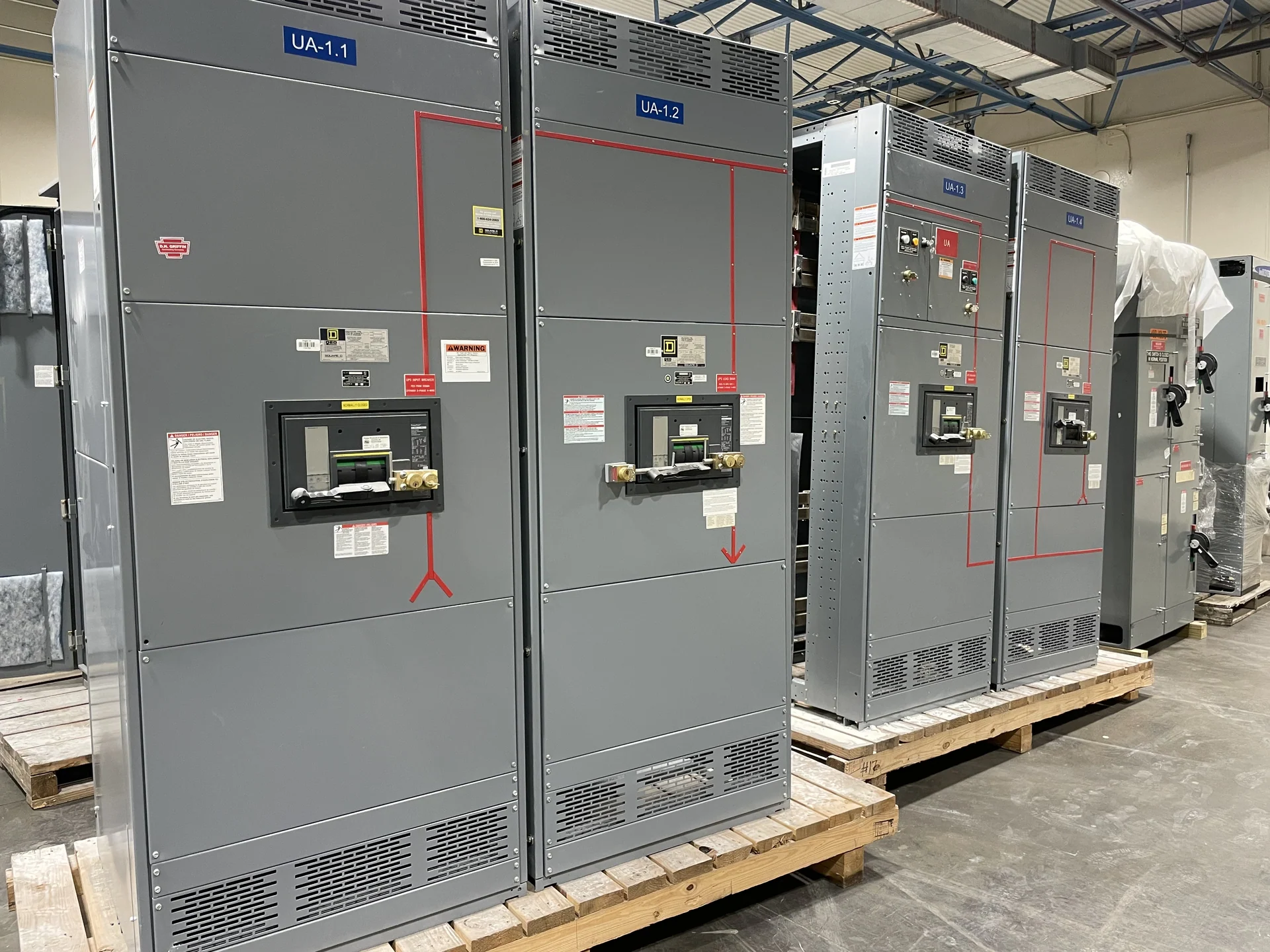
Florida switchgear projects often begin with a practical question: how will pumps, conveyors, and process loads start, run, stop, and recover when operating conditions change? A useful motor control center specification maps each motor to its voltage, full-load current, starting method, duty, control signal, and protective requirements. It should also identify whether loads are grouped by process area, building, or production sequence. Switchgear Builders manufactures new electrical equipment in the United States, builds custom to specification, uses American components, and ships nationwide; the equipment scope still depends on the project's engineered requirements.
Choose Starters, Drives, and Feeder Protection
Starter selection should reflect the motor and the process rather than a generic lineup preference. Across-the-line starting may suit a straightforward motor circuit, while reduced-voltage methods can be considered where starting behavior, mechanical stress, or system conditions call for another approach. Variable frequency drives may support adjustable speed or controlled acceleration, but introduce questions about bypass arrangements, heat dissipation, harmonics, cable practices, and controls. For every feeder, define overcurrent protection, overload protection, disconnecting means, interrupting duty, and coordination inputs with the responsible electrical engineer.
Account for Pumps, Conveyors, and Process Sequences
Industrial pumps may require lead-lag rotation, dry-run protection, level or pressure signals, and an orderly response to a fault. Conveyors can require permissives, interlocks, zero-speed feedback, jam detection, and a defined restart policy. Process equipment may need local controls, remote commands, emergency-stop interfaces, or communication with a plant control system. Document which signals are hardwired and which are networked, identify normally open and normally closed states, and show the intended sequence of operation. These details allow a custom motor control center to be arranged around actual process behavior instead of only nameplate data.
Design for Florida Site Conditions
A Florida electrical distribution design should consider whether the motor control center is indoors, in a conditioned room, under a covered exterior area, or exposed to weather. Heat, humidity, salt-laden air near coastal locations, wind-driven moisture, and site washdown can influence enclosure selection, ventilation, corrosion considerations, cable entry, and maintenance access. Confirm the installation environment, elevation, available space, housekeeping pad or supports, door swing, lifting route, and working clearances. These are project inputs, not assumptions based only on the state name, and the final enclosure and installation approach require qualified engineering review.
Coordinate the Distribution Interface
The motor control center cannot be specified in isolation from the upstream and downstream system. Provide the source voltage, phase and frequency, grounding arrangement, available fault current, feeder conductors, transformer information, and the intended connection method. Then coordinate main devices, branch protection, motor overload settings, control power, grounding and bonding, and any tie or transfer arrangement with the one-line diagram. If an existing plant is being expanded, include available lineup dimensions, bus or feeder interfaces, cable lengths, pull-space limitations, and outage constraints so the new equipment can be reviewed against the actual installation.
Define Drawings, Testing, and Field Responsibilities
A clear inquiry should request the documents needed to approve and install the equipment: one-line diagrams, elevation and footprint drawings, elementary or schematic diagrams, wiring diagrams, device schedules, terminal plans, nameplate information, and a bill of materials or equivalent scope description. Agree in advance on inspection points, continuity and insulation checks where applicable, control-function checks, and recorded acceptance criteria. Assign responsibilities for field terminations, programming, network integration, startup, and final settings rather than leaving those interfaces ambiguous. Project-specific requirements determine which tests and records belong in the equipment package.
Prepare a Complete Florida Quote Request
For a quote on new custom switchgear or a motor control center for a Florida facility, send the project location, application narrative, load schedule, motor list, one-line diagram, control philosophy, site conditions, required dimensions, incoming and outgoing cable information, and requested documentation. Explain whether the equipment serves pumps, conveyors, process skids, or a combination, and identify any owner, utility, engineer, or installer requirements that must be incorporated. Switchgear Builders can review the supplied scope for a manufacturer-built solution with nationwide shipping; confirm project-specific service, delivery details, component selections, and any applicable standards before ordering.