Plan the Water-Treatment Electrical Scope
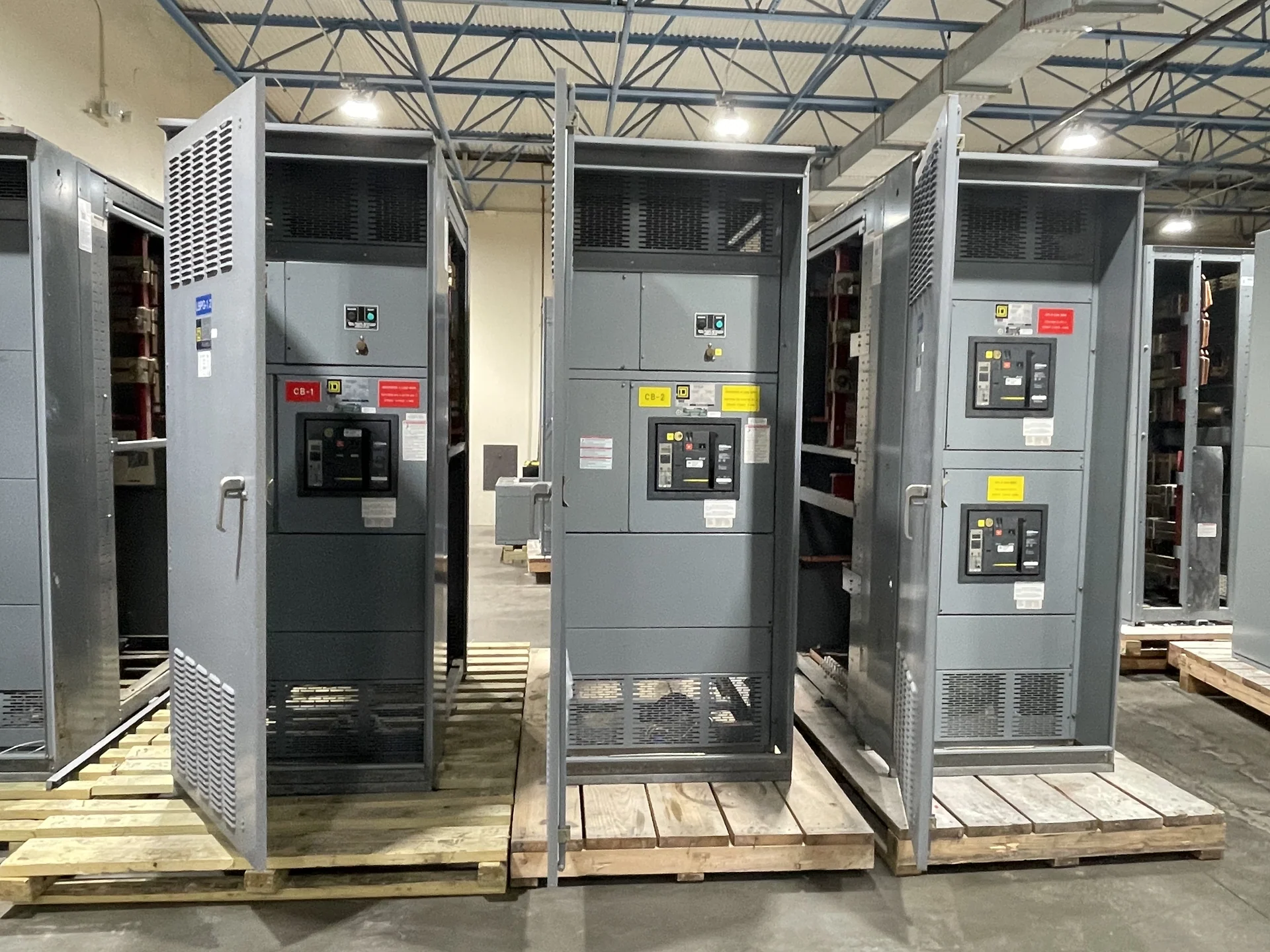
Iowa water and wastewater projects often combine pump motors, blowers, mixers, chemical systems, instrumentation, and building services in one coordinated distribution plan. Start with the process flow diagram, motor schedule, one-line diagram, and control narrative rather than selecting a motor control center by enclosure size alone. Identify normal and alternate sources, voltage, phase, frequency, available fault current, environmental exposure, feeder routing, and the space available for installation. Switchgear Builders manufactures new electrical switchgear in the United States, builds custom equipment to project specifications, uses American components, and supplies nationwide. The final configuration remains subject to engineering review and the project documents.
Match Motor Starting to the Process
Motor starting method affects inrush current, acceleration behavior, mechanical stress, voltage disturbance, and the process sequence. An across-the-line starter may suit a straightforward pump duty when the electrical system and motor can accommodate starting current. Reduced-voltage starting can change the starting profile, while a variable frequency drive can provide adjustable speed for flow control and ramping, but introduces heat, harmonic, bypass, and maintenance questions. For each motor, document horsepower, full-load current, service factor, starting requirement, duty cycle, rotation control, and whether the process permits automatic restart. Coordinate the selected starter or drive with upstream protection and the motor manufacturer’s data.
Configure the Motor Control Center
A useful motor control center layout reflects operation and maintenance, not merely a list of buckets. Group related process loads, reserve space for documented future circuits when required, and separate power, control, and communication interfaces according to the design. Confirm feeder and main-device ratings, bus configuration, short-circuit duty, grounding method, cable entry, vertical wireway needs, door arrangement, and access clearances. Drive sections may require attention to heat dissipation, line and load reactors, harmonic mitigation, disconnecting means, and bypass arrangements. A custom manufacturer quote should identify every starter, drive, feeder, metering point, control transformer, terminal group, and spare provision included.
Account for Iowa Site Conditions
Site conditions can change the enclosure and installation requirements for an Iowa treatment facility. Indoor electrical rooms still require review of temperature, humidity, condensation, ventilation, corrosive agents, washdown practices, and elevation. Outdoor or partially exposed equipment requires a project-defined enclosure approach, sealing, drainage, sunlight exposure, and foundation interface. Treatment chemicals and moisture deserve specific attention to material selection, finishes, cable entries, and the separation of sensitive controls. Provide room dimensions, access doors, lifting path, floor elevation, housekeeping pads, and equipment clearances early so the lineup can be built around real installation constraints instead of being forced into an unsuitable space later.
Coordinate Controls and Communications
Water-treatment motor control is inseparable from the control system. Define whether each motor is local, remote, or automatic; list permissives, interlocks, alarms, trips, hand-off-auto behavior, emergency stops, and fail-safe positions; and identify the signals exchanged with a PLC, SCADA system, or building management system. Specify discrete and analog points, network protocol, device addressing responsibility, and the required terminal and communication documentation. Pump sequencing may depend on level, pressure, flow, or redundant equipment logic, so the equipment package should distinguish motor protection from process control. Review control voltage, shield termination, segregation, and testing responsibilities with the engineer and controls integrator.
Prepare a Buildable Quote Package
For an Iowa switchgear or motor control center inquiry, submit the electrical one-line, load and motor schedules, control schematics, equipment specifications, site environmental data, available fault-current information, and preferred delivery destination. Include whether the project is new construction, an expansion, or a replacement, along with shutdown constraints, receiving access, shipping splits, lifting requirements, and installer responsibilities. Ask the manufacturer to identify assumptions, exclusions, required approvals, component choices, documentation, inspection or test scope, and any items needing clarification. Switchgear Builders can evaluate a custom new-equipment request for nationwide shipment, while project-specific service, shipping estimates, and delivery details must be confirmed before ordering.