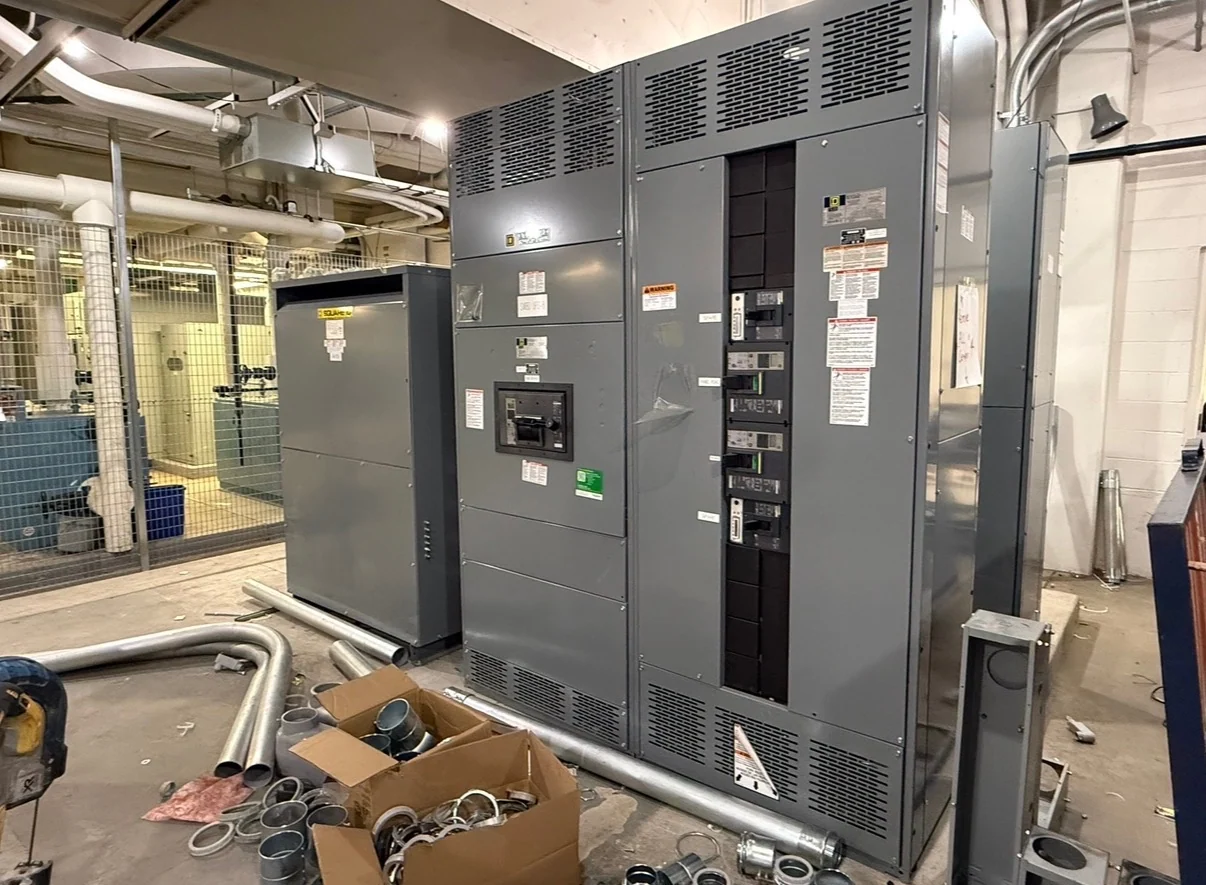
Start with the Bangor Site and Electrical Scope
Planning switchgear for Bangor, Maine begins with the facility rather than a city label. Gather the service voltage, phase and wire arrangement, available fault current, continuous load, largest motor or transformer, grounding method, and expected load growth. A site plan should show the electrical room, service route, feeder exits, equipment movement path, working clearances, and exposure to moisture or temperature. These inputs let an engineer and manufacturer distinguish a practical lineup from a nominally similar catalog description. Switchgear Builders manufactures new electrical switchgear in the United States, custom to specification, using American components and offering nationwide shipping; the actual equipment scope remains dependent on the project documents and engineering review.
Match Equipment to Critical Facility Loads
Critical facilities in the Bangor area may require continuity for different reasons, so the equipment should follow the load hierarchy established by the design team. Separate life-safety, legally required, mission-critical, process, and convenience loads where applicable, then identify which source serves each group. Confirm whether the project calls for one service, multiple utility sources, generators, or another source arrangement. The resulting one-line diagram should show mains, ties, feeders, protective devices, neutral treatment, grounding connections, and transfer equipment interfaces. Do not assume an automatic transfer switch belongs inside the switchgear; define its location, ratings, controls, bypass features, and communications separately.
Automatic transfer switches for critical facility loads should be evaluated by sequence, not just ampere capacity. Document what starts the transfer, which source is preferred, whether open or closed transition is required, how retransfer occurs, and what happens when a source becomes unstable. Identify generator start contacts, permissives, time delays, load-shed stages, emergency stop circuits, alarms, remote status points, and manual operating provisions. The switchgear lineup must provide suitable terminations and protection coordination for that sequence, while the transfer switch manufacturer and controls engineer confirm the actual logic. A written operating narrative prevents ambiguous assumptions during submittal review and commissioning planning.
Coordinate Protection and Available Fault Current
Protection review is especially important when a critical-load arrangement combines utility service, generators, transformers, and transfer equipment. Request the latest utility fault-current information and include transformer impedance, generator contribution, conductor lengths, and source configurations in the study inputs. Compare the equipment short-circuit rating with the calculated duty, and coordinate breaker or fuse settings with upstream and downstream devices where the study supports that approach. A Bangor project may also have utility requirements or authority-having-jurisdiction review items that must be confirmed by the responsible electrical professional rather than inferred from the location alone.
Design the Physical Installation
The physical design should account for the realities of bringing a large electrical assembly into a Maine facility. Confirm door widths, turns, floor loading, rigging points, elevator limits, staging space, weather protection during receiving, and the route from unloading to final placement. Inside the electrical room, reserve working space, cable-bending room, ventilation, lighting, drainage considerations, and access for operating and maintaining devices. Give the manufacturer final dimensions, entry directions, bus or cable interface details, enclosure environment, and anchorage requirements. A carefully coordinated footprint helps identify field conditions that require verification before installation.
Prepare a Complete Manufacturer Quote Package
A useful request for Bangor electrical distribution equipment should include the one-line diagram, load schedule, equipment schedule, specifications, floor plan, elevations, control schematics, protection study if available, and the desired document list. State whether the request covers switchgear, switchboards, automatic transfer switches, metering, protective relays, control power, or only selected portions of the distribution system. Include service conditions, indoor or outdoor placement, enclosure expectations, seismic or environmental requirements, cable entry preferences, shipping destination, unloading constraints, and who owns installation and field testing. Consistent information allows Switchgear Builders to develop a custom new-equipment scope instead of guessing at interfaces.
Plan Documentation, Shipping, and Review
Before fabrication and shipment, agree on drawing milestones, approval responsibilities, nameplate information, device data, wiring identification, test records, packing details, shipping splits, lifting provisions, and receiving inspection steps. Nationwide shipping can support a Bangor destination, but packaging, freight terms, transit estimates, and site access must be confirmed for the particular order. The installing contractor should inspect the shipment for visible damage, compare pieces with the packing documentation, protect equipment from weather, and coordinate qualified rigging and electrical work. If UL 891 is specified, confirm its applicability and any project-specific listing or verification requirements before the design is finalized; it should never be assumed from a location or product name alone.