Plan the Expansion Before Equipment Is Specified
South Carolina facility expansion projects often combine new electrical feeders with an operating distribution system, so the first step is to define the physical and electrical boundary of the work. Gather the one-line diagram, utility information, existing equipment schedules, available fault-current data, load calculations, site voltage, phase and grounding arrangement, and the expected future load. A manufacturer can use those inputs to develop new custom switchgear to the project requirements, while the engineer of record confirms system design and applicable local requirements.
Account for Existing Equipment Interfaces
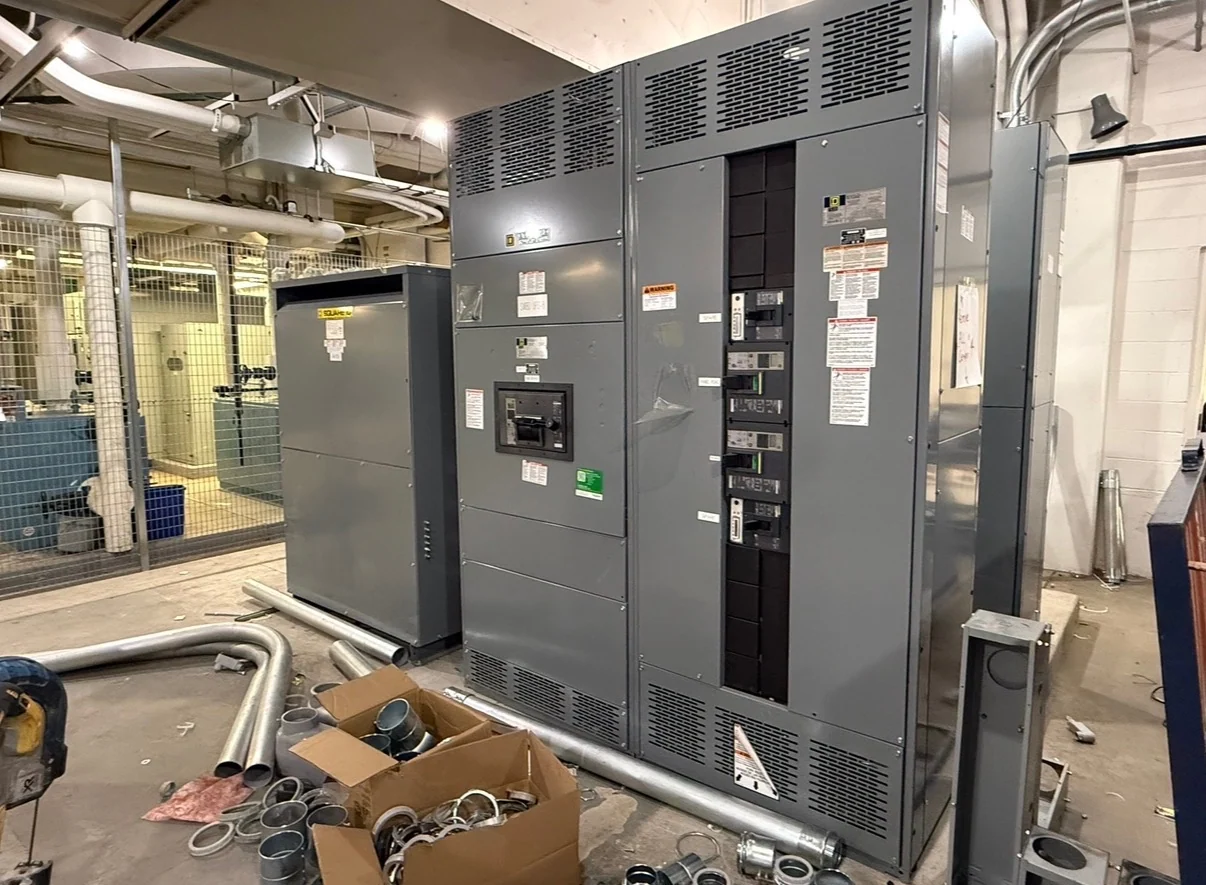
A new lineup must connect to more than conductors on a drawing. Review the existing gear's bus arrangement, feeder positions, cable entry direction, termination space, control voltage, metering interfaces, grounding provisions, and available room for maintenance access. Field dimensions and clear photographs can reveal door swings, obstructions, slab elevations, and routing constraints that are absent from older documents. These details help the manufacturer distinguish a genuinely compatible replacement or extension from a nominally similar design that cannot be installed as planned. Also record the existing lineup manufacturer and section identifiers, conductor sizes, termination hardware, control interconnections, and any obsolescence concerns identified by the project team. If drawings conflict with field conditions, flag the discrepancy before fabrication so the design review can resolve it rather than leaving an installer to improvise an interface during an outage.
Size New Feeders Around Load Growth
For South Carolina electrical distribution serving an expanding facility, feeder planning should address present demand as well as documented growth assumptions. Identify continuous loads, motor starting characteristics, sensitive electronic loads, standby or alternate sources, and the protective-device coordination study inputs. Compare main, bus, and feeder ratings with calculated demand and available fault current rather than selecting equipment from an ampere label alone. The final custom configuration may include different device arrangements, metering provisions, or section dimensions depending on the approved one-line and operating sequence.
Coordinate Outage Windows and Installation Access
Expansion work frequently depends on a carefully defined outage window, even when the new equipment is installed beside energized distribution. Before requesting a quote, identify which loads can be interrupted, whether temporary power is needed, the sequence for shutdown and energization, and who controls switching authorization. Confirm the route from the receiving point to the electrical room, doorway and turning dimensions, floor loading, lifting points, and rigging responsibilities. A nationwide shipment from an American manufacturer still requires site-specific receiving and installation coordination in South Carolina.
Define the Manufacturer Quote Package
A useful request for South Carolina switchgear should state the project location, equipment type, nominal voltage, continuous-current requirements, short-circuit duty, enclosure environment, number and type of mains and feeders, control voltage, metering, communications, cable termination preferences, dimensions, and documentation expectations. Include the latest drawings, schedules, specifications, and requested shipping destination. Ask the manufacturer to identify assumptions, exclusions, engineering-review needs, shipping terms, and project-specific availability or delivery estimates instead of treating a generic catalog description as a complete offer.
Verify Standards, Documentation, and Delivery Details
The project team should identify which standards and submittal requirements apply to the selected assembly, then have the manufacturer confirm applicability during engineering review. UL 891 may be relevant to some low-voltage switchboard projects, but its applicability and any project-specific listing or verification must be confirmed for the actual equipment. Request approved drawings, device data, wiring information, test records, installation instructions, and shipping documentation required by the contract, with final acceptance responsibilities assigned clearly.