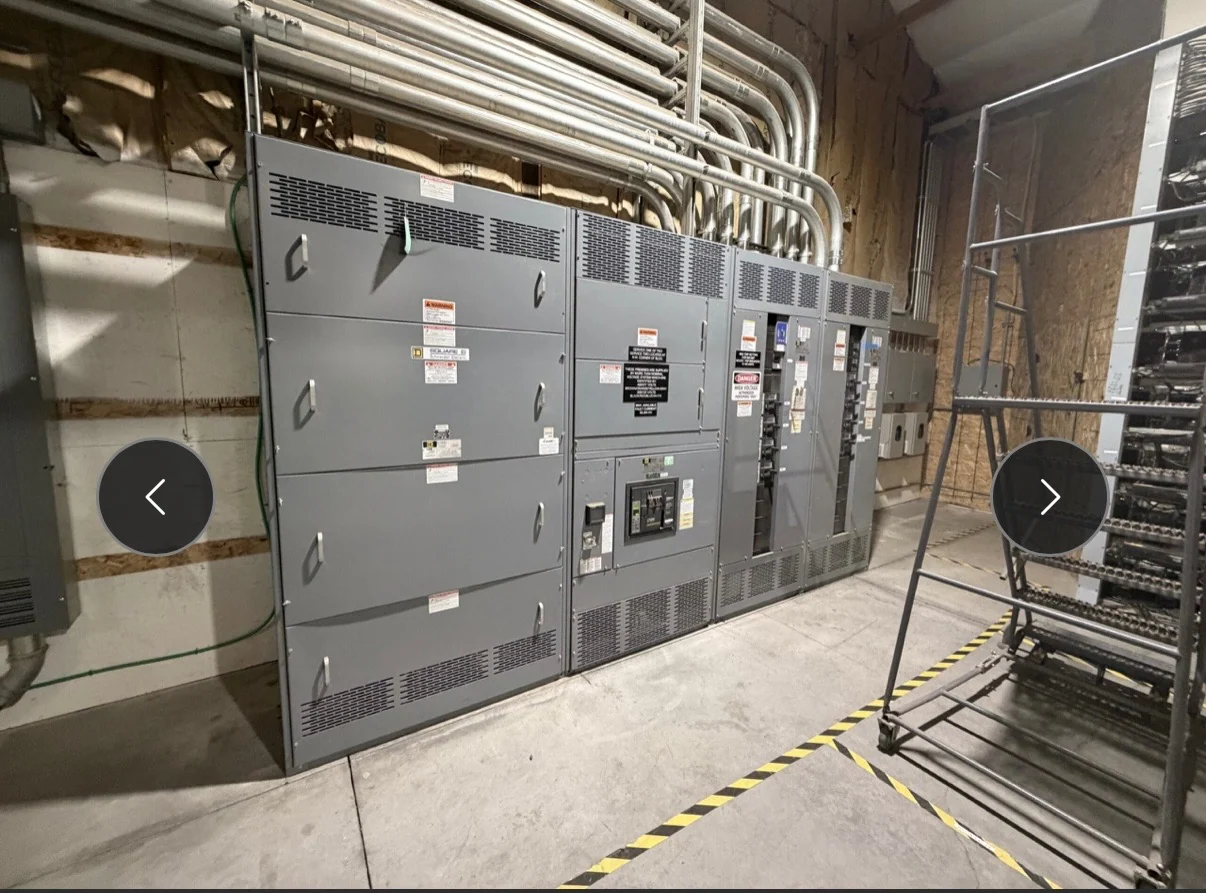
Start with the Charleston Project Requirements
A Charleston South Carolina switchgear project should begin with the electrical one-line diagram, load schedule, available fault current, system voltage, phase, frequency, grounding method, and the intended installation environment. Industrial sites may combine utility service, transformers, motor control centers, process feeders, and standby sources, so the equipment scope must identify how each part connects. Share room dimensions, access paths, cable entry direction, elevation concerns, and maintenance clearances early. Switchgear Builders manufactures new electrical switchgear in the United States, custom to specification, using American components and nationwide shipping for customer projects.
Match Motor Control Centers to the Loads
Motor control centers for industrial pumps, conveyors, and process loads require more than a cabinet size and nominal horsepower list. For each motor, identify voltage, full-load current, starting method, duty cycle, acceleration requirements, overload approach, and whether a starter, variable frequency drive, or another arrangement is appropriate. Pumps may need coordinated operation with valves or level controls; conveyors can involve sequential starts and interlocks; process machinery may require permissives, alarms, and remote status. The final arrangement should follow the engineer’s control narrative and the site’s operating priorities rather than a generic lineup pattern.
Coordinate Protection and Control Interfaces
Motor protection and control decisions should be reviewed against upstream and downstream devices, conductor ampacity, available fault current, starting characteristics, and the coordination study for the particular facility. Define feeder breakers or fuses, overload settings, short-circuit protection, ground-fault functions where applicable, and any selective coordination objectives. List control power voltage, terminal assignments, network requirements, remote start and stop logic, emergency shutdown interfaces, and local operator controls. A complete interface schedule helps the manufacturer place terminals, wiring, devices, and segregation consistently with the installation drawings.
Account for Coastal and Industrial Site Conditions
A project in or around Charleston should document actual environmental conditions instead of relying on a city name as an enclosure specification. Identify indoor or outdoor placement, humidity, salt exposure, washdown, dust, corrosive process chemicals, ambient temperature, ventilation, and the required enclosure type. Explain whether equipment will be installed in a conditioned electrical room, a process area, or a weather-exposed location. These inputs affect materials, coatings, doors, gaskets, ventilation, cable compartments, and access provisions. The specification should also address anchorage, lifting, shipping splits, and the route from the receiving point to the final equipment room.
Prepare a Useful New Equipment Quote Request
To request pricing for Charleston electrical distribution equipment, send the latest one-line, load schedule, motor list, control schematics, floor plan, elevations, and applicable project specifications. State the required lineup sections, main and feeder devices, bus requirements, metering, control voltage, communications, enclosure conditions, documentation, inspection expectations, and shipping destination. Include the desired division of responsibility for field wiring, programming, installation, testing, and rigging. Consistent information lets the manufacturer identify assumptions and exclusions instead of hiding them inside a broad equipment description.
Review Drawings, Testing, and Delivery Interfaces
Before fabrication, the project team should review equipment layouts, one-line diagrams, wiring diagrams, device schedules, terminal plans, nameplates, and the operating sequence. Acceptance criteria should identify dimensional checks, wiring verification, continuity or insulation checks when applicable, functional simulations, and records required for turnover. If UL 891 is relevant to the specified assembly, its applicability, construction requirements, and any project-specific listing or evidence must be confirmed for that project; it should not be assumed from the equipment name. For nationwide shipping to South Carolina, coordinate packaging, freight terms, receiving access, lifting points, damage inspection, and installation responsibilities in writing. Confirm these handoffs before release.