Plan the Columbia Project Around the Electrical Scope
A Columbia, South Carolina facility expansion can change more than the size of a distribution lineup. New production areas, tenant space, process equipment, or building services may require additional feeders, a revised service arrangement, or a coordinated connection to an existing bus. Begin with the project one-line diagram, the nominal voltage and phase arrangement, calculated loads, available fault current, grounding method, and the intended operating sequence. A manufacturer can build new electrical switchgear to the project specification, using American components and shipping nationwide, while the design team confirms the final engineering requirements for the particular site.
Document Existing Equipment Interfaces
Expansion work must account for the equipment that remains in service and the physical interfaces around it. Gather field-verified dimensions, incoming and outgoing conductor information, termination locations, bus orientation, enclosure conditions, access paths, and the location of nearby walls or obstructions. Existing drawings are helpful, but discrepancies should be resolved through a qualified site review before fabrication. This information lets the manufacturer evaluate a new lineup or section for connection points, maintenance space, cable routing, and installation sequencing rather than treating a replacement or extension as an isolated box.
Account for Load Growth and Feeder Coordination
A feeder plan for Columbia electrical distribution should separate present demand from anticipated growth and identify which loads are continuous, intermittent, motor-based, electronic, or sensitive to interruption. Engineers can then evaluate continuous-current ratings, protective-device interrupting duty, conductor sizing, voltage drop, motor starting effects, and selective coordination objectives. Future spaces may justify spare provisions or a larger lineup, but unused capacity still has dimensional and cost consequences. Provide the load schedule, transformer information, generator or alternate-source details, and protective settings needed to coordinate the new equipment with upstream and downstream devices.
Design Around Outage Windows and Installation Phases
An expansion schedule should identify when an outage is permissible, which loads must remain energized, and how temporary distribution or phased cutovers will be handled by the project team. These decisions affect shipping splits, section boundaries, cable-entry orientation, interlocks, control wiring, testing, and the order in which installers can set and connect equipment. A practical inquiry describes shutdown limits, access restrictions, and desired project milestones early. The manufacturer can use those inputs to develop a build scope and documentation package for review by the responsible engineer and contractor. Include planned energization steps, responsible parties for terminations and settings, inspection hold points, and the records required at turnover so the equipment package supports the broader construction plan.
Verify Room Space, Access, and Environmental Conditions
Available space includes more than the footprint shown on a plan. Check working clearances, door swings, equipment removal paths, floor loading, ceiling height, ventilation, cable bending room, and the route from the receiving point to the electrical room. Note whether the installation is indoors or outdoors and identify moisture, dust, corrosive agents, temperature, elevation, or washdown conditions that influence enclosure and material choices. For a South Carolina project, site-specific environmental information is more useful than a generic location assumption. The final arrangement should be reviewed against applicable project and local requirements.
Prepare a Complete New Switchgear Quote Request
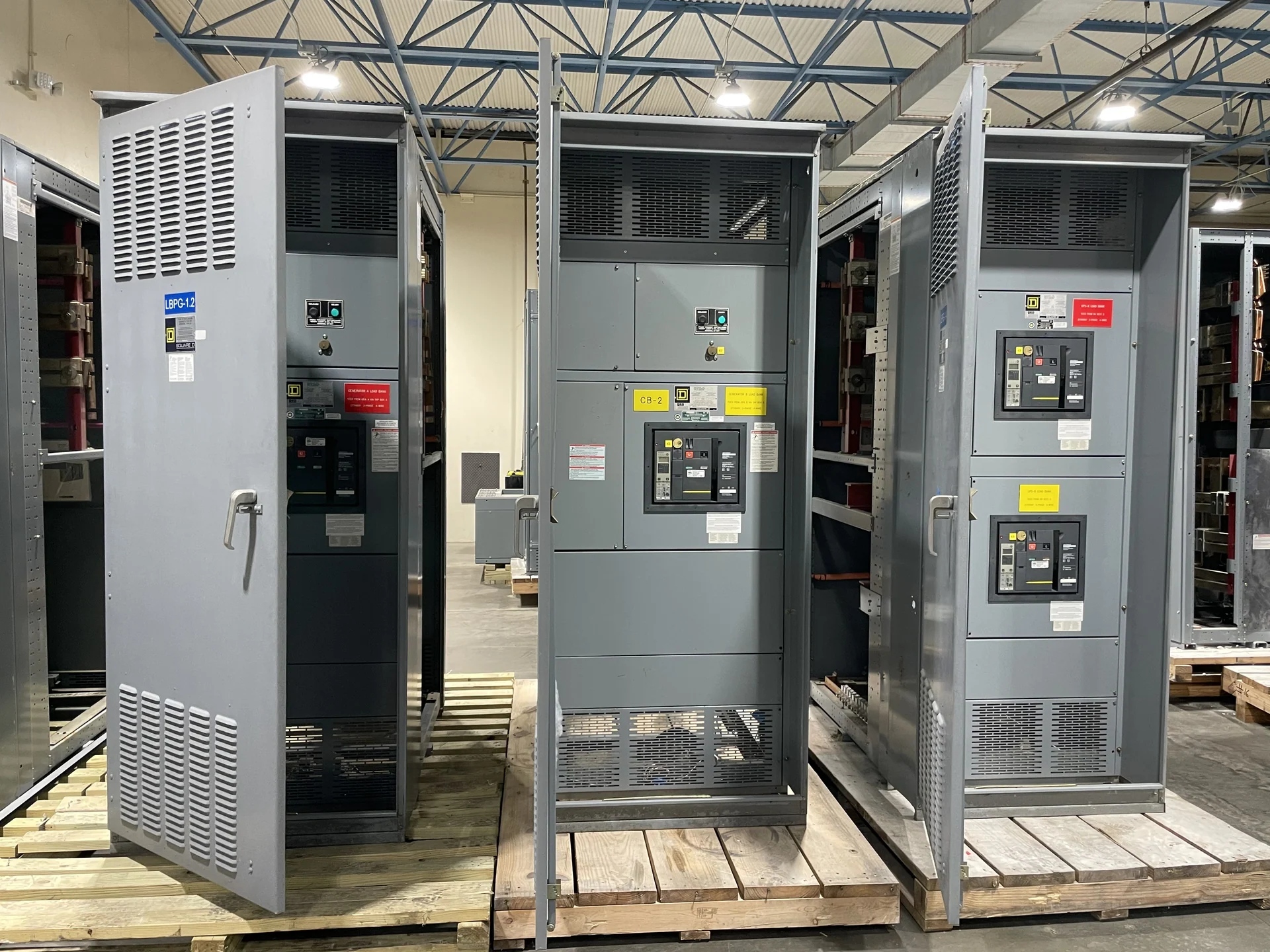
A useful quote request for switchgear for facility expansion and new electrical feeders includes the one-line diagram, equipment schedule, elevations or footprint limits, system voltage and frequency, main and feeder device requirements, fault-duty information, metering and controls, cable details, indoor or outdoor conditions, desired shipping destination, and documentation expectations. State whether witness testing, special packaging, split shipments, or field coordination is contemplated. Switchgear Builders manufactures new custom electrical switchgear in the United States for customer-defined applications; project-specific ratings, component selections, standards, and any UL 891 applicability or listing requirements must be confirmed before the design is finalized.