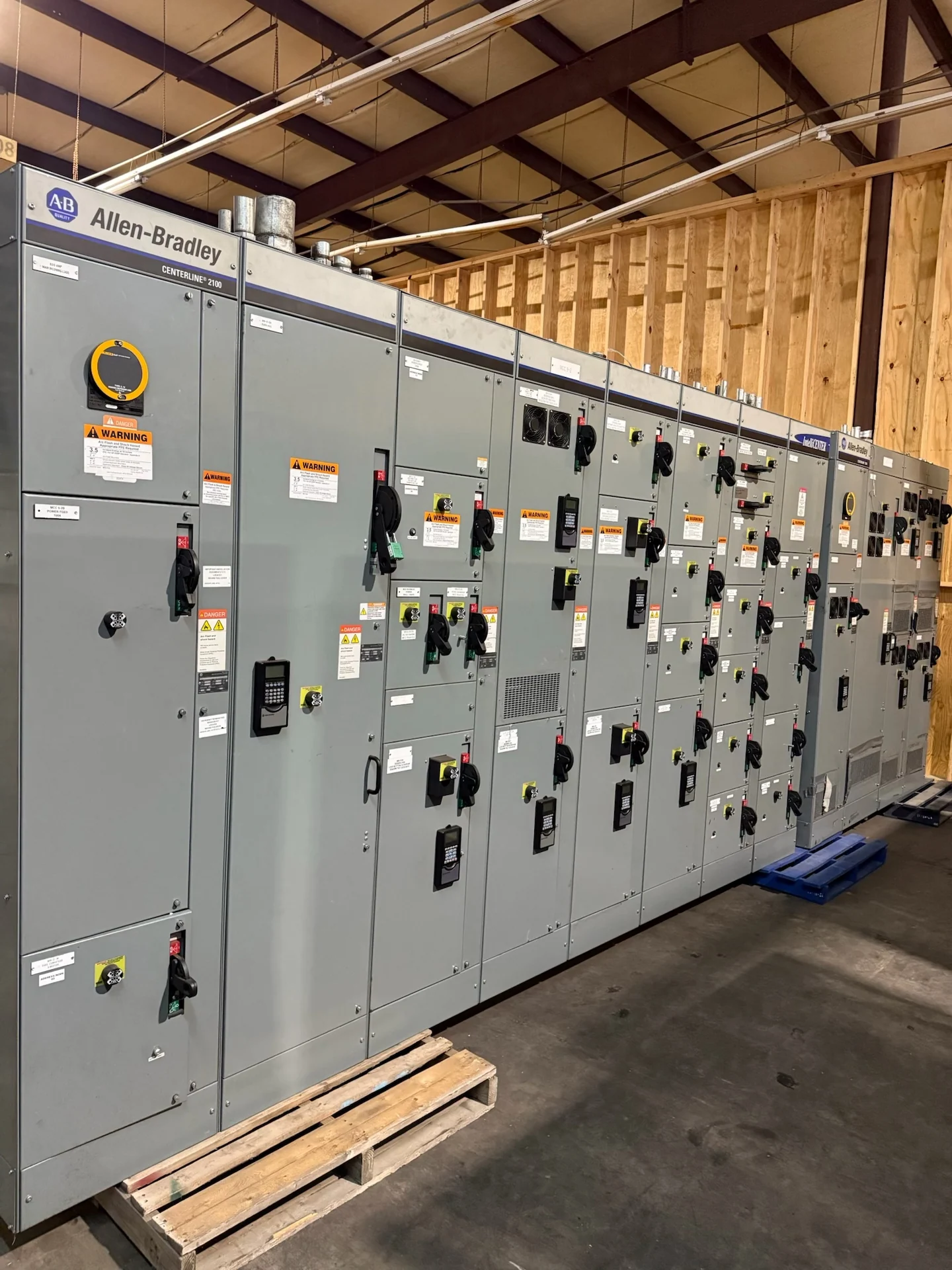
Planning Virginia Service-Entrance Equipment
Virginia commercial and industrial projects need service-entrance equipment that fits the utility interface, building load, and installation environment rather than a generic lineup. Start with the project single-line diagram, service voltage, phase and wire arrangement, calculated load, available fault current, and required main and feeder functions. Switchgear Builders manufactures new electrical switchgear in the United States, custom to specification, using American components and shipping nationwide. A Virginia project can be coordinated around its engineering documents, site constraints, approved procurement scope, and delivery requirements.
Coordinate Utility Metering Early
Service-entrance switchboards often have to accommodate utility metering provisions, service conductors, disconnecting means, and access arrangements that depend on the serving utility and project design. The quote package should identify the metering compartment or instrument requirements, physical service-entry point, conductor routing, ownership boundaries, and any utility review documents available to the design team. Virginia electrical distribution planning is clearer when the engineer, electrical contractor, utility representative, and manufacturer agree on these interfaces before dimensions and device locations are finalized.
Define Main and Feeder Circuits
A useful equipment specification lists each incoming source, main device, bus section, feeder circuit, protective device, metering function, and spare or future provision that the project actually requires. For commercial work, tenant or building distribution may drive feeder grouping and space allocation; for industrial work, process loads, motor loads, and operating sequences may affect the arrangement. Provide conductor sizes when established, termination direction, maintenance access, enclosure conditions, and connection details so a custom manufacturer can develop a practical layout instead of guessing at field interfaces.
Review Available Fault Current
Available fault current is a design input, not a value to infer from the service voltage or building type. Request the source information, transformer data, utility contribution where applicable, conductor lengths and sizes, and study assumptions used by the electrical engineer. The equipment specification should then identify the applicable short-circuit duty for the assembly and the interrupting ratings of protective devices. When system changes or utility data are pending, mark those values as open design items and resolve them before final equipment approval.
Account for Virginia Site Conditions
Virginia projects can span conditioned electrical rooms, industrial spaces, exterior service areas, and locations with different access or environmental demands. Confirm whether the lineup is indoors or outdoors, the enclosure requirements, ambient conditions, corrosion exposure, elevation concerns if relevant to the design, working clearances, ventilation, floor loading, and the route from unloading point to final room. These details influence enclosure construction, dimensions, lifting provisions, and shipping splits. The site plan should show doors, ramps, turns, housekeeping pads, and the intended installation sequence.
Build a Complete Manufacturer Quote Package
For a Virginia switchgear quote, send the single-line diagram, equipment schedule, specifications, load and fault-current information, metering requirements, control schematics, physical dimensions, requested documentation, and destination details. Identify what is furnished by others, such as service conductors, field terminations, rigging, or installation labor. Switchgear Builders can review the requested scope for a new custom build and describe applicable component, drawing, inspection, and shipping inclusions. A clear package makes quote comparisons meaningful by identifying equipment scope, price, availability, and delivery expectations for each proposal.
Coordinate Delivery and Installation
Nationwide shipping requires project-specific coordination of packaging, shipping sections, weights, lifting points, freight access, receiving responsibility, and the destination's unloading capabilities. Before release, the Virginia project team should confirm the approved drawings, delivery address, site contact, receiving hours, storage limitations, rigging plan, and field sequence. Delivery details and timing must be confirmed for the specific order rather than assumed from the location. A qualified electrical contractor should verify installation, terminations, testing, and energization requirements against the approved project documents.