Planning Industrial Distribution in Cheyenne
Industrial electrical distribution in Cheyenne, Wyoming can combine pump stations, conveyors, process skids, buildings, and utility interfaces within one operating plan. A useful equipment inquiry starts with the one-line diagram, service voltage, phase and frequency, available fault current, feeder lengths, and the load schedule. From those inputs, Switchgear Builders can manufacture new custom switchgear and motor control equipment to specification using American components and coordinating nationwide shipping. The final arrangement should reflect the actual site, governing electrical requirements, environmental exposure, and the responsibilities of the engineer, contractor, and owner.
Matching Motor Control Centers to Loads
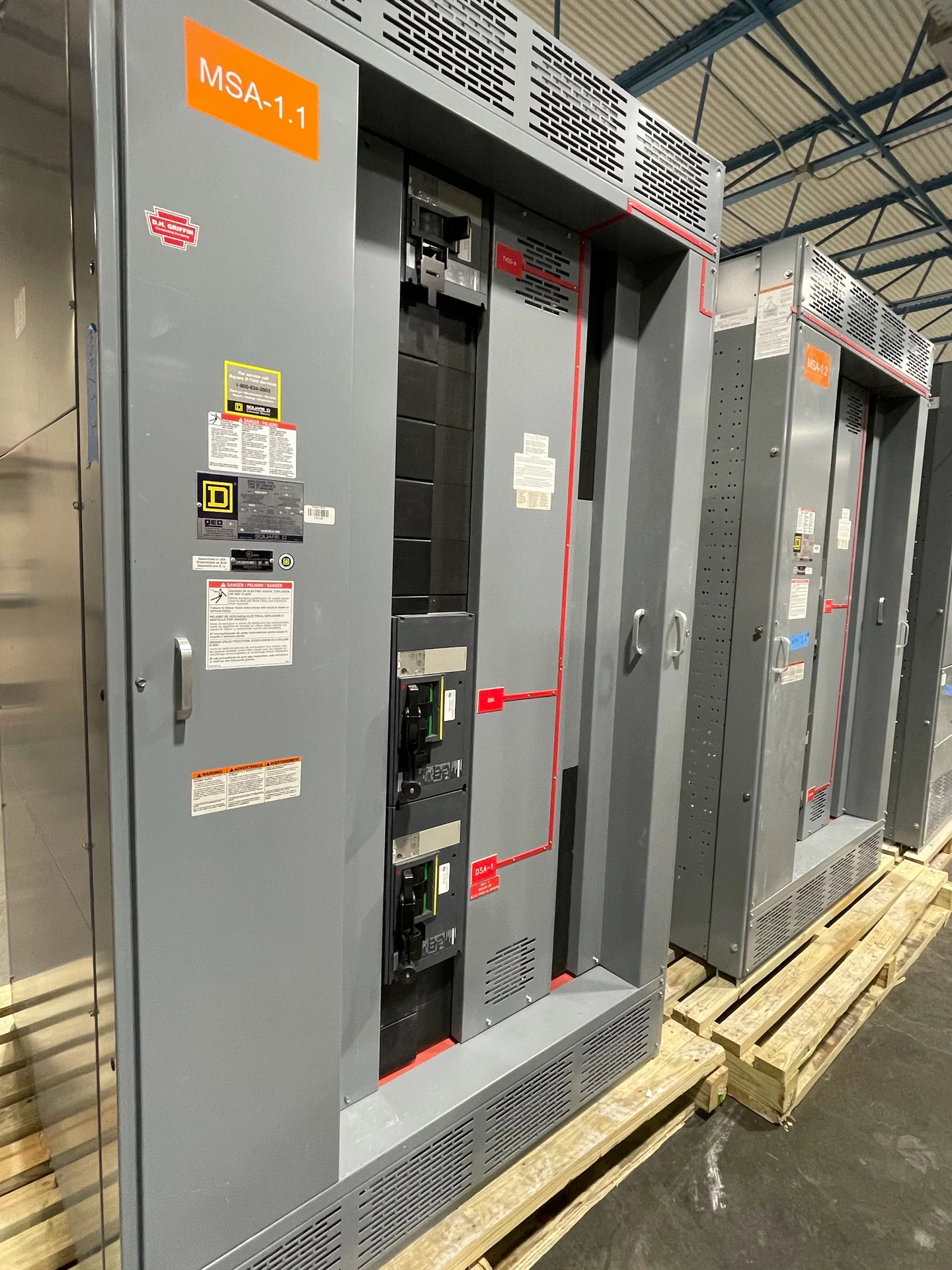
Motor control centers for industrial pumps, conveyors, and process loads should be organized around the motors' starting method, operating sequence, duty, and maintenance needs. Across-the-line starters, reduced-voltage methods, or variable frequency drives each affect feeder sizing, controls, heat, harmonic considerations, and space. The design team should identify motor horsepower, full-load current, voltage, enclosure environment, acceleration expectations, bypass needs, and whether local or remote operation is required. A custom builder can then translate that schedule into a coordinated lineup with clearly defined compartments, wireways, terminals, and future-space assumptions.
Motor Protection and Feeder Coordination
Motor protection is more than selecting a starter. Each circuit needs an appropriate combination of short-circuit protection, overload protection, disconnecting means, grounding, and control logic, with settings reviewed against the motor data and upstream distribution. For pump and conveyor systems, engineers should also consider locked-rotor current, cycling, jam or dry-run conditions, phase loss, and the consequences of a trip. The available fault current and coordination study determine what protective devices and ratings are suitable; equipment should not be specified from a generic motor list alone.
Controls, Signals, and Operating Sequence
The control interface should document what starts each motor, what permissives must be true, and what happens during an alarm, loss of source, emergency stop, or process interlock. A pump lineup may exchange run status, pressure or level signals, and fault indications with a plant control system, while a conveyor may require staged starts, speed feedback, pull-cord inputs, and jam detection. Define control voltage, terminal conventions, network requirements, remote I/O boundaries, and hand-off-auto behavior before drawings are finalized. Clear signal ownership reduces commissioning questions and makes the new assembly easier to integrate.
Site Conditions and Equipment Interfaces
Cheyenne project planning should account for the actual installation environment rather than relying on the city name alone. Confirm indoor or outdoor placement, ambient conditions, dust or moisture, elevation considerations when relevant, corrosion exposure, seismic requirements if specified, access doors, working clearances, cable entry, housekeeping pads, and lifting routes. The owner or engineer should provide room drawings and interface dimensions, while the installer should verify conduit approaches, grounding provisions, and space for maintenance. These details influence enclosure choices, lineup sections, shipping splits, and receiving preparation.
Preparing a Custom Switchgear Inquiry
To request a useful quote for a Cheyenne-area industrial project, send the latest one-line diagram, load and motor schedules, control narratives, site location, required equipment dimensions, short-circuit information, environmental requirements, and desired documentation. Identify whether the package includes motor control centers, feeder sections, metering, source equipment, or interfaces to other assemblies. Switchgear Builders can review the defined scope for a new custom build, clarify assumptions, and supply equipment across the United States. Confirm shipping terms, packaging, unloading responsibilities, drawing review, testing scope, and any project-specific UL 891 applicability before order documents are approved. The inquiry should distinguish motor branch circuits from larger feeder or service sections, show spare positions separately from active loads, and identify which devices will be furnished by others. It should also state whether the installer needs bottom, top, or side cable access and how sections will be positioned during placement. A disciplined scope makes comparison of manufacturer responses more meaningful without substituting a generic lineup for engineering review.