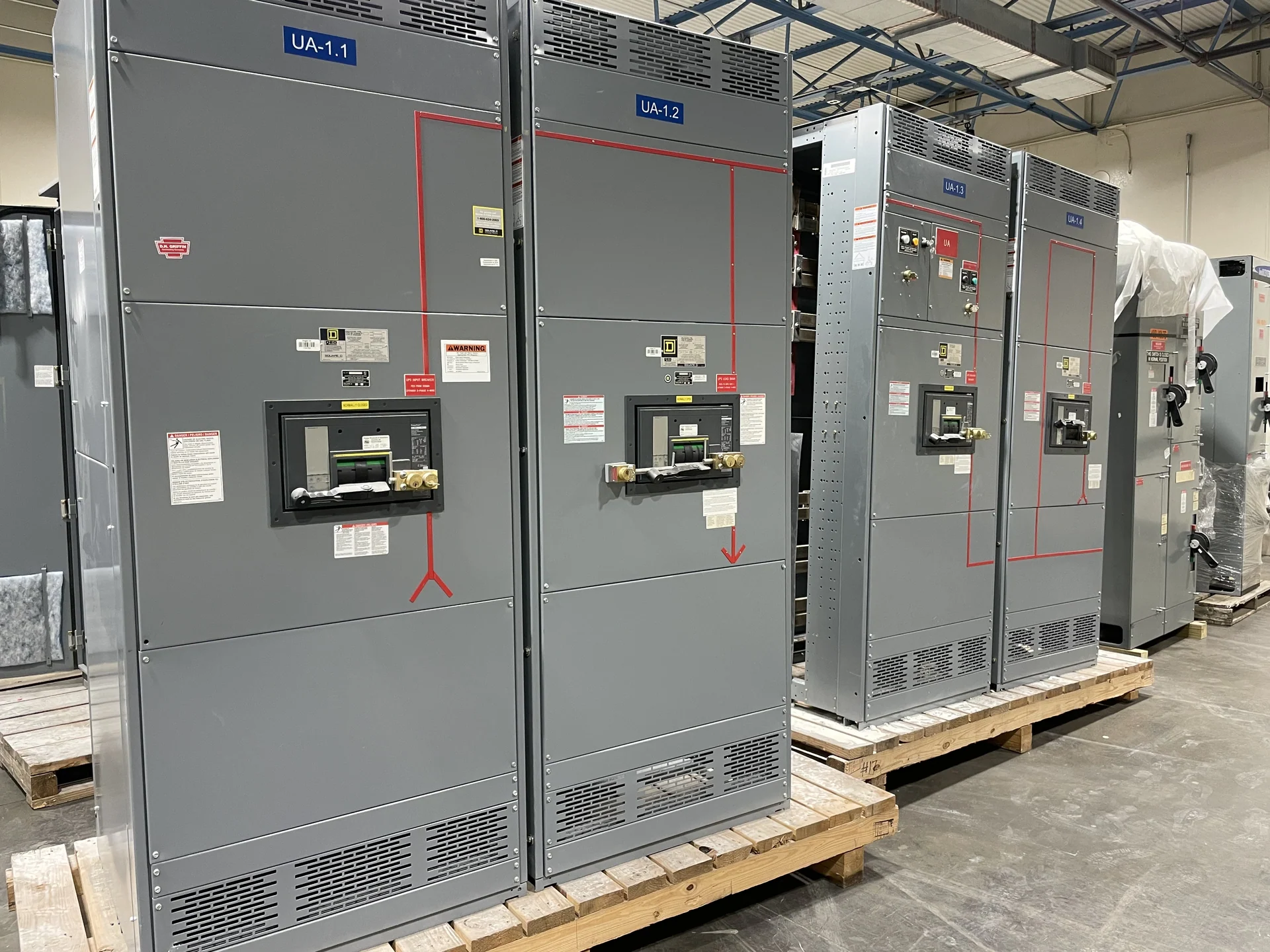
What Makes a Motor Control Center Intelligent
An intelligent motor control center combines the power distribution and motor-starting functions of an MCC with sensing, communication, and supervisory data. The useful question is not whether a lineup has a network port, but what operating decisions the data must support. A project may need run status, current, voltage, overload condition, trip indication, energy values, or diagnostic information for selected motor branches. A custom manufacturer-built lineup should translate those objectives into device selection, compartment layout, control wiring, and a documented data map. The result remains a physical electrical assembly first; its digital layer must be coordinated with protection, controls, maintenance access, and the facility network.
Define the Motor and Feeder Functions
Begin intelligent motor control centers selection with a branch-by-branch schedule rather than a communications preference. Identify each motor or load, starter or drive arrangement, voltage and phase, full-load current, overload method, short-circuit duty, control voltage, local controls, and required interlocks. Note whether a branch needs across-the-line starting, reduced-voltage starting, variable frequency control, reversing, bypass, or a special sequence. The engineer should also identify criticality, restart behavior, permissives, and shutdown causes. This functional inventory lets a manufacturer build a lineup around real operating requirements and exposes conflicts between available space, heat-producing devices, cable entry, maintenance access, and future circuit capacity.
Choose a Communication Architecture
Protocol selection should follow the control system and data consumers, not marketing terminology. Common project discussions may include Ethernet-based protocols, serial fieldbus networks, or a gateway between intelligent motor devices and a plant control platform. Confirm the owner’s preferred protocol, network topology, addressing method, cable routing, shielding and grounding practice, redundancy expectations, and responsibility for switches or gateways. Determine whether motor protection devices, variable frequency drives, meters, and remote I/O will share a network or use separate segments. Switchgear Builders can review these interfaces while building new equipment custom to specification, but the final architecture must be agreed with the controls integrator and electrical engineer.
Specify the Data Before Fabrication
A useful data schedule states more than a list of supported protocols. For every connected device, define the tag name, source, data type, engineering unit, normal state, alarm meaning, update expectation, and destination system. Separate commands from indications, and distinguish measured values from calculated values. Decide which events require time stamps, which alarms need acknowledgement, and which values belong in historian or energy reports. Include loss-of-communications behavior, local-versus-remote control priority, and the method for confirming point-to-point operation. These details belong in project drawings and documentation so that panel wiring, device configuration, and commissioning checks can be evaluated against one consistent information model.
Coordinate Physical Construction and Installation
Networked intelligence still depends on careful physical construction. Review enclosure dimensions, shipping splits, bus arrangement, device heat, ventilation, control-power sources, wireway capacity, terminal access, and separation of power, control, and communication conductors. Provide the installation team with cable-entry locations, grounding points, lifting information, lineup dimensions, and the planned connection responsibilities. The site team should verify room clearances, routing, environmental conditions, and network infrastructure before delivery. As an American manufacturer, Switchgear Builders builds new equipment with American components and can coordinate nationwide shipping requirements, while project parties retain responsibility for site installation, field wiring, and local engineering decisions.
Plan Verification, Handover, and Future Changes
Verification should cover both electrical behavior and information behavior. A project test plan may include point-to-point continuity, control logic, interlocks, protective-device operation, communication addressing, register or object mapping, alarm states, command permissions, and loss-of-network responses. Agree in advance on simulated signals, witness participation, records, and the documents to be delivered. The handover package may include approved drawings, device schedules, network diagrams, settings, data maps, and configuration backups as applicable to the scope. When future motors or protocol changes are possible, reserve documented capacity rather than assuming expansion will be simple; every later modification still requires engineering review.