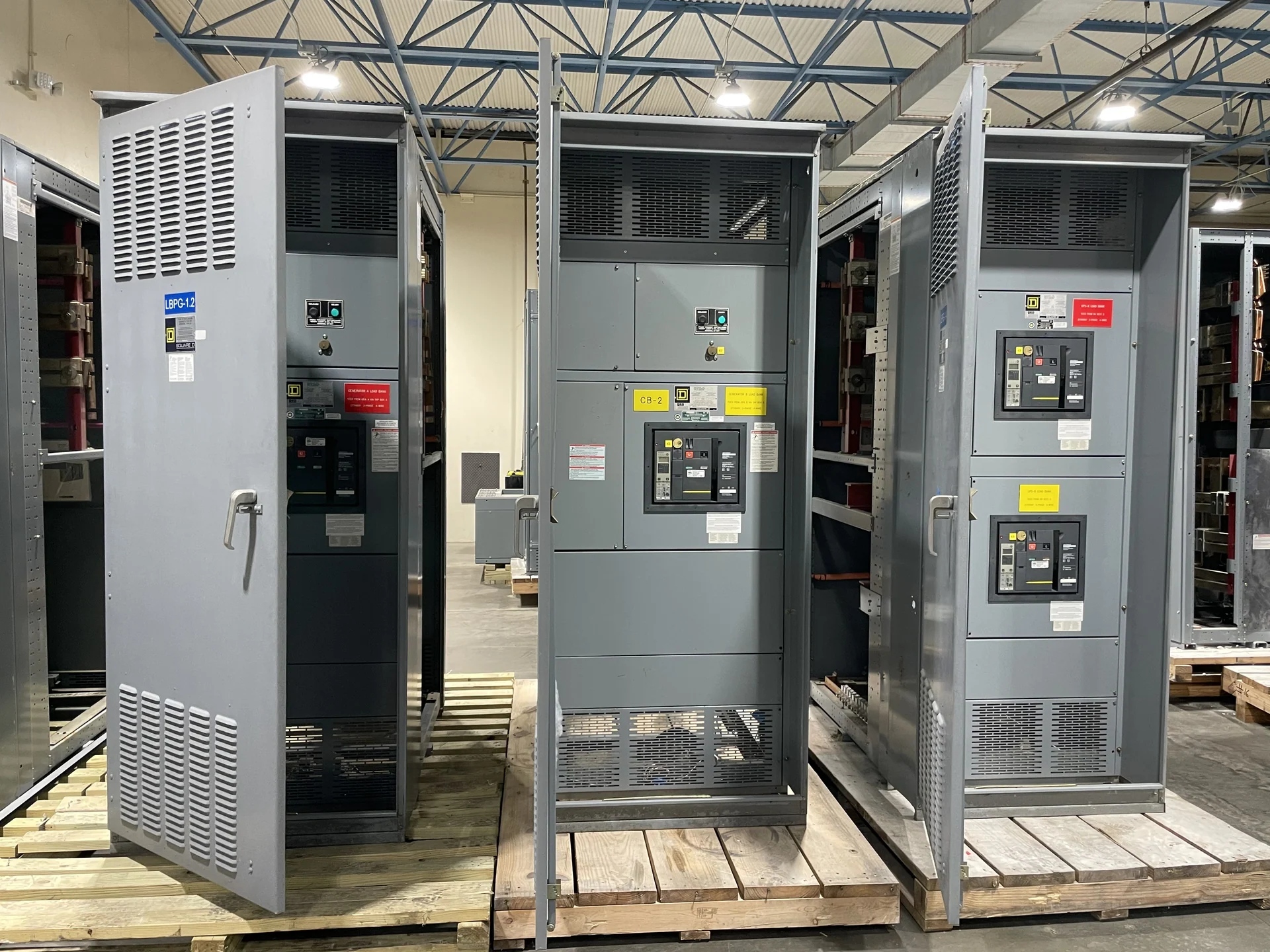
What an Across-the-Line Motor Control Center Does
Motor control centers with across-the-line starters group motor branch circuits, disconnecting means, overload protection, control components, and incoming distribution within a coordinated lineup. An across-the-line starter applies full available voltage to the motor when commanded, so the selection discussion should begin with motor horsepower, voltage, phase, frequency, starting current, duty cycle, and the operating sequence. A new custom assembly from an American switchgear manufacturer can be laid out around the project one-line diagram, feeder arrangement, enclosure conditions, and installation interfaces rather than forcing an unsuitable standard arrangement.
Motor Protection and Starter Selection
The starter does not replace a complete protection scheme. Each motor circuit needs a project-defined combination of branch-circuit short-circuit protection, overload protection, disconnecting means, contactor or starter, grounding provisions, and control circuitry. Engineers should compare motor full-load current with device adjustment ranges, verify interrupting and short-circuit ratings against available fault current, and consider locked-rotor current where starting duty affects the feeder or upstream equipment. The correct overload approach also depends on motor data, ambient conditions, service factor, and the applicable installation requirements. Identify whether motors are constant-torque, variable-torque, reversing, jogging, or subject to frequent starts, because those operating patterns affect device selection, heat, contact wear, and maintenance planning.
Starting Duty, Voltage Drop, and System Coordination
Full-voltage starting can produce a substantial inrush that influences voltage drop, generator loading, transformer selection, bus capacity, and nuisance-operation risk. For a proposed lineup, provide the utility or source characteristics, transformer impedance when relevant, feeder length, motor schedule, simultaneous-starting assumptions, and any limits imposed by the facility process. A qualified engineer can then evaluate whether across-the-line starting is appropriate or whether another starting method should be considered. Protective-device time-current coordination should be reviewed across the motor branch, MCC feeder, and upstream distribution equipment. Consider the consequences of a source dip on contactors, controls, process instruments, and neighboring loads, rather than judging the starter only by its normal running current.
MCC Layout, Controls, and Maintenance Access
A useful MCC layout accounts for starter bucket arrangement, vertical sections, incoming and outgoing cable paths, wireway space, terminal locations, control power, metering, pilot devices, network interfaces, spare provisions, and the physical route from the receiving area to the electrical room. Define whether operators need local start-stop stations, permissive contacts, alarm contacts, remote commands, or a specified control voltage. Door clearances, working space, ventilation, lifting and handling points, anchorage, and access for testing or component replacement should be coordinated with the installer before drawings are finalized. Also resolve how field wiring will be identified, where shields or instrument conductors terminate, and which signals must remain available if a starter is isolated for maintenance.
Custom Manufacturing and Project Documentation
Switchgear Builders manufactures new electrical distribution equipment in the United States, builds custom to specification, uses American components, and supplies equipment with nationwide shipping coordination. For a manufacturer quote, send the motor list, one-line diagram, control schematics, equipment ratings, enclosure conditions, dimensions, cable-entry preferences, device data, and required submittals. The project team should identify expected inspection points, electrical and functional tests, nameplate information, spare-parts preferences, and the records needed at delivery. Any standard or listing requirement, including whether UL 891 applies, must be confirmed for the specific assembly and project.
Inputs for a Reliable New MCC Quote
A request for pricing should distinguish confirmed requirements from open engineering questions. Include the destination, requested shipping split, receiving constraints, installation environment, available fault current, system grounding, short-circuit rating, continuous bus or feeder rating, motor starting sequence, communication expectations, and applicable owner or utility specifications. If the MCC replaces or interfaces with existing distribution, provide accurate field dimensions, cable locations, termination details, and outage constraints; the manufacturer can use those inputs to develop a new equipment package while the responsible engineer verifies compatibility, protection settings, and installation compliance. Ask for drawings that clearly identify assumptions, exclusions, open points, and field responsibilities so the quote can be compared fairly with other new equipment proposals and converted into an orderly submittal review.