Start With the Production Process
Motor control for production lines begins with the process rather than a preferred enclosure or device list. Identify each machine group, motor duty, starting method, normal operating sequence, shutdown behavior, and consequence of an interruption. A production-line electrical distribution review should also map incoming sources, feeder locations, branch circuits, control voltage, environmental exposure, and the space available for a motor control center. Switchgear Builders manufactures new electrical equipment in the United States, custom to project requirements, using American components and nationwide shipping for customer-defined installations.
Choose Starters and Drives by Duty
Across-the-line starters can suit motors whose starting current, acceleration, and mechanical impact are acceptable for the process, while variable frequency drives may support adjustable speed, ramp control, or process coordination. The selection should account for motor horsepower, voltage, frequency, starts per hour, load inertia, bypass needs, braking, and the control system interface. A custom build should distinguish drive compartments from starter sections, document heat-producing devices, and leave service access consistent with the installation plan rather than treating every motor feeder as interchangeable.
The motor schedule should identify full-load current, service-factor information, enclosure type, rotation requirements, acceleration expectations, and any manufacturer instructions that affect the feeder or controller. For a drive application, review input protection, output cable routing, grounding, motor compatibility, harmonic effects, and control mode with the responsible engineer. For a starter application, verify overload selection, coordination, reversing or two-speed logic, and whether mechanical interlocks are needed. These details help the manufacturer arrange sections and terminals around the actual production sequence instead of forcing late changes during installation.
Coordinate Protection and Controls
A useful production-line motor-control specification defines overload protection, short-circuit protection, disconnecting means, grounding, control circuit protection, interlocks, emergency-stop interfaces, and permissive signals. Protective settings must be coordinated with upstream distribution equipment and the motor characteristics identified by the engineer; a motor control center layout alone does not establish those settings. Control drawings should show terminal numbers, wire identification, remote start and stop logic, status contacts, fault indications, network points, and the operating sequence expected by the automation system.
Design for Heat, Space, and Access
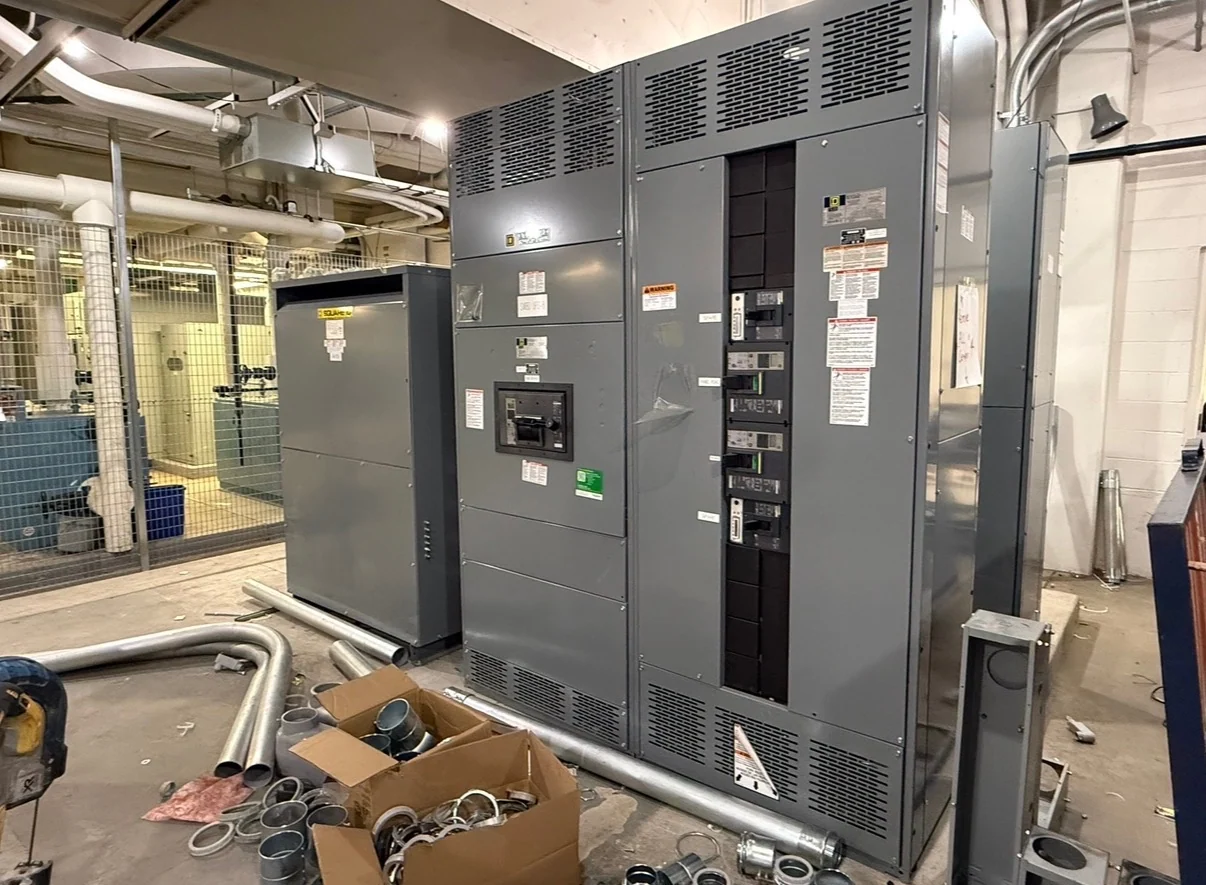
Production environments often make maintenance access as important as initial fit. Review the lineup footprint, door swing, cable entry, vertical wireway space, ventilation, ambient temperature, dust or moisture exposure, and the route for bringing the assembled sections into position. Drives and other electronic devices may add heat and require the design team to evaluate spacing and airflow. Removable or serviceable components, clearly identified terminals, and practical test access can reduce disruption, but each choice must be reconciled with the specified enclosure and installation conditions.
Define Drawings, Testing, and Interfaces
Before fabrication, the project package should settle the one-line diagram, feeder schedule, motor list, device data, control schematic, communications requirements, enclosure details, nameplate information, and shipping splits. Factory checks can then be tied to agreed acceptance criteria, such as point-to-point wiring review, continuity checks, device operation, interlock behavior, and documentation completeness. If a project invokes UL 891, confirm its applicability, construction requirements, and any project-specific listing or verification before the design is released; no general assumption should replace that review.
Plan the Manufacturer Quote
For a practical quote on new motor-control equipment, provide the production-line one-line diagram, motor schedule, voltage and frequency, available fault current, starter and drive preferences, control narrative, network protocol, enclosure environment, dimensions, incoming and outgoing cable details, desired documents, destination, and any installation constraints. Switchgear Builders can evaluate a custom scope as an American manufacturer supplying new equipment with American components and nationwide shipping. The final configuration, component selection, project requirements, and delivery expectations should be confirmed in the project quotation rather than assumed from a generic catalog description.