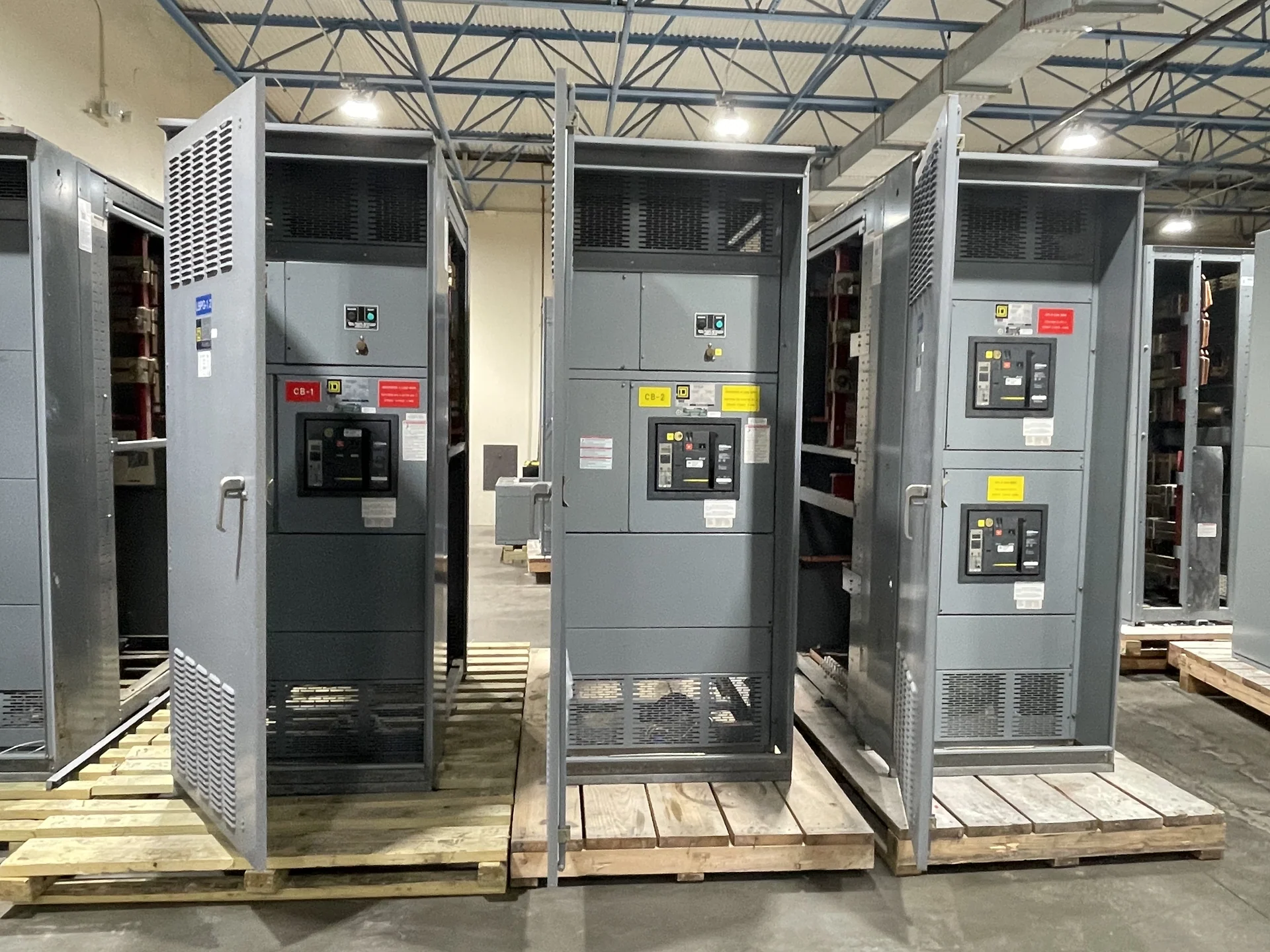
What Pad-Mounted Switchgear Does
Pad-mounted switchgear is enclosed electrical distribution equipment designed for placement outdoors on a prepared foundation or equipment pad. It can organize feeder switching, sectionalizing, and protection at locations where overhead structures are impractical or where a compact, accessible ground-level arrangement is preferred. The right design starts with the distribution one-line, source and load relationships, system voltage, available fault current, continuous current, grounding method, and the operating sequence the owner expects. Switchgear Builders manufactures new electrical switchgear in the United States, builds custom equipment to project specifications, uses American components, and can coordinate nationwide shipping; final configuration remains subject to project engineering review.
Define the Electrical Arrangement
A useful pad-mounted switchgear selection separates the functions the enclosure must perform. Identify incoming and outgoing feeders, normally open or normally closed points, transformer connections, sectionalizing needs, and any fuses, circuit breakers, switches, relays, metering, or control circuits required by the design. The specification should state nominal and maximum system voltage, phase and frequency, continuous current, interrupting or withstand duty as applicable, grounding, insulation requirements, and enclosure arrangement. If a loop or main-tie-main concept is being considered, document the intended switching sequence and interlocking so the builder can translate the operating concept into a physically workable assembly.
Account for Outdoor Exposure
Outdoor placement makes environmental information part of the electrical specification rather than an afterthought. Describe rain, snow, ice, sunlight, wind, salt, dust, corrosive atmosphere, flooding potential, temperature range, and any vegetation or vehicle exposure at the proposed location. Enclosure material, finish, doors, roofs, seals, drainage, ventilation, and hardware should be selected against those conditions and the applicable project requirements. The foundation must also support drainage and finished grade expectations while preserving equipment access. A pad-mounted switchgear enclosure should be evaluated as an integrated site interface, not selected only by nominal voltage or ampere rating.
Plan Safe Access and Operation
Access planning covers more than leaving room for the enclosure footprint. Confirm the approach for operators, maintenance personnel, test instruments, lifting equipment, and future cable work, then coordinate doors, operating handles, removable panels, cable compartments, and barriers with those movements. The site plan should show working space, traffic protection, bollards or other physical safeguards when needed, cable trench or conduit entry, and a route for delivery and placement. Define who controls switching, what labels and diagrams are needed, and which interlocks or key schemes support the intended operating sequence after qualified engineering and safety review.
Coordinate Protection and Interfaces
Protection choices depend on the source, transformer or feeder characteristics, downstream equipment, and coordination study rather than on enclosure style alone. Provide available fault current, transformer data, feeder lengths, conductor information, grounding details, protective-device curves, and relay or fuse requirements when requesting a design. Confirm cable lug orientation, termination space, phase identification, neutral or ground provisions, metering interfaces, communications, and control power. These details reduce late changes between the switchgear, utility, civil foundation, protection engineer, and electrical contractor. Any arc-flash, service, utility, or code-related requirement should be identified and confirmed for the particular project.
Build and Ship to the Project
A custom pad-mounted switchgear inquiry should include the one-line diagram, equipment schedule, site and foundation information, environmental conditions, dimensional limits, cable-entry plan, required drawings, inspection points, and desired shipping destination. Switchgear Builders can use that package to develop new equipment custom to the stated requirements, with component selections and documentation reviewed against the project scope. Before release, align approved drawings, nameplates, connection details, lifting provisions, packaging, freight responsibilities, receiving access, and field installation duties. Nationwide shipping can be coordinated around the destination and project logistics, while transit estimates and availability must be confirmed for the specific order.