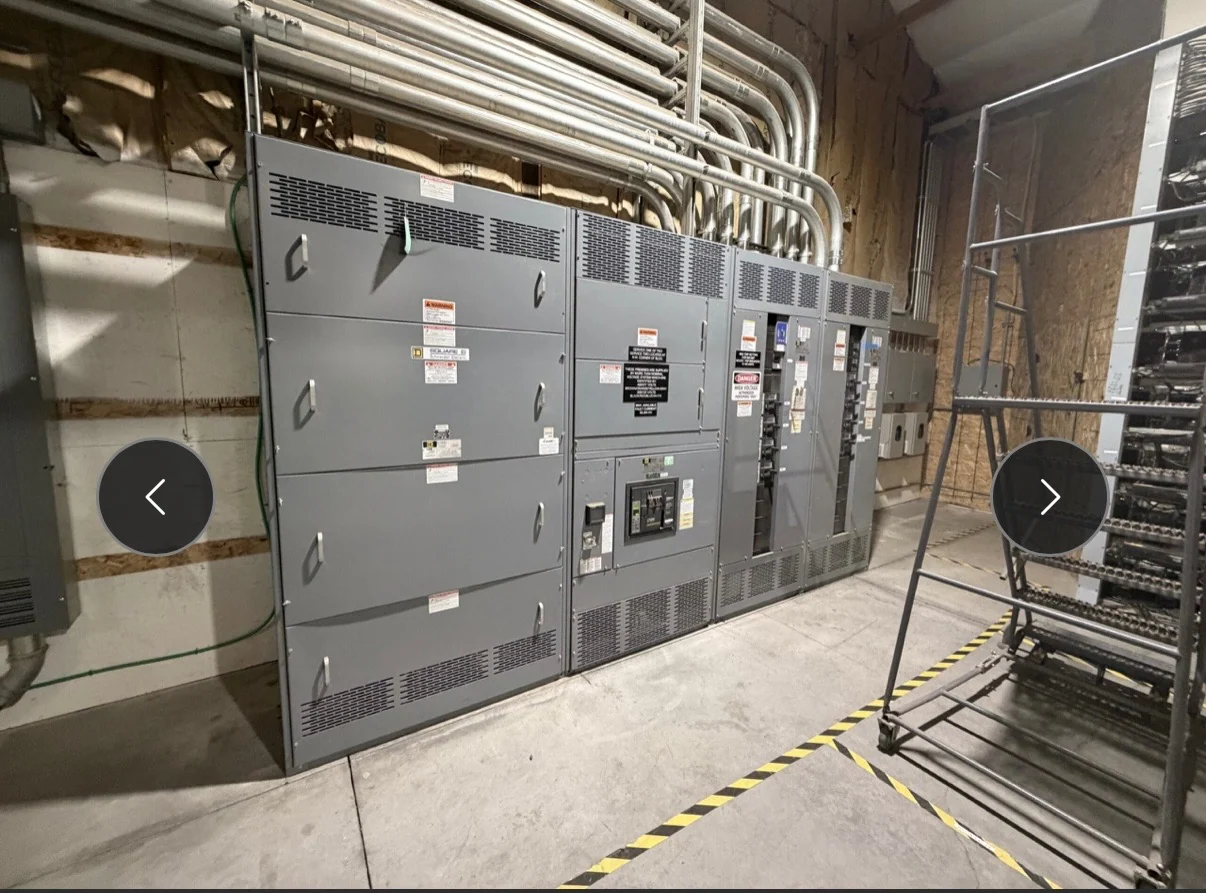
Interrupting Rating in Plain Language
An interrupting rating is the maximum fault current a protective device is designed to interrupt safely at a stated voltage and under defined conditions. It applies to a circuit breaker, fuse, or comparable interrupting device rather than automatically describing every part of a switchgear assembly. When a fault occurs, the device must open the circuit and stop current without exceeding its specified capability. A useful switchgear specification therefore identifies the device interrupting rating, system voltage, phase arrangement, and the available fault current at the device location. These values must be reviewed together; a number copied from a general product description is not a substitute for project engineering.
How Fault Current Relates to the Rating
Available fault current is the prospective current that the electrical system can deliver during a short circuit at a particular point. It depends on sources, transformers, conductors, utility data, generators, motors, and system configuration. The interrupting rating is the device capability selected to address that calculated duty. If the available fault current exceeds the applicable interrupting rating, the device selection requires correction before equipment is ordered. Engineers commonly compare the calculated value with the device rating at the actual voltage, then examine upstream and downstream relationships rather than treating the lineup as an isolated box.
Interrupting Rating Versus Other Switchgear Ratings
Interrupting rating should not be confused with continuous current rating, short-time withstand rating, or peak withstand capability. Continuous current concerns how much current a device or bus can carry during normal operation. Withstand ratings concern the assembly's ability to remain intact for a specified duration or peak condition, while interrupting rating concerns a protective device opening a fault. A complete equipment review may need all of these values, plus voltage class, frequency, grounding method, enclosure conditions, and coordination requirements. Switchgear Builders can build new equipment to a project specification, but the engineer of record must define which ratings apply and how they are demonstrated.
Inputs Needed for a New Switchgear Quote
For a meaningful quote on new custom switchgear, provide the latest one-line diagram, nominal system voltage, frequency, phase and wire arrangement, available fault-current study or utility information, main and feeder device requirements, and the desired lineup arrangement. Include transformer data, generator or alternate-source details, grounding information, enclosure environment, cable entry preferences, metering, control voltage, and physical constraints when applicable. Identify whether the design is a service entrance, feeder, main-tie-main, or another arrangement. These inputs let an American manufacturer evaluate the requested interrupting duties alongside bus construction, device layout, documentation, and shipping requirements using American components and nationwide U.S. delivery planning.
Coordination, Verification, and Documentation
Interrupting rating is only one part of protective-device coordination. Time-current characteristics, selective coordination goals, instantaneous settings, upstream source changes, and downstream equipment can affect the final selection. Ask the electrical engineer to confirm the fault-current calculation at each relevant bus and device, including credible operating configurations. The manufacturer should receive the approved device schedule and any required drawings so the ordered assembly reflects the design basis. Request that the quotation identify assumptions, exclusions, device ratings, test or inspection records, and document submittals. UL 891 applicability, if relevant to the project, must be confirmed specifically rather than assumed from the phrase switchgear.
Questions to Resolve Before Release
Before releasing a switchgear purchase, resolve whether the stated fault current is symmetrical, asymmetrical, or otherwise defined by the governing calculation method; which voltage is used for the device rating; and whether the rating applies to the exact device configuration. Confirm source combinations, future system changes, spare provisions, and any utility or authority review. Also verify clearances, cable terminations, arc-flash study inputs, labeling, and installation responsibilities with the project team. A direct request to Switchgear Builders should distinguish required performance data from preferences, identify the destination for nationwide shipping, and include the revision level of the drawings being priced.