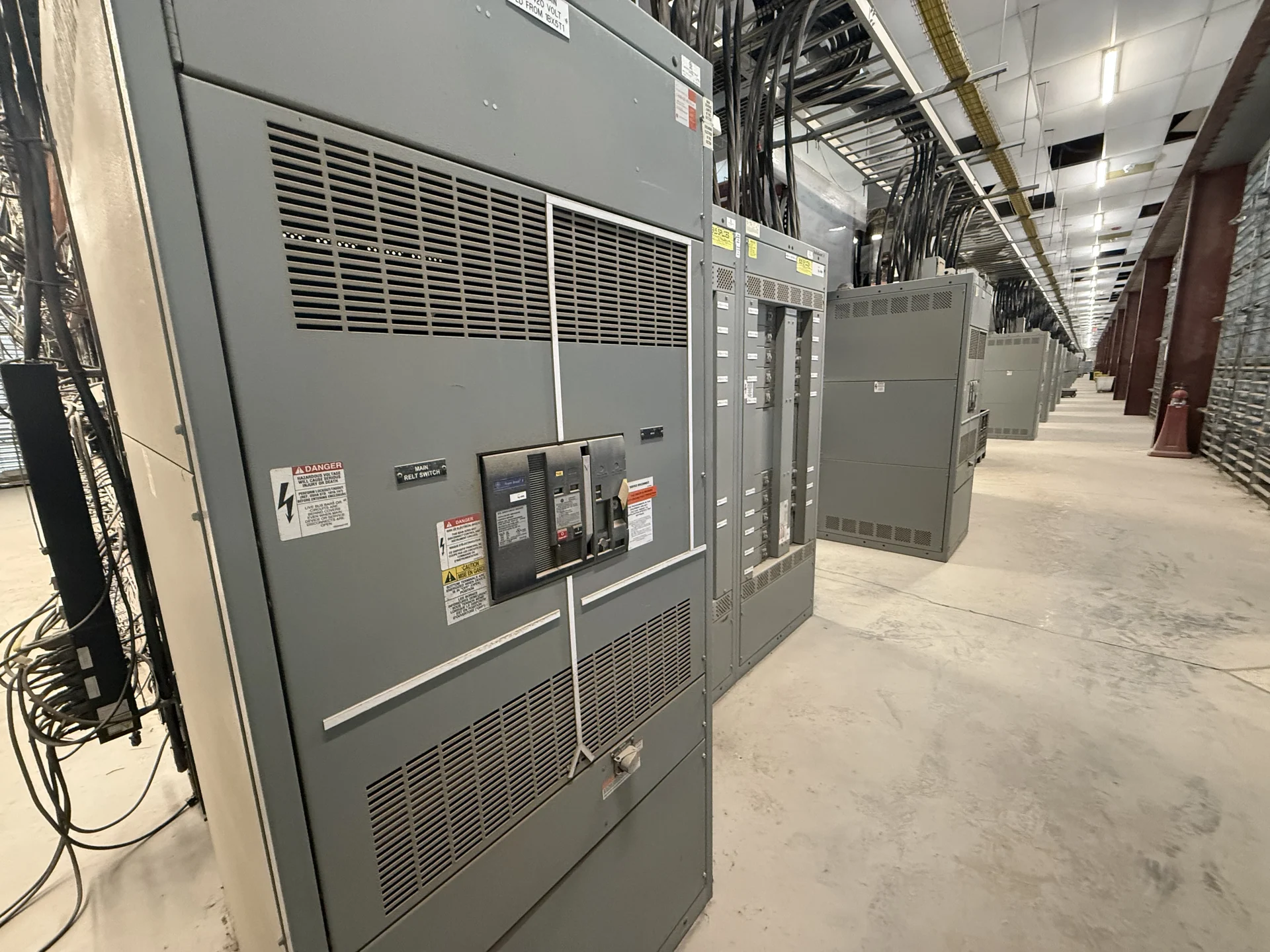
Basic Arrangement
A main-tie-main configuration is a distribution arrangement with two incoming source sections, a main protective device for each source, and a bus-tie device connecting the sections. In normal operation, each source may supply its own bus section while the tie remains open, although an engineered operating scheme can define a different state. The arrangement is used when a facility needs planned source separation, controlled transfer, or a way to connect both bus sections under specific conditions. The one-line diagram should show source identity, phase and voltage information, grounding, feeder destinations, and every intended switching position before equipment dimensions or components are finalized.
How the Operating Scheme Works
The phrase main-tie-main describes hardware; it does not, by itself, define the operating sequence. Engineers may specify open-transition transfer between sources, a closed-transition condition where permitted, manual switching, automatic controls, or a sequence that keeps the tie unavailable except during a planned event. Interlocking is central because the equipment must prevent an operating action that conflicts with the approved source arrangement. A project specification should state which mains and tie may close together, what conditions permit transfer, how control power is supplied, and what indications operators must see before changing state.
Ratings and Protection Inputs
Selecting a main-tie-main lineup requires more than naming the arrangement. The design team should establish nominal system voltage, frequency, continuous current, available fault current, interrupting or withstand duty as applicable, conductor configuration, grounding method, and the protective devices assigned to each source and feeder. A coordination study may influence breaker functions, time delays, and tie settings. Source contributions can change when the tie closes, so the fault-duty review should address each permitted operating state rather than only the two normal states. These inputs allow a manufacturer to develop a custom build without guessing at critical electrical interfaces.
Controls, Interlocks, and Indication
Control details determine whether a main-tie-main lineup behaves predictably in the field. The project team should identify local or remote control stations, source-available sensing, permissive signals, synchronism requirements where relevant, control voltage, alarm contacts, breaker position indication, and the desired response to loss of a source. Mechanical and electrical interlocks should be described in terms of the allowed sequence, not merely a preferred device label. Drawings should also identify terminal points and communication interfaces so the installer and controls integrator can coordinate wiring, testing, and responsibility boundaries.
Physical and Installation Planning
The lineup must fit the electrical room, service path, and maintenance approach as well as the one-line diagram. Confirm lineup orientation, section widths, cable entry, bus connection points, working clearances, door swing, lifting and rigging provisions, floor conditions, and the destination’s environmental exposure. Existing facilities may impose outage, demolition, or tie-in constraints that affect shipping splits and field sequencing. Switchgear Builders manufactures new custom electrical switchgear in the United States, uses American components for its builds, and supports nationwide shipping; final construction and logistics remain subject to the project scope and confirmed requirements.
Ordering and Project Documentation
A useful inquiry should include the one-line diagram, load schedule, source data, fault-current information, equipment location, dimensions, control narrative, protection requirements, metering needs, utility requirements, and documentation expectations. Ask the manufacturer to identify assumptions, exclusions, required approvals, and the information still needed before release for fabrication. If the assembly may fall under UL 891, confirm its applicability and any project-specific listing or verification requirements for the proposed construction; that determination cannot be assumed from the phrase main-tie-main.