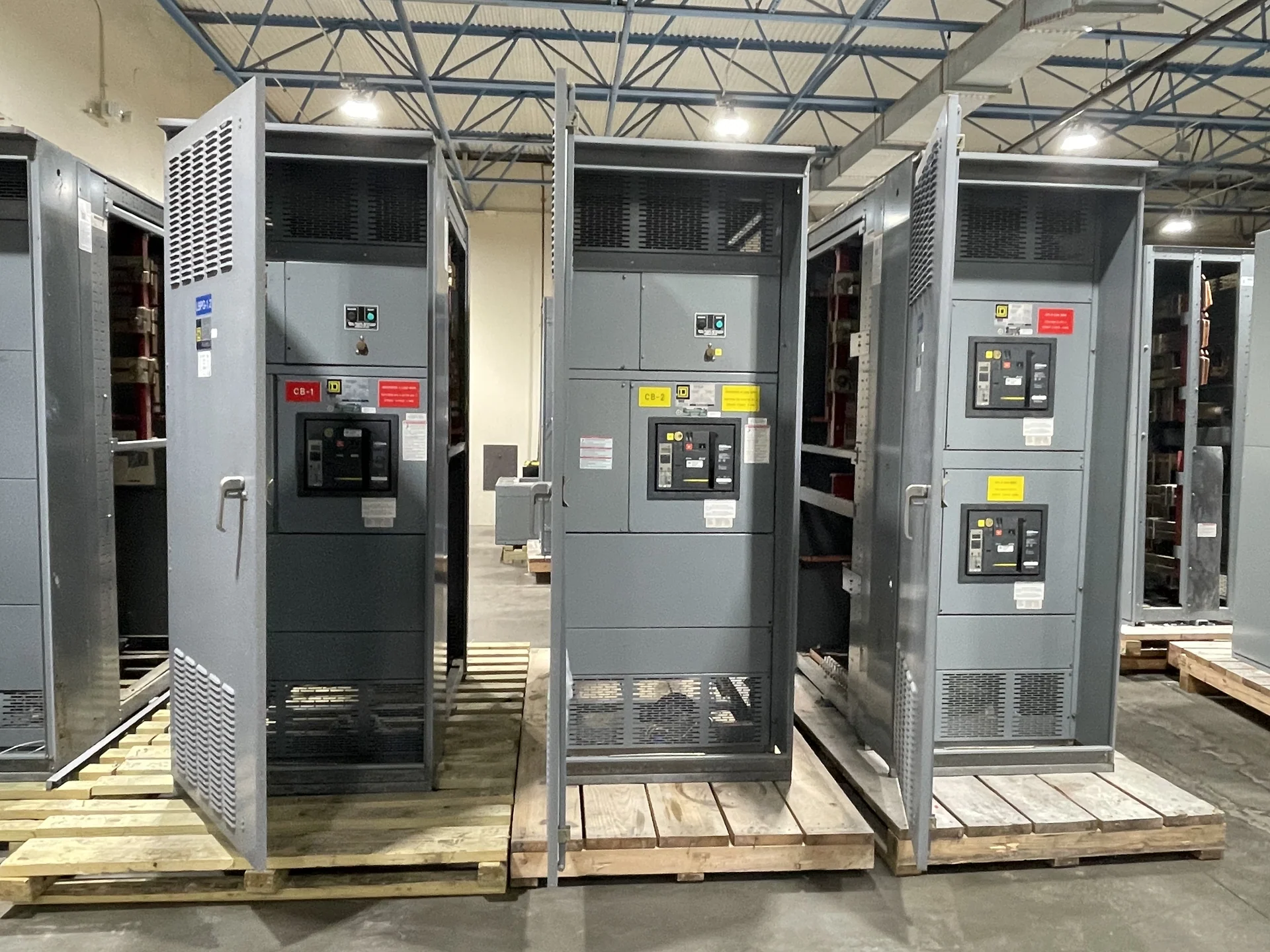
Busbar Definition
A busbar is a rigid electrical conductor used to collect power from one or more incoming circuits and distribute it to outgoing circuits within an assembly. Unlike a flexible cable, it is typically formed as a bar, tube, or shaped conductor supported inside switchgear, a switchboard, a panelboard, or another distribution enclosure. Its job is to provide a deliberate common electrical path between connected devices while fitting the assembly's insulation, clearance, connection, and maintenance requirements. The word busbar describes a function and construction element, not a complete equipment type or a universal rating.
How a Busbar Works in Distribution Equipment
In a typical lineup, an incoming main device connects to a busbar system, and feeder devices connect to the same system at defined points. The bus carries current across the assembly so each feeder can receive power through its protective device. A busbar may also connect sections of a lineup, a main-tie-main arrangement, or a branch distribution section, depending on the one-line diagram. Engineers evaluate current flow, fault duty, phase arrangement, grounding, and the intended operating sequence rather than choosing a bar by physical size alone.
Busbar Materials and Physical Arrangement
Copper and aluminum are common bus conductor materials, but material selection depends on the specified electrical, mechanical, environmental, and connection requirements. A design may use plated or treated contact surfaces, insulated portions, flexible connectors between sections, or multiple bars per phase when the project calls for that arrangement. Supports must maintain spacing and resist forces associated with the specified short-circuit duty. The enclosure layout also has to allow appropriate conductor routing, joints, barriers, access, and heat-management provisions without assuming a particular configuration before engineering review.
Busbar Ratings to Confirm
A useful busbar specification identifies continuous current, system voltage and frequency, phase and wire configuration, grounding method, short-circuit withstand or short-circuit current requirements as applicable, and the connection points for mains and feeders. The calculated load is only one input; available fault current, protective-device coordination, ambient conditions, enclosure arrangement, and future capacity can affect the design. For medium-voltage applications, insulation level, clearances, terminations, and related system studies require additional attention. These values should come from the project electrical design and governing requirements. Also identify whether the lineup is expected to be extended, separated into shipping sections, or connected to equipment from another manufacturer. Those interfaces can influence bus joints, transition sections, shipping dimensions, and the location of accessible connection hardware.
Busbar Connections, Supports, and Inspection
Busbar joints are important interfaces, so drawings should identify joint locations, hardware, access, and any required preparation or treatment. Supports, barriers, and phase identification need to remain consistent with the approved layout and the assembly's intended service access. Inspection planning can include conductor dimensions, hole patterns, alignment, separation, connection workmanship, labeling, and continuity checks, with acceptance criteria established for the project. A manufacturer building new custom switchgear can coordinate these details from the one-line diagram, equipment dimensions, device schedule, and installation interfaces before fabrication.
Specifying a Busbar for New Switchgear
When requesting new switchgear, provide the busbar's required current and voltage context along with the incoming sources, feeder count, device types, physical dimensions, cable or busway interfaces, environmental conditions, and documentation expectations. Include the preferred cable-entry direction, available working space, lifting and handling limits, and any required inspection or witness points. Switchgear Builders manufactures custom new electrical switchgear in the United States, using American components and supporting nationwide shipping; the final busbar arrangement remains subject to project engineering and component selection. Ask for drawings that show bus sections, joints, supports, barriers, connections, and access so the equipment can be reviewed before manufacture and shipment.