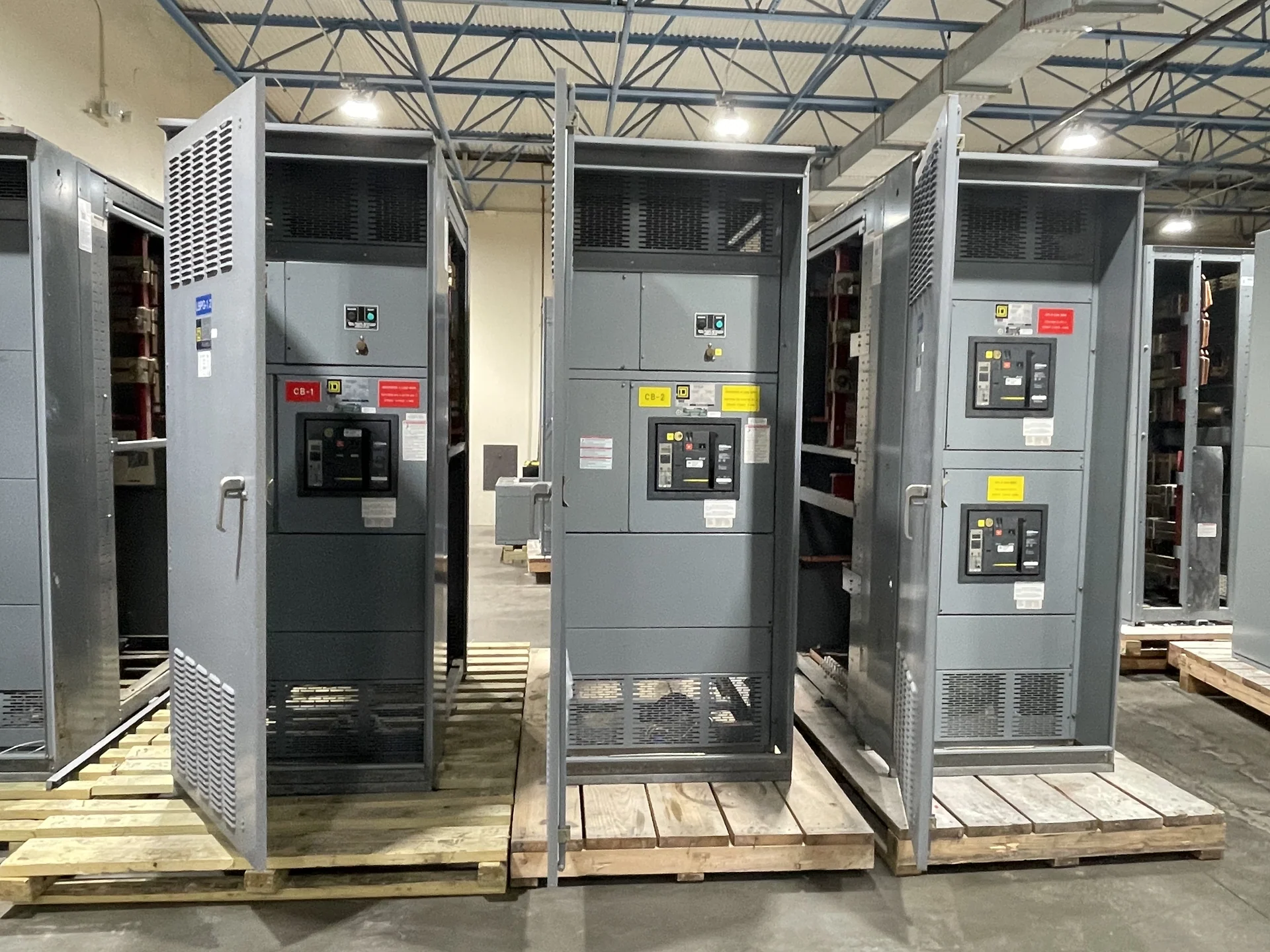
Switchgear Definition
Switchgear is an engineered assembly of electrical switching, protection, control, and isolation equipment used to direct power safely through a distribution system. A lineup may include circuit breakers, switches, fuses, bus conductors, instrument transformers, meters, relays, control wiring, and an enclosure. The exact combination depends on voltage, current, fault duty, system arrangement, environmental exposure, and the operating sequence defined for the project. In practical terms, switchgear provides a controlled point where circuits can be connected, interrupted, protected, inspected, and isolated. Switchgear Builders manufactures new electrical switchgear in the United States, builds custom equipment to specification with American components, and supplies projects with nationwide shipping.
Switching, Protection, and Isolation
The three words in a switchgear definition describe different functions. Switching changes the energized path during normal operation, such as connecting a feeder or transferring a source. Protection detects abnormal current or another defined condition and opens an interrupting device according to the system design. Isolation creates a clearly defined separation for maintenance or testing, subject to the equipment design, operating procedure, and qualified personnel requirements. These functions can share an assembly but should not be treated as interchangeable. A specification should identify which devices perform each role, how they operate, and what interlocks or indications are required.
What a Switchgear Lineup Contains
A switchgear lineup is more than a cabinet with breakers. The enclosure supports barriers, doors, compartments, bus supports, cable entrances, grounding provisions, and access features. The power path includes mains, ties, feeders, and bus sections sized for the specified continuous current and fault conditions. Protective devices require interrupting or withstand ratings appropriate to the available fault current. Metering, relaying, control power, terminal blocks, and communications may be included when the operating concept calls for them. Drawings should show device identity, compartment arrangement, conductor interfaces, control logic, and dimensions so the assembly can be coordinated with the room and installation.
Switchgear Compared With Related Equipment
Switchgear, switchboards, panelboards, motor control centers, and transfer equipment all distribute or control electricity, but their construction and intended duties differ. A panelboard commonly serves branch circuits and smaller feeder arrangements, while a switchboard organizes larger distribution devices in an accessible assembly. Motor control centers group motor starters, drives, and related controls. Transfer equipment manages source changes according to a defined sequence. Switchgear is a broader engineered assembly centered on switching, interruption, protection, and isolation, often with compartmentalization and more extensive control or protection functions. The correct choice follows the one-line diagram, ratings, space, access, and operating requirements rather than terminology alone.
Ratings and Design Inputs
A useful switchgear definition must be connected to the ratings that make an assembly suitable for a particular system. Design inputs commonly include nominal voltage and frequency, phase and wire configuration, grounding method, continuous current, available fault current, interrupting requirements, short-circuit withstand, insulation coordination where applicable, enclosure environment, cable sizes, and working-space constraints. The one-line diagram should also identify sources, transformers, generators, feeders, ties, and protective devices. Engineers and installers should reconcile these inputs before fabrication, because a change in source, conductor, enclosure location, or protection scheme can affect dimensions, components, settings, and documentation.
Custom Manufacturing and Documentation
New switchgear is often custom equipment rather than a generic item selected from a shelf. A manufacturer translates the approved electrical concept into enclosure layouts, bus arrangements, device locations, control wiring, labels, lifting provisions, and shipping sections. A quote request is more useful when it includes the one-line diagram, equipment schedule, available fault current, dimensions, incoming and outgoing cable details, source logic, metering needs, environmental conditions, and requested drawings or test records. Switchgear Builders can manufacture custom new assemblies to the supplied project requirements and coordinate a nationwide shipment; project-specific scope, availability, and delivery details must be confirmed in the quotation.
Project Standards and Verification
Standards and listing requirements belong in the project specification, not in a generic definition. The design team should identify the applicable equipment category, governing codes, utility requirements, installation conditions, and required evidence for the particular assembly. UL 891 may be relevant to some low-voltage switchboard projects, but its applicability and any project-specific listing or capability must be confirmed for each design; it should not be assumed for every switchgear type. Before approval, review drawings, ratings, component data, control sequences, inspection points, and test expectations with the responsible electrical professionals and the manufacturer.