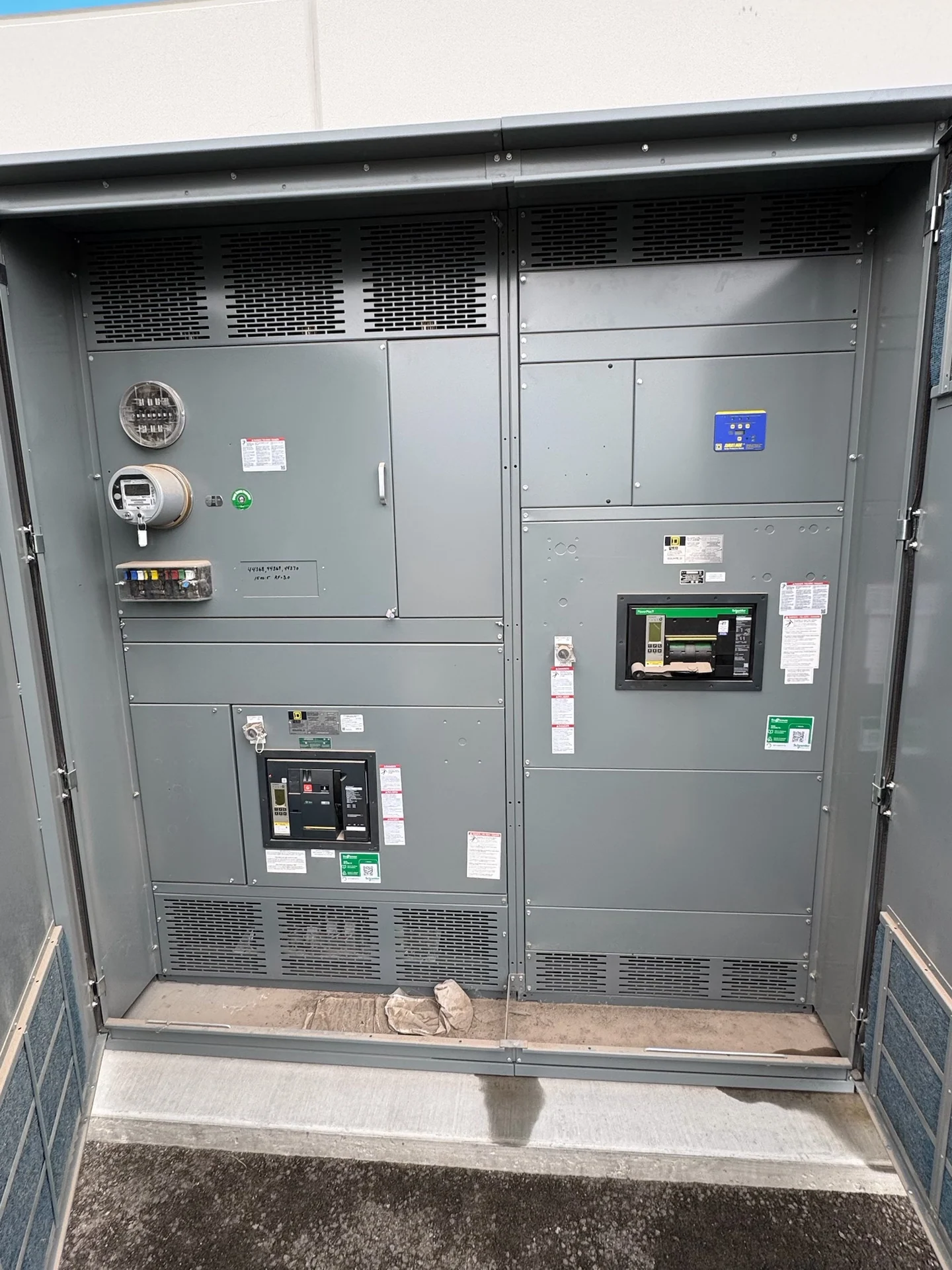
Fuse Definition in an Electrical Circuit
A fuse is an overcurrent protective device that opens an electrical circuit when its fusible element melts under specified conditions. The element is selected so current above an intended range produces enough heat to separate the conductive path, limiting continued fault or overload current. Once the element opens, the fuse does not reset itself; the circuit remains interrupted until a correctly specified replacement is installed after the cause of the overcurrent has been investigated. In a switchgear assembly, a fuse works with its holder, enclosure, terminals, and upstream or downstream equipment as part of a complete protection scheme rather than as an isolated component.
How a Fuse Responds to Overcurrent
Fuse operation depends on the magnitude and duration of current, the element construction, and the surrounding electrical conditions. A modest overload may take longer to melt the element, while a high prospective fault current can produce rapid operation, subject to the fuse design and its published time-current characteristics. This inverse relationship helps protect conductors and connected equipment without treating every temporary current increase as an immediate fault. Engineers should evaluate motor starting, transformer energization, capacitor inrush, and other normal transients so the selected fuse can tolerate expected conditions while still responding appropriately to damaging overcurrent.
Important Fuse Ratings
A useful fuse specification includes more than an ampere value. The continuous current rating must suit the circuit and its design conditions, while the voltage rating must be appropriate for the system and the way the fuse is applied. The interrupting rating indicates the prospective fault current the fuse can safely interrupt under stated conditions; it must be compared with the available fault current at the installation point. Physical dimensions, terminal style, frequency, phase arrangement, enclosure conditions, and any required current-limiting behavior can also affect selection. Final ratings require review against the equipment design and governing project requirements.
Fuse Classes and Application Choices
Fuse classes and construction types are not interchangeable labels for every application. A cartridge fuse, current-limiting fuse, time-delay fuse, and medium-voltage fuse may serve different voltage ranges, fault duties, mounting arrangements, and coordination objectives. A time-delay characteristic can accommodate a defined starting transient, whereas a faster characteristic may be preferred where fault limitation or semiconductor protection is important. The correct choice depends on the protected conductor, load behavior, available fault current, equipment arrangement, and required operating sequence. The fuse manufacturer data and the project engineer's protection study should control the final selection instead of a generic ampere comparison.
Fuse Coordination and Replacement Planning
Selective coordination examines how a fuse relates to other fuses, circuit breakers, and protective devices so the device nearest a fault can be evaluated for opening before an upstream device, where the system design requires that behavior. Time-current curves, tolerance bands, let-through energy, conductor limits, and device manufacturer data are useful inputs. Replacement planning should identify the exact fuse class, voltage, current, interrupting rating, dimensions, and compatibility requirements; a visually similar fuse is not automatically an acceptable substitute. Any change should be reviewed for protection settings, equipment ratings, and the documented circuit design.
Fuses in Custom Switchgear Specifications
When a new custom switchgear lineup includes fused equipment, provide the one-line diagram, system voltage and frequency, available fault current, continuous load information, conductor details, environmental conditions, enclosure requirements, and the desired control or indication scheme. These inputs allow a manufacturer to coordinate fuse compartments, bus connections, cable terminations, access, labels, and project documentation with the rest of the assembly. Switchgear Builders manufactures new electrical switchgear in the United States, builds equipment custom to specification with American components, and supplies projects with nationwide shipping; fuse applicability and every rating still require project-specific engineering confirmation before fabrication.