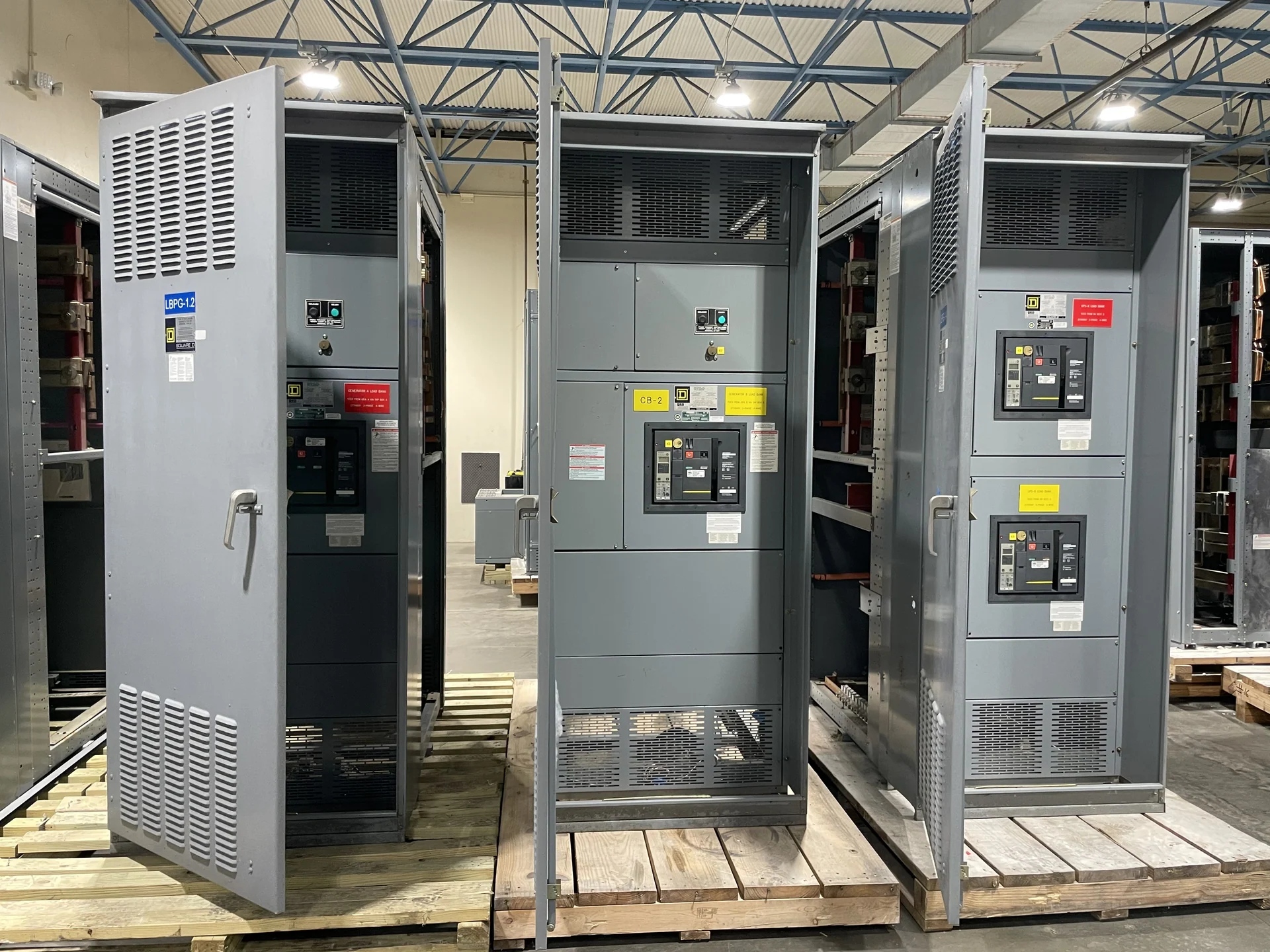
What a 1,200-Amp Designation Means
A 1,200 amp switchgear designation usually describes a planned continuous-current rating for a main bus, main device, or distribution lineup, but it does not by itself define the complete equipment. The engineer still needs to identify system voltage, phase, frequency, grounding method, service or feeder role, and the loads connected to each section. A 1200 A electrical distribution arrangement can be appropriate for a calculated demand while being unsuitable for a different fault duty, enclosure environment, or operating sequence. Treat the ampere value as one starting point in a coordinated specification rather than as a complete product selection.
Calculate the Continuous Current Requirement
Begin with a load schedule that separates continuous loads, noncontinuous loads, motors, transformers, power electronics, and prospective additions. Review demand assumptions, diversity, starting conditions, and the way loads are grouped across mains and feeders. The switchgear continuous current rating should be compared with calculated operating current at each relevant section, not merely the sum of nameplate values. Document expected normal loading and reasonable load growth so the manufacturer can lay out bus, devices, terminals, and cable spaces around an engineering-defined requirement, with future capacity identified separately.
Match Main and Feeder Protective Devices
Protective-device selection must follow the one-line diagram, conductor ampacity, equipment ratings, coordination objectives, and the duties identified by the project engineer. A 1,200-amp main breaker is not interchangeable with a 1,200-amp bus rating, and feeder devices may have very different frame sizes, trip functions, or setting ranges. Define whether the lineup needs a main, tie, feeder, bypass, metering, or other project-specific arrangement. Review time-current behavior and selective coordination where required, then provide approved device data and settings for the manufacturer to incorporate into the new custom assembly.
Verify Available Fault Current
Available fault current is a separate design input from continuous amperage. Obtain the utility or source study inputs, transformer impedance information, generator contributions where applicable, conductor lengths, and system operating scenarios needed for a qualified short-circuit analysis. Compare the resulting duty with the interrupting ratings of protective devices and the applicable short-circuit or withstand rating of the assembly. Because source changes and parallel operation can alter the result, a 1,200-amp lineup should not be specified from the ampere value alone. Ask the electrical engineer to identify the governing fault-current case and required documentation.
Coordinate Physical and Environmental Details
The physical specification should cover lineup dimensions, section arrangement, cable entry, termination space, working clearances, access path, lifting provisions, anchorage interfaces, and the installation environment. State whether the equipment is intended for an indoor or outdoor location, and identify conditions such as moisture, dust, corrosive exposure, ambient temperature, seismic requirements, or unusual ventilation needs. Door swing, maintenance access, and the route into the electrical room can affect the practical design as much as the 1,200 amp rating. Confirm enclosure and construction requirements for the actual site rather than assuming a standard arrangement.
Prepare a Manufacturer Quote Package
For a useful quote on new 1,200 amp switchgear, send the manufacturer the latest one-line diagram, load schedule, voltage and grounding information, available-fault-current study, protective-device preferences, physical drawings, site conditions, control and metering requirements, and required submittal documents. Identify the destination for nationwide shipping and coordinate receiving access, unloading responsibility, shipping splits, and field installation interfaces. Switchgear Builders manufactures custom electrical switchgear in the United States, using American components and supplying equipment to projects nationwide; final scope, configuration, applicability of standards such as UL 891, and any project-specific listing must be confirmed for the individual design.