What a 2,500-Amp Rating Establishes
A 2,500 amp switchgear lineup is planned around continuous current, not simply a large number printed on a nameplate. The rating must fit the calculated demand, conductor arrangement, bus design, protective devices, ambient conditions, and operating profile of the distribution system. Engineers should distinguish the service or feeder rating from the actual expected load, then document whether the equipment is intended for a main, tie, feeder group, or a coordinated combination. A 2500 A electrical distribution design also needs system voltage, phase, frequency, grounding method, and wire configuration before a manufacturer can evaluate a workable arrangement.
Start With Load and Future-Capacity Inputs
The load schedule should show existing calculated loads, expected additions, motor starting requirements, continuous-load treatment, and any operating scenarios that change demand between sources or buses. A 2,500-amp selection may provide useful capacity, yet oversizing can affect enclosure dimensions, conductor terminations, heat management, and project cost without solving an upstream limitation. Identify transformer capacity, utility or generator source data, feeder sizes, and planned expansion separately. If load growth is a reason for the selected rating, state the assumptions so future circuits and physical space can be evaluated rather than treated as automatic capacity.
Verify Available Fault Current and Protection
Continuous current and short-circuit duty answer different questions. The available fault current study, source impedance, transformer information, utility contribution, generator contribution, and system configuration help define the required withstand or short-circuit current rating for the assembly, along with interrupting ratings for individual protective devices. Protective device selection should be reviewed with time-current characteristics and coordination objectives, including main, feeder, and tie behavior where applicable. Do not infer an interrupting rating from the 2,500 A continuous rating; the project engineer must establish fault-duty requirements and confirm that the proposed equipment and settings are suitable.
Define the Lineup and Operating Arrangement
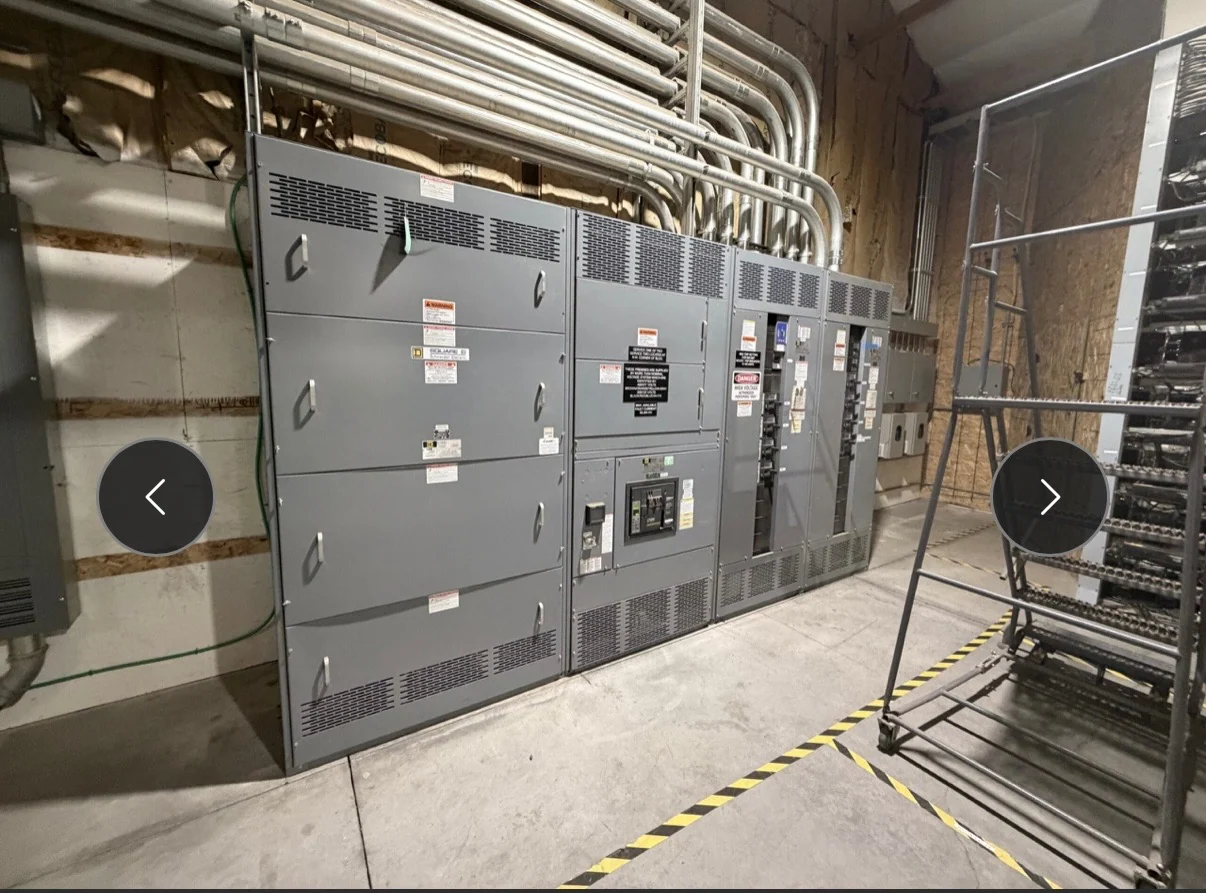
A useful specification describes how power enters, leaves, and moves through the lineup. Identify main devices, feeder count, bus sections, metering, control power, grounding provisions, cable entry, and any main-tie-main or alternate-source sequence. Drawout and fixed-mounted arrangements can change maintenance access, compartment layout, termination space, and operating procedures, so the preference should be stated early. Provide the one-line diagram, elevations, room dimensions, working clearances, and connection points for review. For an American manufacturer building custom new switchgear, these details turn a broad 2,500 A inquiry into a defined equipment package.
Coordinate Enclosure, Installation, and Documentation
The equipment footprint must fit the electrical room, movement path, lifting method, cable-bending space, and installation sequence. Confirm indoor or outdoor exposure, enclosure requirements, environmental conditions, access direction, anchorage, seismic project criteria where applicable, and separation from nearby equipment. Submittal expectations may include a one-line diagram, front elevation, floor plan, device schedule, terminal information, control schematics, and project-specific test records. If UL 891 is cited in the specification, its applicability, construction requirements, and any listing or verification must be confirmed for this particular project rather than assumed from the amperage.
Request a Manufacturer-Built 2,500-Amp Quote
When requesting a quote, send the project location, one-line diagram, voltage and grounding data, continuous-load calculation, available fault current, protection and coordination requirements, dimensions, device preferences, cable-entry direction, metering or controls, documentation needs, and shipping constraints. Switchgear Builders builds new electrical switchgear in the United States to the project specification, using American components and arranging shipment nationwide. The final scope should identify inclusions, exclusions, approval responsibilities, shipping sections, receiving access, and any project-specific testing or standard requirements so the quoted assembly can be reviewed on a consistent technical basis.