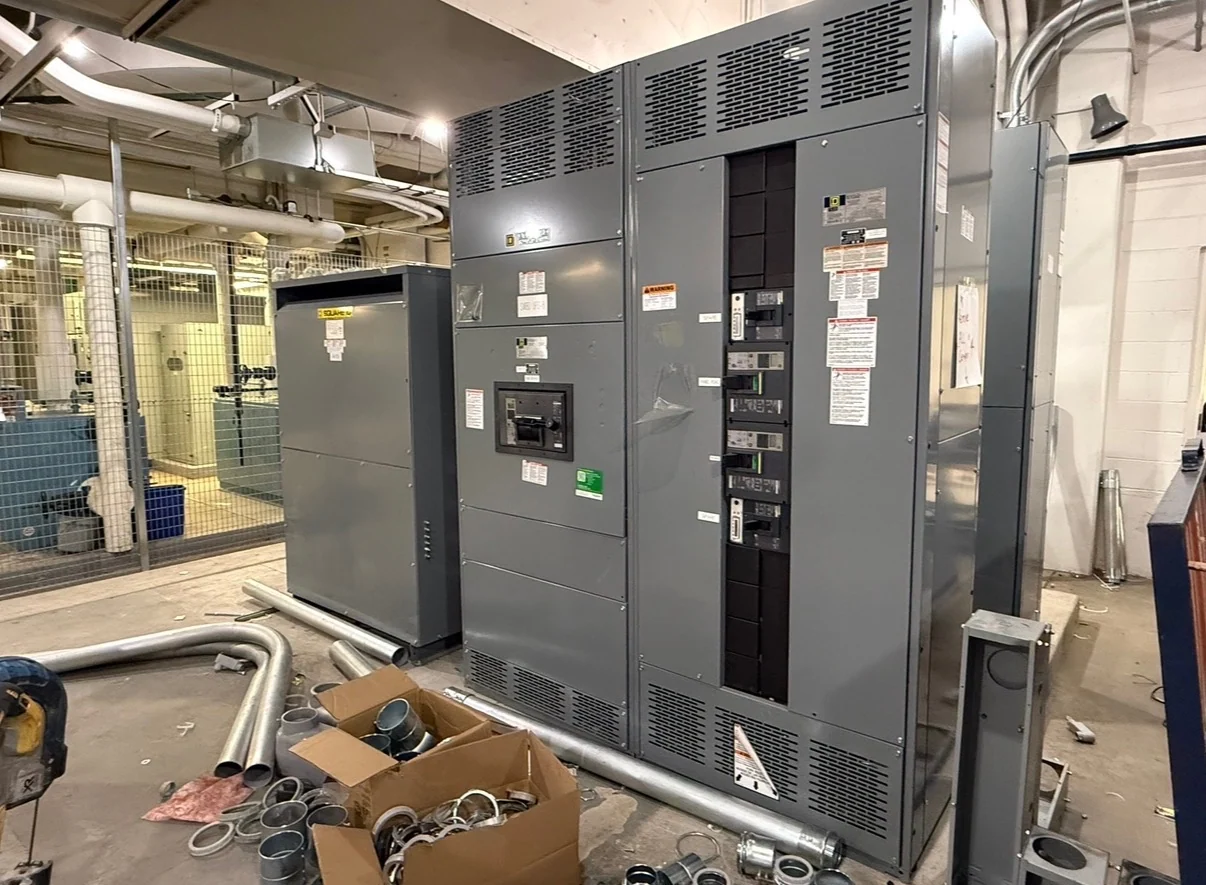
Start with the Healthcare Power Architecture
Healthcare backup power switchgear in Oklahoma City, Oklahoma must be planned as part of the facility’s complete electrical architecture, not as an isolated enclosure. Begin with the normal sources, emergency sources, transformers, transfer equipment, distribution buses, and downstream panels shown on the one-line diagram. Identify whether the project concerns a new service, an expansion, a replacement, or a reconfigured lineup. A useful equipment inquiry also states system voltage, phase and frequency, grounding method, available fault current, continuous load, environmental conditions, room access, and the intended interface between distribution and transfer equipment for healthcare backup power. For a hospital campus, map which electrical rooms serve operating suites, imaging, laboratories, nursing units, and support systems so feeder boundaries match care dependencies. Note whether generator capacity is shared with another building and whether future phases could change emergency bus loading.
Separate Essential Loads by Function
The phrase essential loads is too broad to size or arrange equipment by itself. The design team should classify loads by operational consequence and required source, such as life-safety functions, critical clinical systems, equipment supporting patient care, communications, security, refrigeration, ventilation, pumps, and information technology. Record normal demand, starting current, harmonics where relevant, and any sequencing constraints for each group. This information helps determine feeder allocation, protective devices, bus arrangement, and transfer priorities. It also reveals where a single transfer switch, multiple transfer switches, or separate emergency distribution sections may better match the facility’s operating plan.
Define the Transfer Sequence Before Fabrication
A backup-power lineup should reflect a written operating sequence that engineers, facility staff, installers, and the manufacturer can review together. Describe how a loss of normal source is detected, how the alternate source becomes available, which loads transfer first, how delayed loads are started, and what conditions permit retransfer. Address source interlocking, manual controls, bypass or maintenance provisions if required, generator permissives, alarms, remote indications, and behavior during a failed transfer. The final sequence should be consistent with the selected transfer equipment, control wiring, protective settings, and the project’s authority having jurisdiction requirements.
Plan Outages and Installation Interfaces
Healthcare replacement or expansion work requires an outage plan that accounts for patient care, temporary source arrangements, construction phases, testing, and restoration. Before requesting a quote, identify the shutdown boundaries, allowable interruption windows, switching responsibility, temporary distribution needs, delivery route, rigging constraints, room clearances, cable entry, and field termination scope. Provide photographs, dimensions, equipment schedules, and available drawings when they can be shared. A manufacturer can then evaluate a new custom assembly around the documented interfaces, while the owner’s qualified electrical professionals control site safety, switching, and acceptance activities. In Oklahoma City, review seasonal heating and cooling behavior, rooftop equipment exposure, and the route from the receiving area to the electrical room. A delivery path can affect shipping-section dimensions, door removal, elevator limits, and the order in which lineup sections are moved.
Confirm Ratings, Standards, and Documentation
Project documents should establish the equipment voltage class, continuous-current requirements, interrupting or withstand duties as applicable, enclosure conditions, bus material, grounding and bonding details, metering, protective relays, control power, communications, and labeling. Healthcare projects may also carry owner standards, utility requirements, engineering specifications, and jurisdictional requirements that affect the design. UL 891 applicability, construction details, and any project-specific listing or verification must be confirmed for the particular assembly rather than assumed from a general product description. Request drawings, device data, wiring diagrams, bills of material, and agreed test records as part of the submittal discussion.
Request New Equipment from an American Manufacturer
Switchgear Builders manufactures new electrical switchgear in the United States, builds custom equipment to project specifications, uses American components, and supplies projects with nationwide shipping. For an Oklahoma City inquiry, send the one-line diagram, load schedule, source and transfer sequence, dimensional constraints, environmental information, required documents, and target site coordination details. Ask the manufacturer to identify assumptions, exclusions, component selections, shipping sections, lifting provisions, and information still needed for engineering review. Comparing proposals is most useful when every bidder receives the same technical scope and commercial requirements, rather than relying on a generic healthcare backup power switchgear description. Include a point-to-point signal list for generator start, transfer status, common alarms, and remote annunciation. Identifying those terminations early reduces field ambiguity and gives the controls designer a basis for checking sequence operation during commissioning.